Why Pressure Can Look Like Light
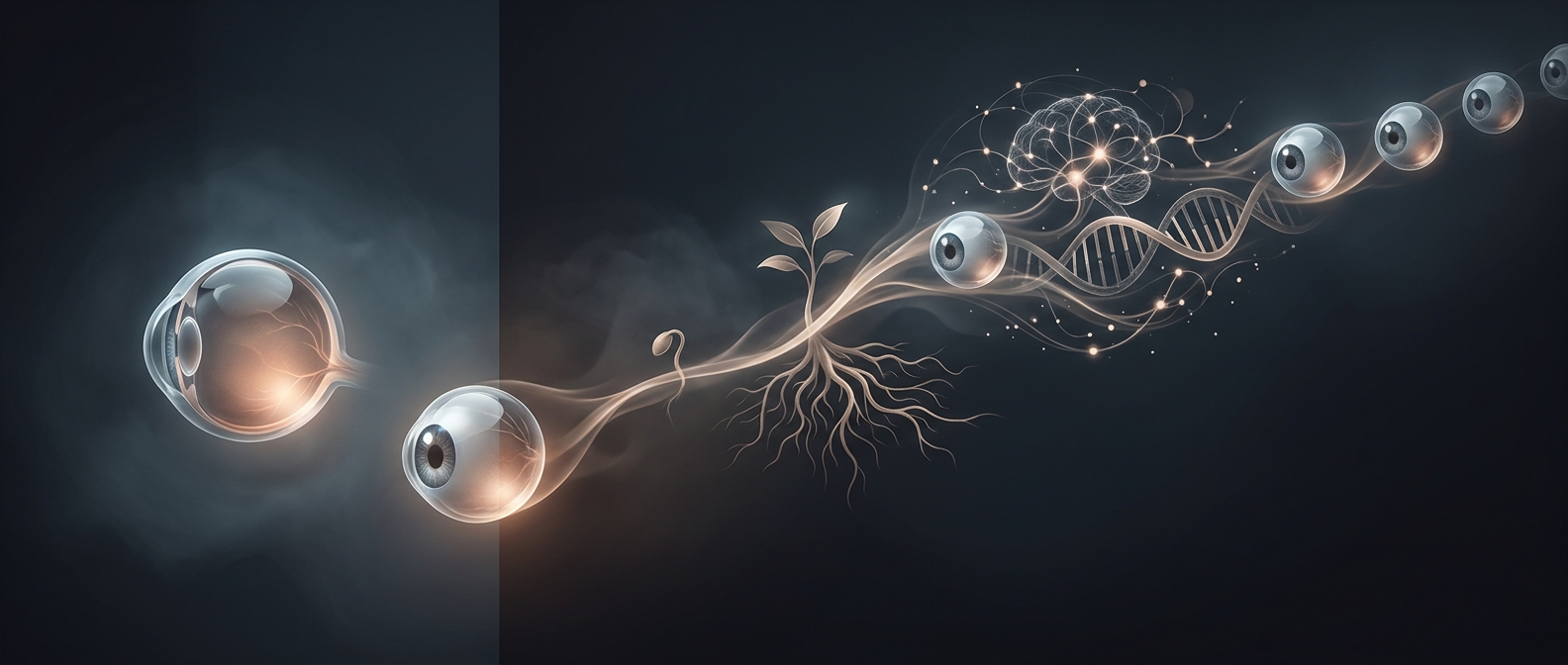
Vision normally begins when light reaches the retina, the light-sensitive tissue lining the back of the eye. There, photoreceptor cells convert light into electrical activity. That activity is processed by retinal circuits and carried toward the brain by retinal ganglion cells, whose long fibers form the optic nerve.
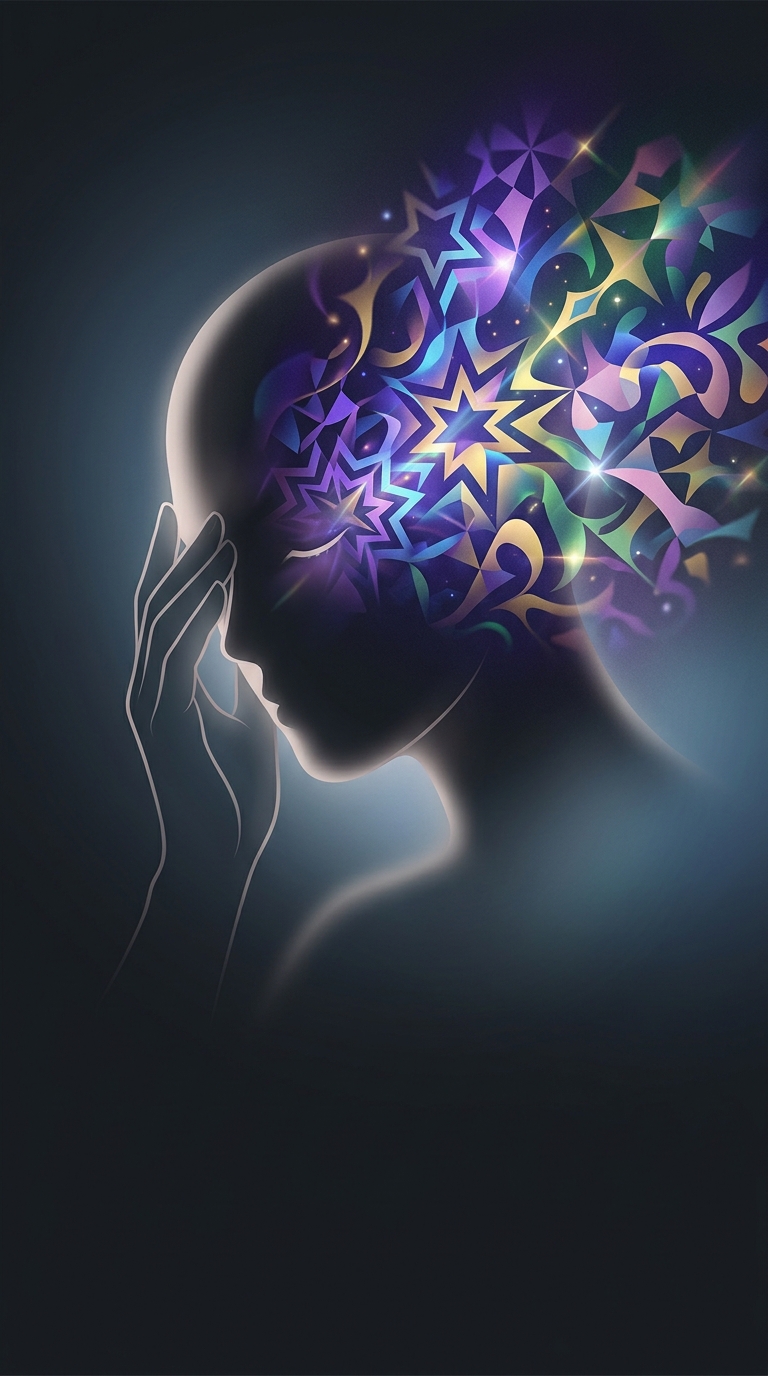
Mechanical pressure can disrupt this system without any light entering the eye. Pressing or rubbing the closed eyelids slightly deforms the eyeball and its tissues, changing activity in the retina. The resulting signals travel through much of the same visual pathway as signals triggered by light. The brain receives activity it ordinarily associates with seeing and experiences it as a flash, glow, or pattern—a phosphene.
Why the Patterns Can Be Geometric
A phosphene is not a picture projected onto the eye. It is a visual sensation produced by activity somewhere in the visual system, and its appearance depends on which cells are activated and how their signals are organized. Pressure may stimulate groups of retinal cells unevenly, so the experience can include arcs, speckles, or shifting geometric shapes rather than a uniform flash. The patterns are not reliable images of objects in the dark; they are the brain’s interpretation of an unusual signal.
Why It Is Better Not to Test It by Rubbing
Gentle pressure can produce a brief, harmless phosphene, but vigorous or repeated rubbing is unnecessary and can irritate or injure the delicate eye and eyelid tissues. The same lightlike sensation can also occur for reasons unrelated to pressing the eye. A new, persistent, or recurring flash—especially with other changes in vision—should not be assumed to be a pressure effect.
The striking point is that the visual system responds not only to light, but also to electrical signals that arrive along its usual route. In a dark room, pressure can briefly give the brain input that it interprets as something bright.