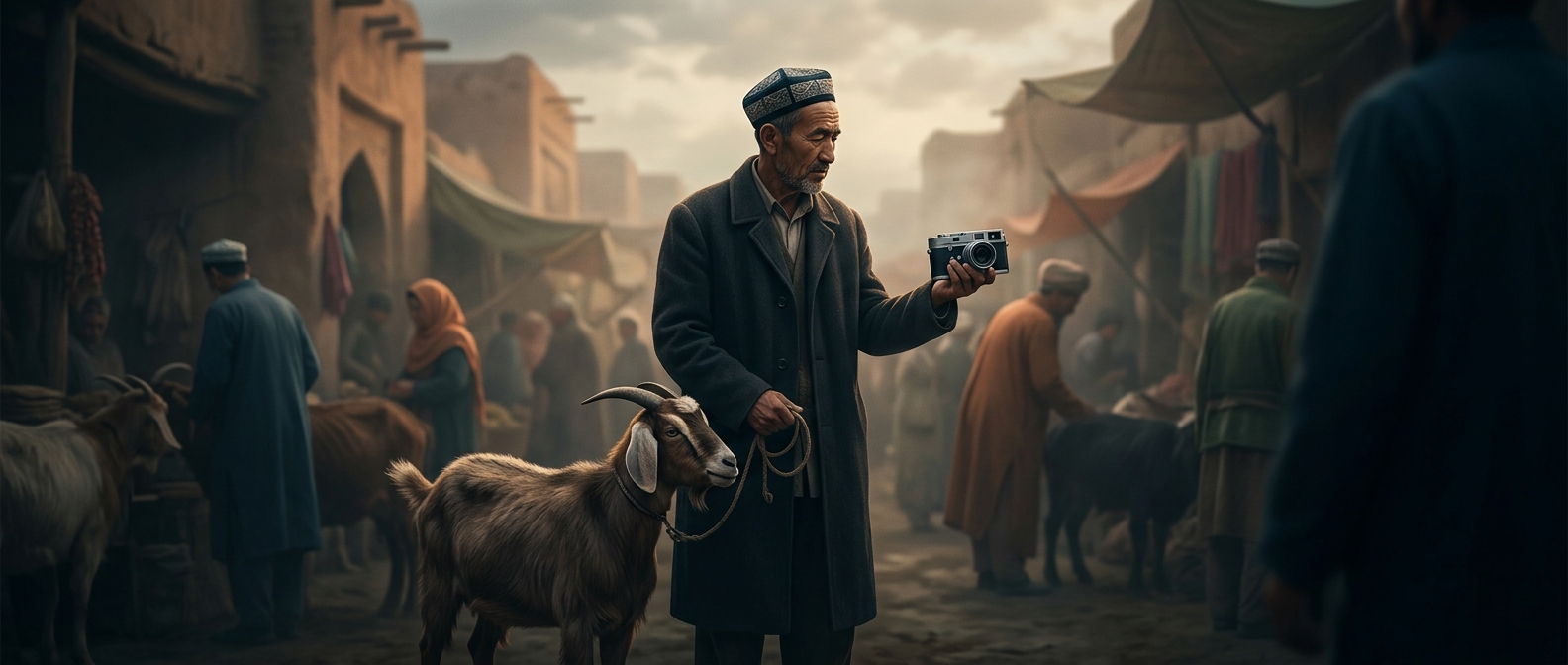
Where a city’s trade becomes personal
Kashgar sits in western China’s Xinjiang region, where routes across Central Asia have long connected agricultural communities and towns. Its livestock market gives that exchange a practical, face-to-face form: farmers bring animals to sell, and buyers can assess the animal before agreeing on a price. Unlike a transaction in which goods are described at a distance, this one turns condition, size, and suitability into matters both sides can inspect and negotiate.
What buyers are weighing
A sheep, horse, or camel is not simply merchandise. It may be intended for breeding, work, resale, or food, and those uses affect what a buyer considers valuable. The animal’s apparent health and build matter, as do the buyer’s needs and the seller’s willingness to accept an offer. Haggling is therefore not just performance; it is how people with different information and priorities arrive at a price.
A market built around movement
The trade also depends on what happens after the sale. Animals must be handled and transported, while farmers and buyers must coordinate their journeys to the market. Gathering livestock trade in one place makes comparison and bargaining possible, but it concentrates the noise, movement, and practical work of commerce into a shared public space.
That is what makes the scene more than a picturesque remnant of the past: it shows a regional economy operating at the scale of individual animals, each one examined, priced, and moved by the people who depend on it.