The eyes do most of the work
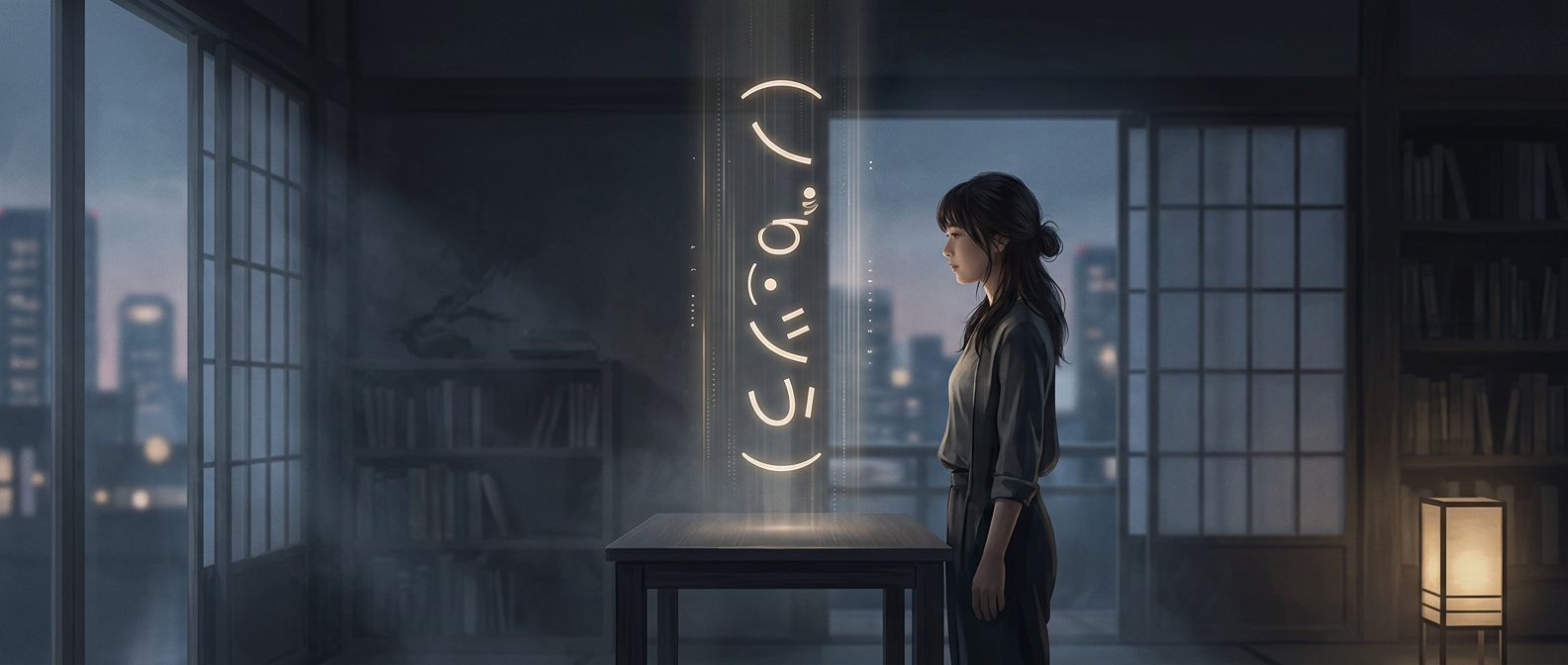
In a kaomoji, the face is arranged across the line rather than turned sideways. Its eyes sit near the center, where a reader expects to find them in a face viewed from the front. Marks at the sides—often parentheses or brackets—can suggest cheeks or the outline of a head, while a short mark between the eyes can serve as a mouth.
That layout makes small changes easy to read. The eyes can look cheerful, weary, startled, or narrowed in suspicion while the rest of the face stays nearly the same. Some kaomoji leave out a recognizable mouth altogether, letting the eyes carry the expression.
A face built from text characters
Kaomoji use ordinary text characters as drawing pieces: punctuation, letters, and symbols can become eyes, brows, or facial contours. Japanese writing offers a broad mix of character shapes, and the text can use them side by side to make a face that reads horizontally. The result works like a tiny expression assembled from parts, not a word that needs to be pronounced.
That also makes the faces flexible in messages. A writer can choose an expression to match the tone of a sentence—or soften words that might otherwise seem blunt—without adding a separate image. The reader sees the eyes first, then fills in the rest of the face.