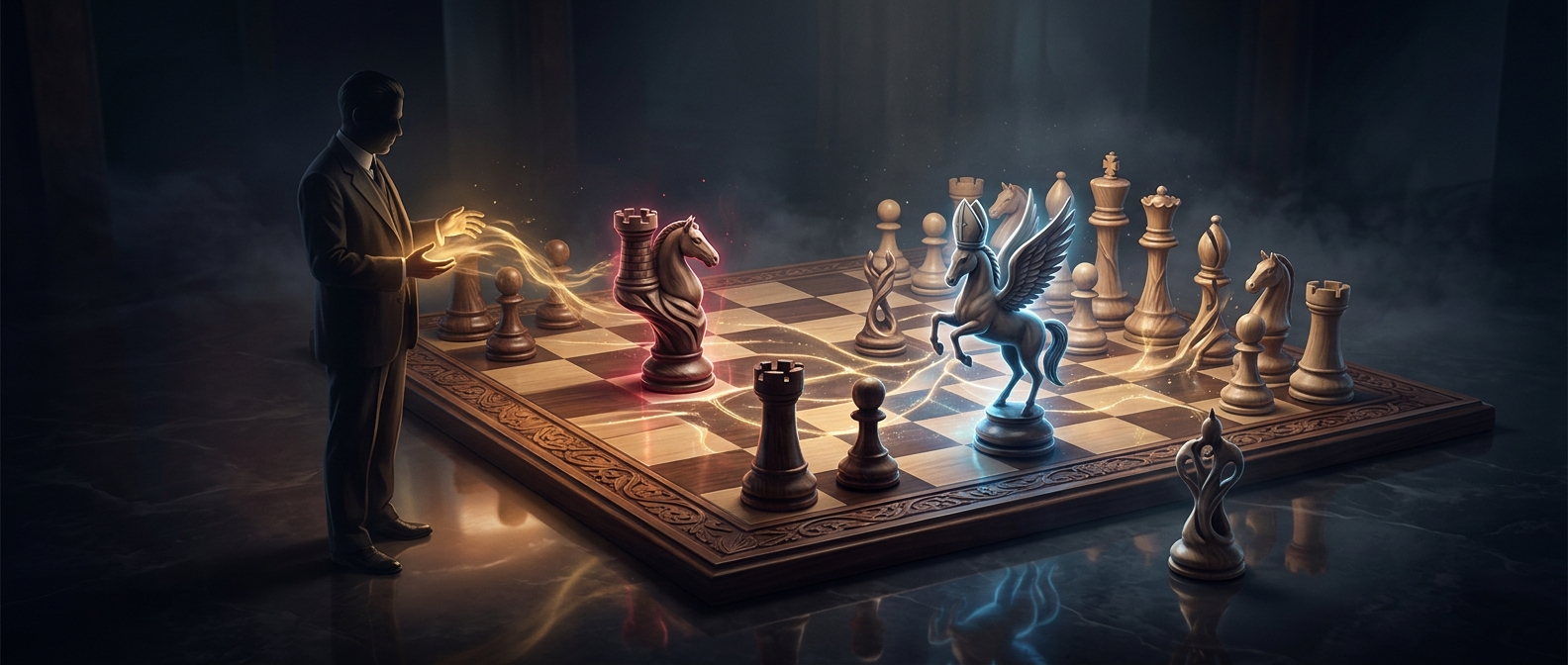
A pawn’s last move can change the whole army
Pawns move toward the far side of the board, one square at a time, but they do not stay pawns if they make it all the way across. On reaching the final rank—the row farthest from where that pawn began—a player must immediately replace it with a queen, rook, bishop, or knight of the same color. The new piece takes effect as part of that move.
The choice is not limited by the pieces already on the board. If a player still has their original queen, the promoted pawn can become another queen. In principle, several pawns can be promoted, giving one side multiple queens or other extra pieces.
Why the strongest choice is not always best
A queen combines the movement of a rook and a bishop, making it the usual choice because it can control long lines in many directions. But chess is about the position, not simply collecting the most powerful pieces. A knight, which moves in an L shape and can jump over other pieces, may deliver a check that a queen cannot. In some positions, promoting to a queen would also leave the opponent with no legal move while their king is not in check—a draw called stalemate—so a less powerful piece can be the winning choice.
Promotion turns a pawn’s slow advance into a strategic race: players may push a pawn not just to gain space, but to threaten a sudden new piece. That is why a pawn that looks modest near the beginning can become the most urgent problem on the board.