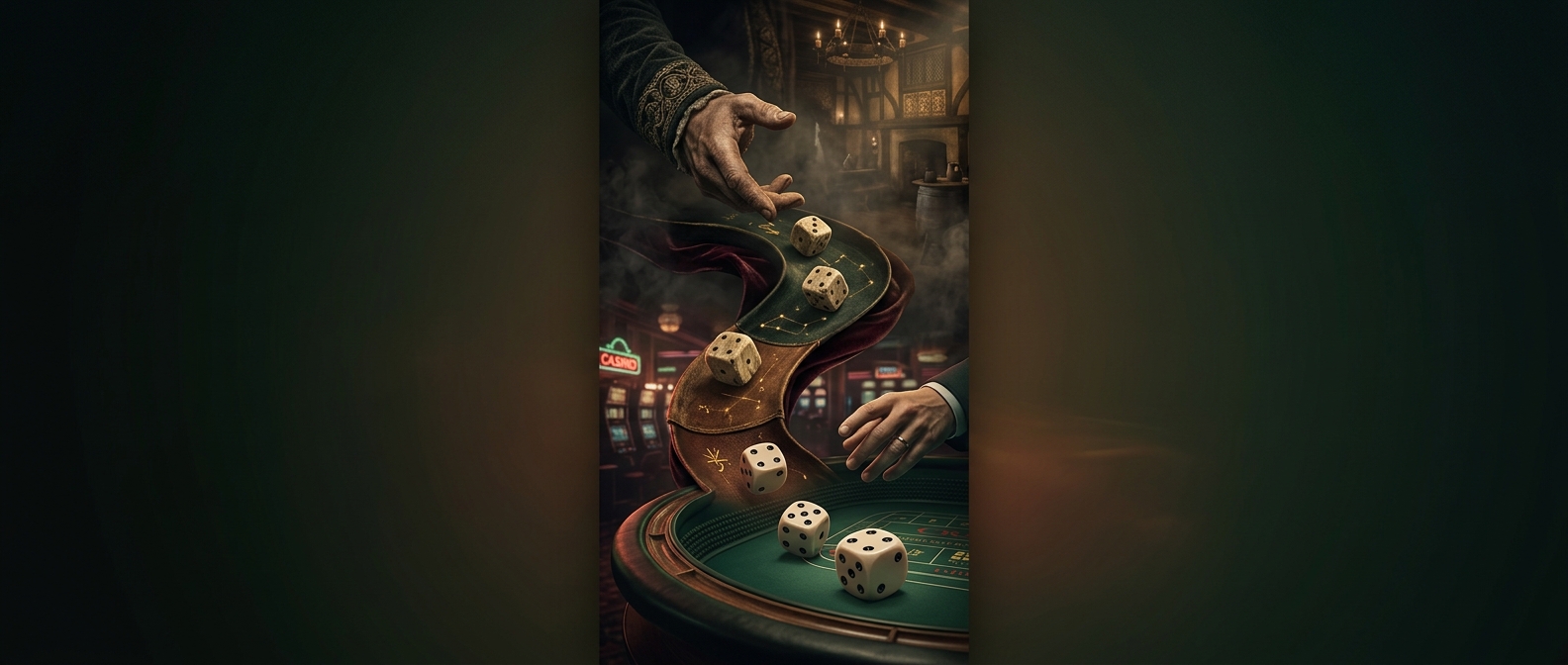
Why seven carries such weight at a craps table
The superstition makes more sense once you know what seven does in craps. Players roll two dice, and seven is the easiest total to make: six different pairs add up to it, more than for any other number. That makes seven a frequent visitor—and, in one crucial part of the game, a feared one.
The roll that can end a turn
After a shooter establishes a point, the shooter keeps rolling until that point appears again or a seven appears. A seven first ends the turn, a result called seven-out. Pass-line bets lose, and the dice move to another shooter. A roll that had felt promising can stop abruptly.
The same number is not always bad: on the opening roll, a seven wins for pass-line bettors. But once a point is set, players watching the shooter try to repeat it may see seven as the outcome that cuts the run short.
A spoken word becomes part of the ritual
At a busy table, players’ bets and fortunes overlap. Avoiding the word is a small way to keep from seeming to invite the unwanted roll—and a way to join the table’s shared routine. Some players may use a substitute or simply avoid naming the number; the custom is a superstition, not a rule that changes the dice.
That tension is the memorable part: seven is statistically the most likely total, yet after a point is established, its arrival can be exactly what players hope not to hear—or say.