Why the Sign Loses to the Lock
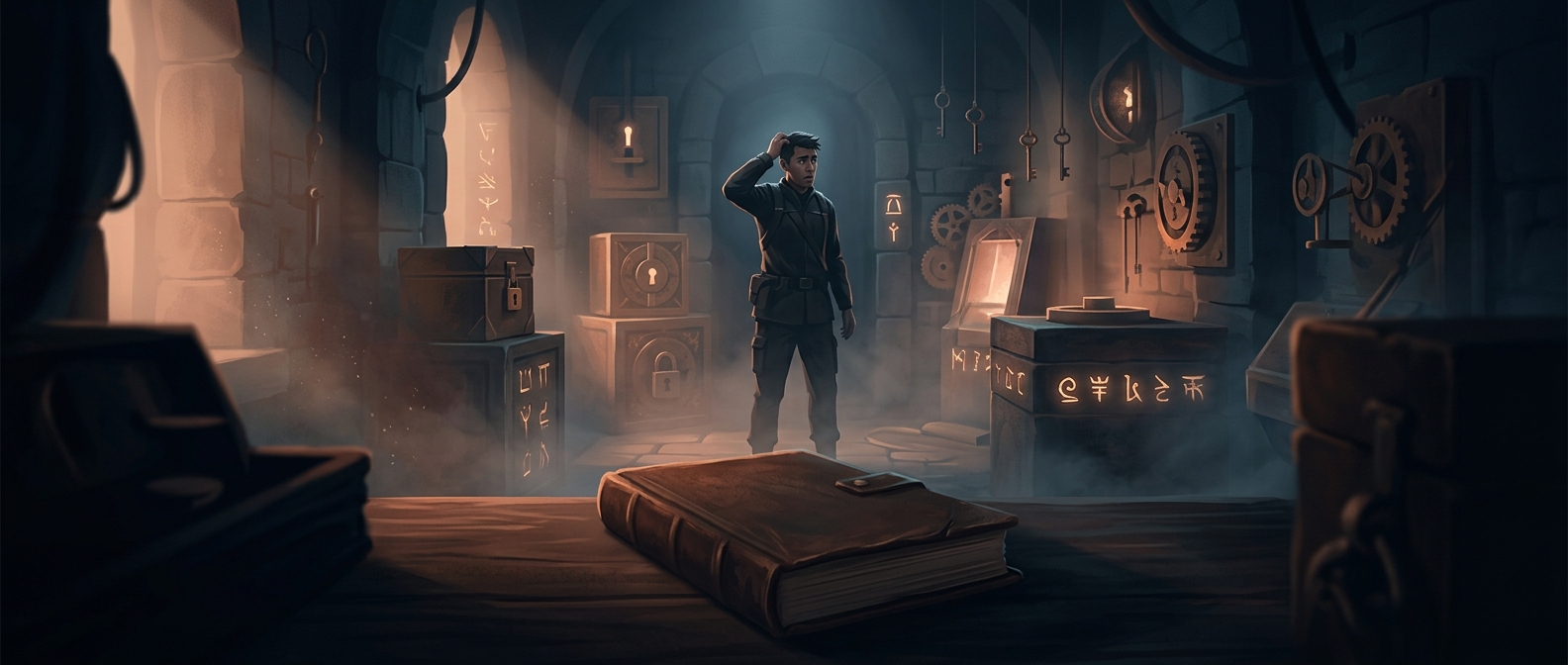
An escape room teaches players to treat objects as possible tools: a key might fit, a dial might turn, and a locked box might conceal the next step. That expectation can make a plain instruction sign seem like background, even when it is the most direct clue in the room. The lock offers an obvious physical challenge; the sign asks players to pause and interpret.
That mismatch gets stronger once a group starts acting. Someone tries the handle, another tests the mechanism, and each attempt draws attention back to the lock. With several people focused on the same object, a nearby instruction can become nearly invisible—not because it is hidden, but because the group has already decided what kind of problem it is solving.
The Design Lesson: Make Reading Feel Like Progress
A useful escape-room clue does more than contain information; it has to compete with the room’s other signals. A sign taped over a lock can be easy to overlook if players assume signs are decoration or if the lock invites immediate experimentation. The puzzle’s intended move may be to read first, but the scene appears to invite them to try first.
For players, the practical reset is simple: when repeated attempts produce no change, stop manipulating the object and inspect what is attached to it, placed beside it, or written nearby. For designers, the same moment is a test of whether the clue’s importance is legible. A clue can be plainly visible and still fail if the room teaches players not to look at it.