A haunting rooted in East Anglia
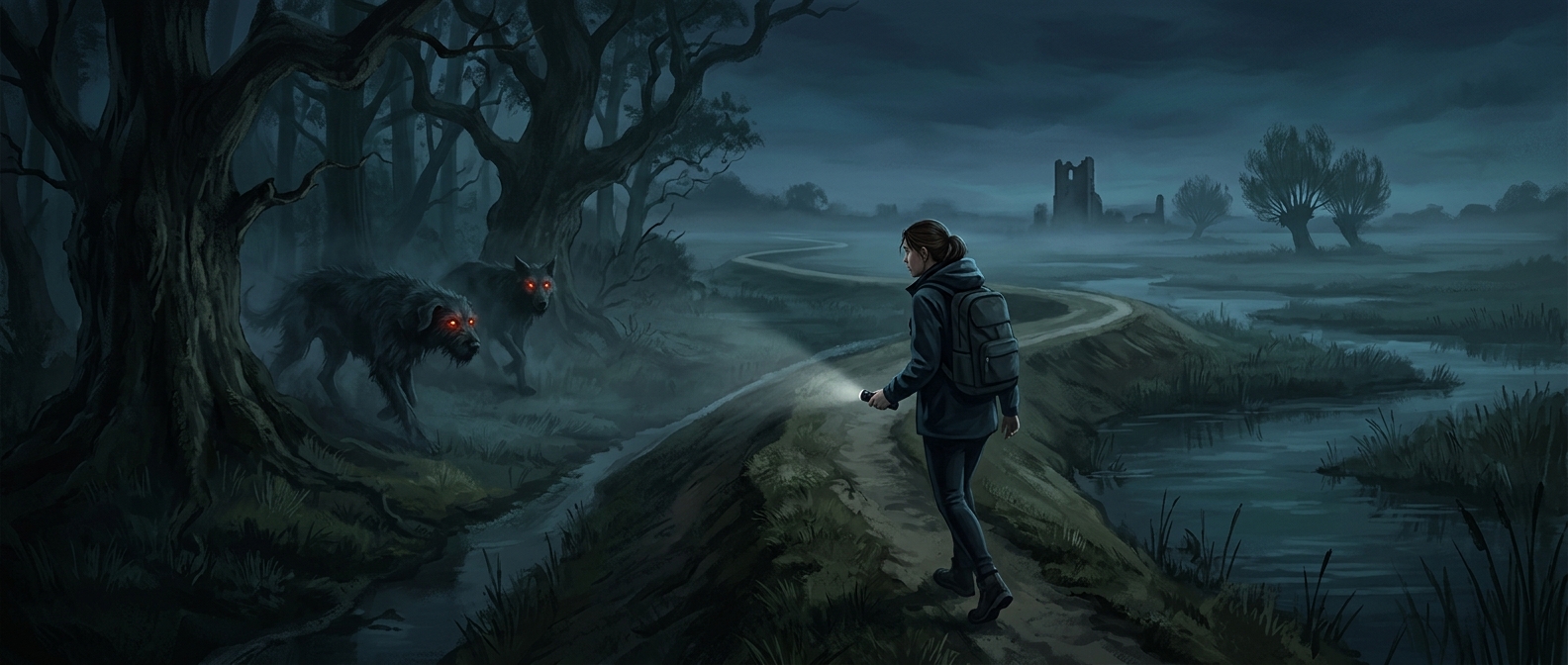
Black Shuck belongs to the folklore of eastern England, especially Norfolk and Suffolk. Stories place the huge, dark dog on lonely roads, open heathland, and near churches—settings where a distant shape or sound could feel unnervingly close before anyone could make it out clearly. The legend gives a name and a presence to that uncertainty: not just a frightening animal, but a supernatural visitor whose appearance carried meaning.
The name is often linked to an old word for a devil or fiend, though its precise origin is uncertain. Across versions of the tale, details shift; the dog may be a threat, a warning, or simply an eerie encounter. That variation is part of how the story works: local tellers could fit it to a particular lane, churchyard, or stretch of coast.
The churches behind the legend
Black Shuck is especially associated with the Suffolk towns of Bungay and Blythburgh. A storm in 1577 became linked in local tradition with reports of a fearsome dog appearing in churches there. The episode helped anchor the roaming figure to identifiable places, turning folklore into part of the region’s landscape rather than a story set somewhere unknowable.
That connection still shapes how visitors encounter the tale. A church, a quiet road, or a broad, darkening stretch of countryside can make the legend feel less like a distant fantasy and more like a story attached to the ground beneath your feet. Black Shuck’s enduring power lies in that local scale: the haunting might be waiting just beyond the next familiar landmark.