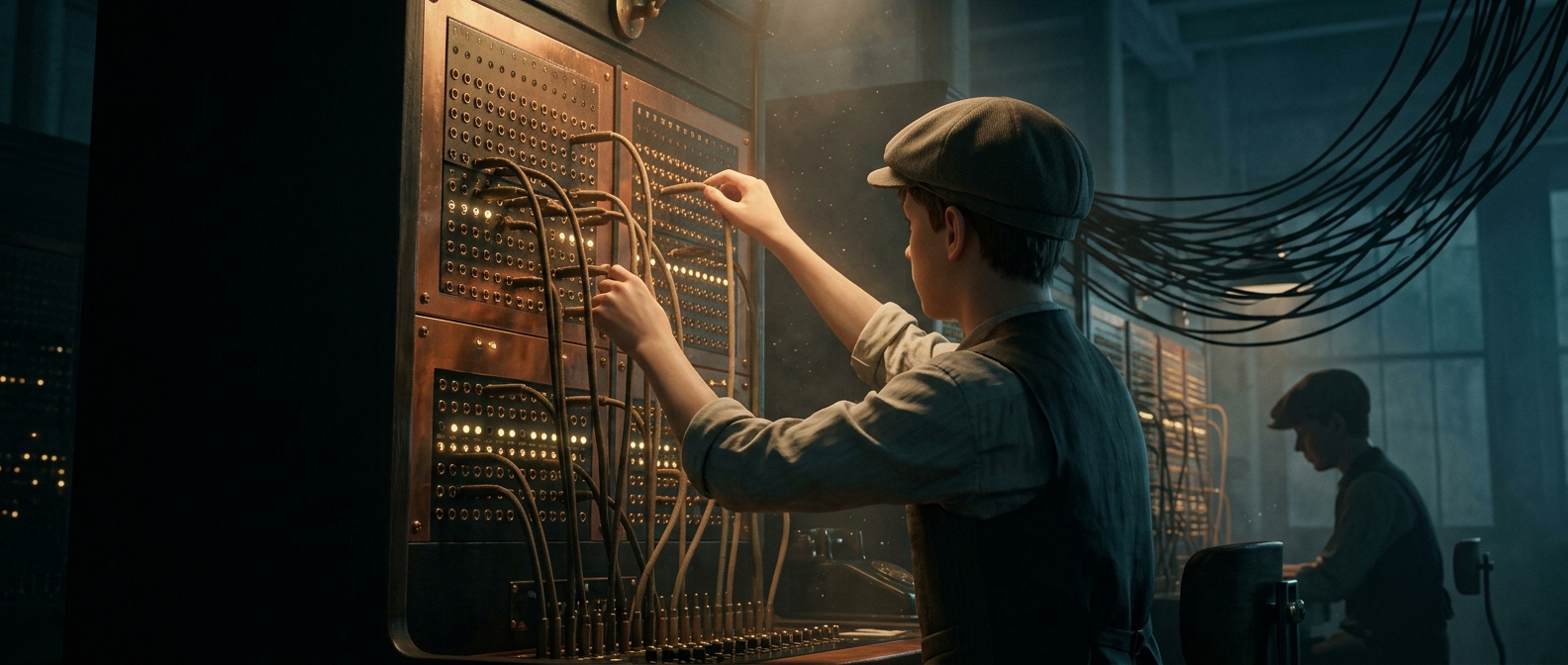
Why the Switchboard Needed a Different Kind of Operator
In an early telephone exchange, a call did not connect itself. An operator sat at a switchboard and joined two customers’ lines by inserting a cord into the right sockets. That made the operator more than a technician: callers depended on a person to connect them promptly and treat them courteously.
Telephone companies first drew on boys for the work, but the job demanded steady attention and self-control. Cursing at callers or pulling out a cord could turn a routine connection into a failed call—and make the company look unreliable. Because customers had little recourse if an operator mishandled a call, individual behavior directly affected trust in the service.
A Personnel Problem Became a Design Choice
Companies responded by replacing boys with women operators. The change was a management decision, not a mechanical fix: the switchboards still worked the same way, but employers sought workers they believed would be more dependable and courteous with customers. That expectation reflected the era’s gender assumptions as well as the companies’ practical interest in controlling service quality.
The shift helped establish the telephone operator as a customer-service role. A connected call depended not only on wires and plugs, but on the person handling them.