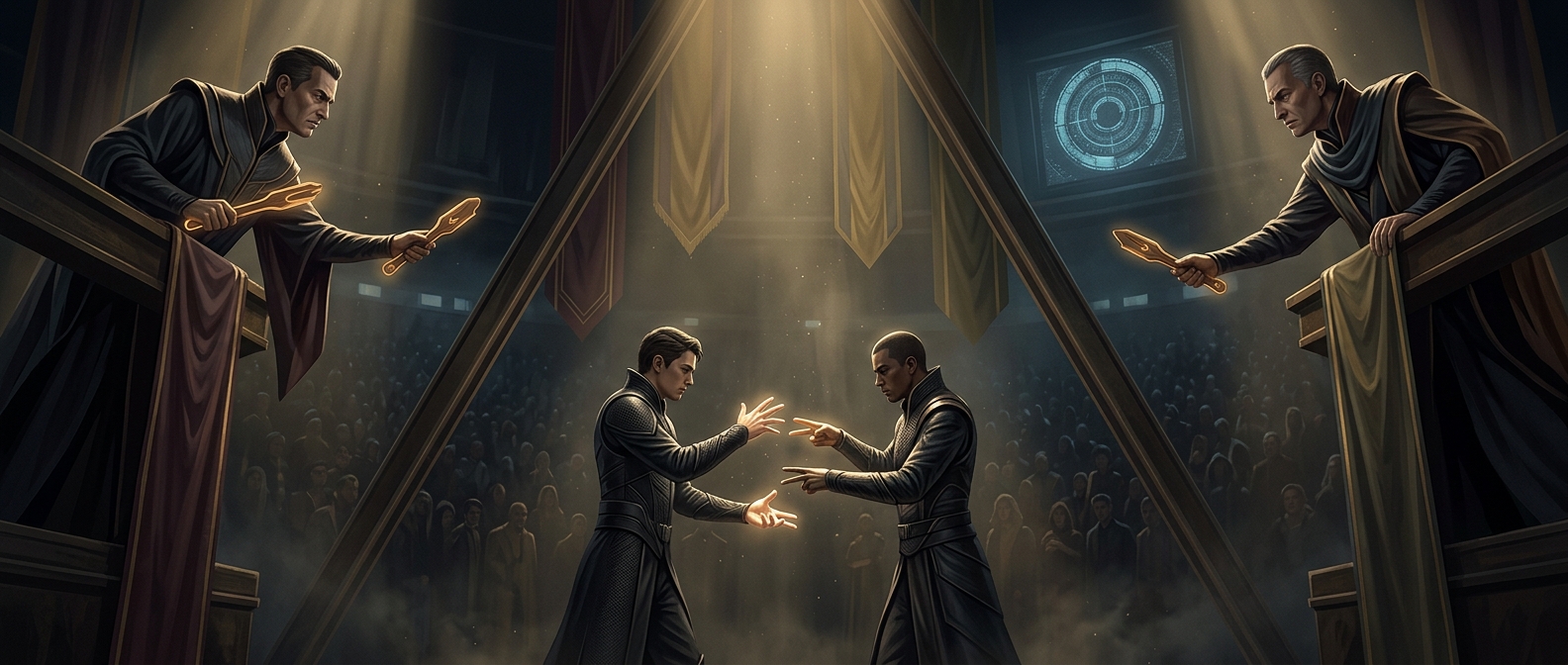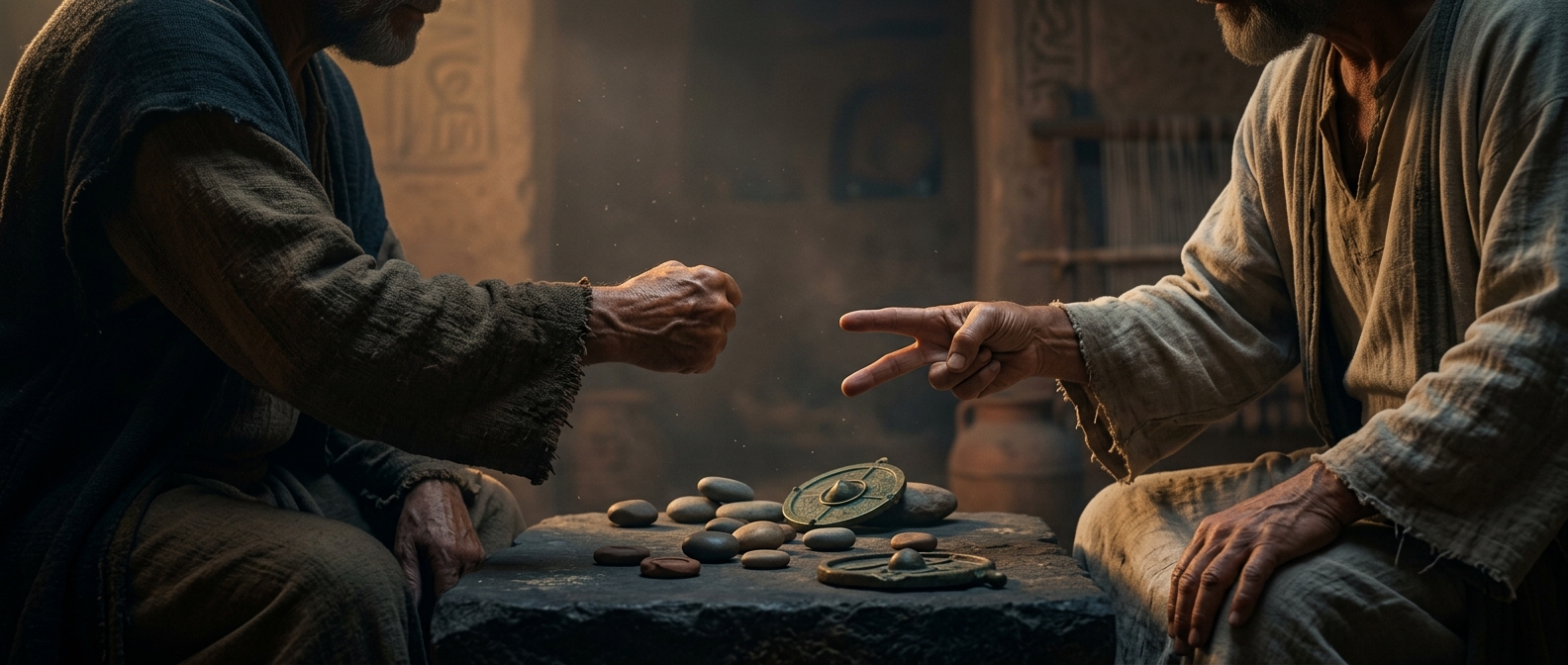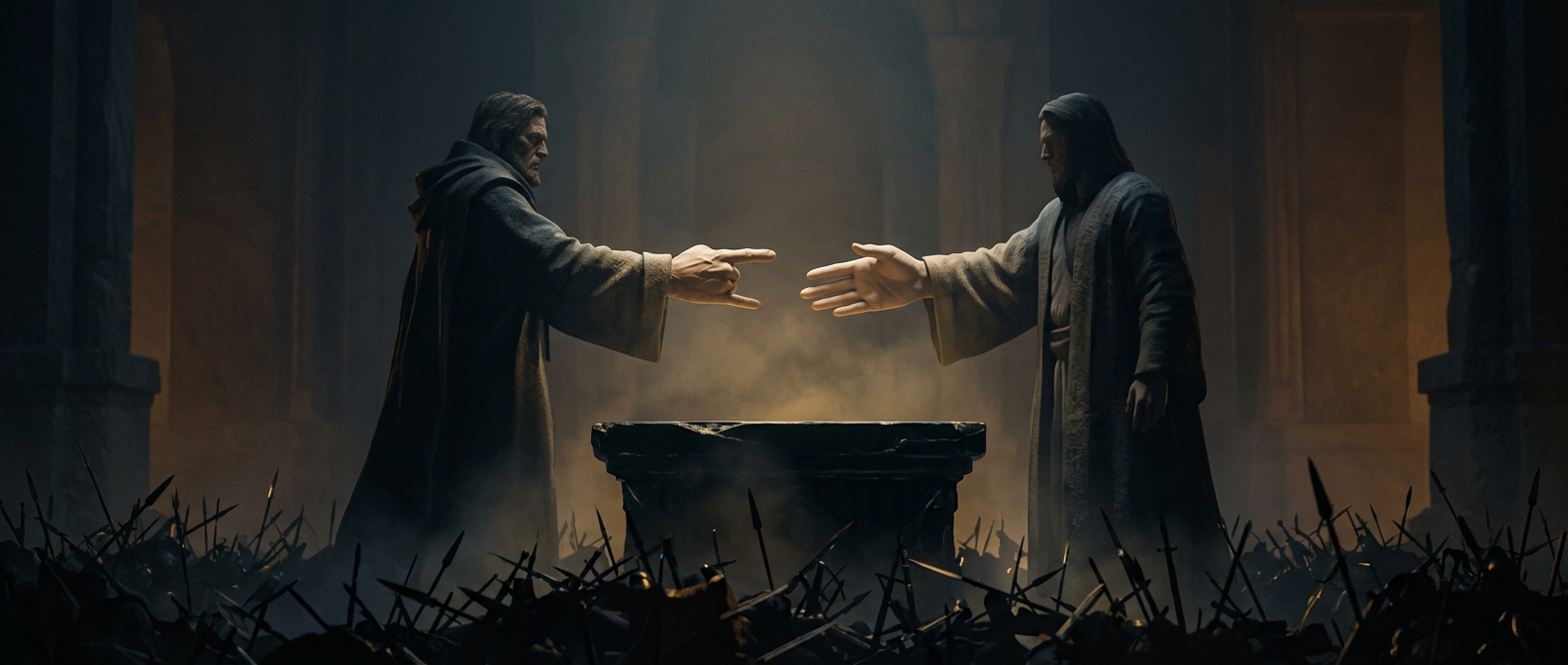
A Game Built to Have No Strongest Move
Rock-paper-scissors works because its three choices form a loop: rock defeats scissors, scissors defeat paper, and paper defeats rock. Each move has one thing it beats and one thing that beats it. That structure is called cyclic dominance—a setup in which no option stays on top of the others.
The outcomes depend on agreed symbols, not on which material would win in a real collision. Paper does not overpower stone; “covering” is the action the rules assign to paper. The simple images make the relationship easy to remember, while the loop keeps any one choice from being an automatic winner.
Why the Loop Matters
If one move beat both of the others, choosing it would be the obvious strategy. A player who noticed that advantage could keep using it, and the game would quickly lose its balance. In rock-paper-scissors, each choice can be countered, so the useful question is not “Which move is strongest?” but “Which move might the other player choose?”
That creates a small contest of prediction. Players may try to anticipate a habit or react to a previous round, but those guesses can themselves be anticipated. Against an opponent who chooses unpredictably, the sound strategy is to keep all three options in play rather than rely on one favorite. The game’s strange logic is also its design: the symbols need not be physically equal, as long as the rules make their advantages cycle.