Why a Wine Cabinet Can Become a “Spirit Trap”
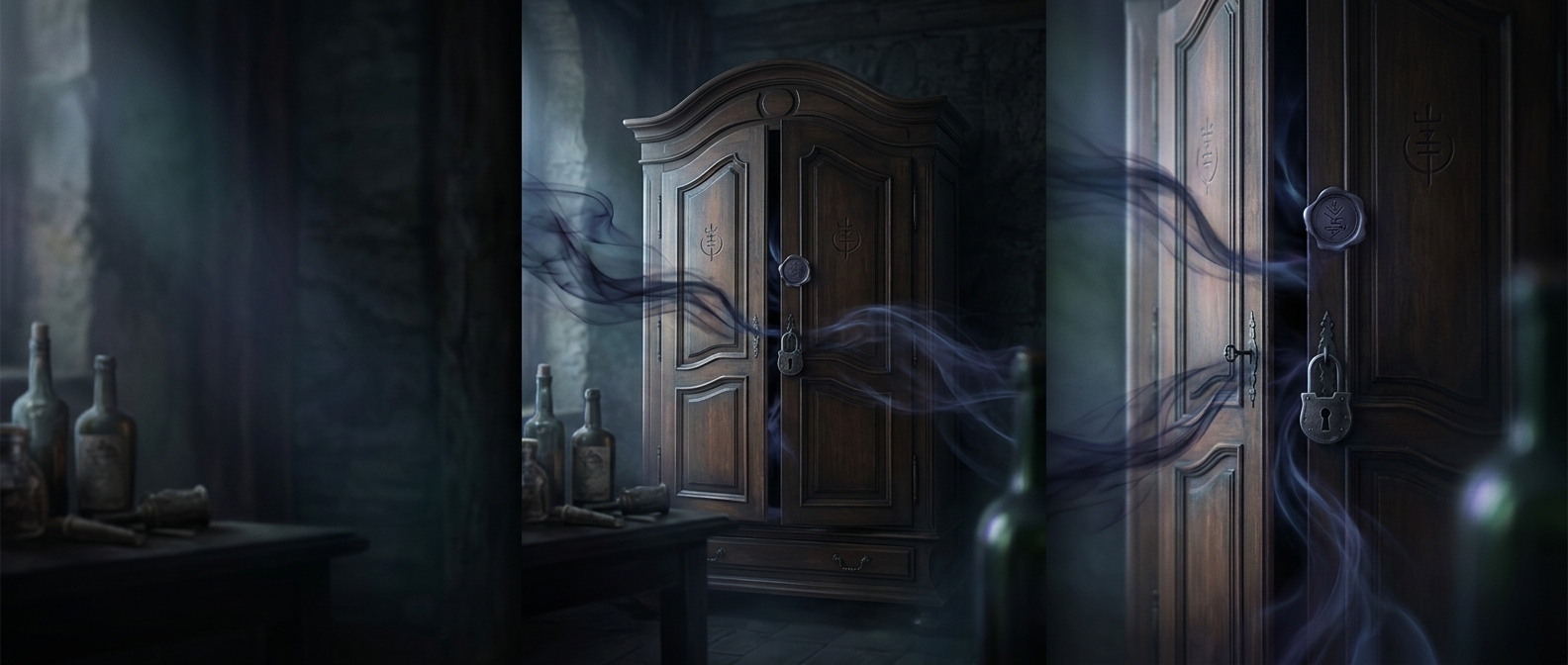
A wooden cabinet is ordinary enough to recognize and mysterious enough to imagine hiding something. In stories about haunted cabinets, the object becomes more than furniture: it is presented as a container that keeps an unseen presence confined. The claim gives an invisible threat a physical boundary—doors that can be shut, a piece of wood that can be displayed, and a clear reason not to open it.
That logic belongs to folklore and supernatural belief, not to a demonstrated way of imprisoning a spirit. The cabinet’s force comes from the story attached to it: who supposedly encountered the presence, what it is said to do, and why the object is thought to hold it. Without that narrative, it is just a cabinet; with it, every mark or creak can feel like part of the evidence.
How the Story Becomes a Collectible
Online listings turn that uneasy idea into a spectacle. A seller can offer not only a wooden object but also the promise of proximity to danger—something a buyer can own, show off, or test against their own nerves. The uncertainty is part of the appeal: the purchaser need not be certain the spirit is real to enjoy the suspense of treating the cabinet as if it might be.
That makes price and belief difficult to separate. A high asking price can reflect the object’s rarity or its notoriety, but it does not establish that anything supernatural is inside. What is being traded, above all, is a cabinet wrapped in a story—and the thrill of deciding how seriously to take it.