A delivery problem built into the first cars
In the late 19th century, selling a car far from its maker created an awkward last step: the new vehicle had to reach its buyer. Driving it there put miles and wear on a machine that was supposed to arrive as a new purchase. Sending a driver with each car also tied up a person and a vehicle for the entire trip.
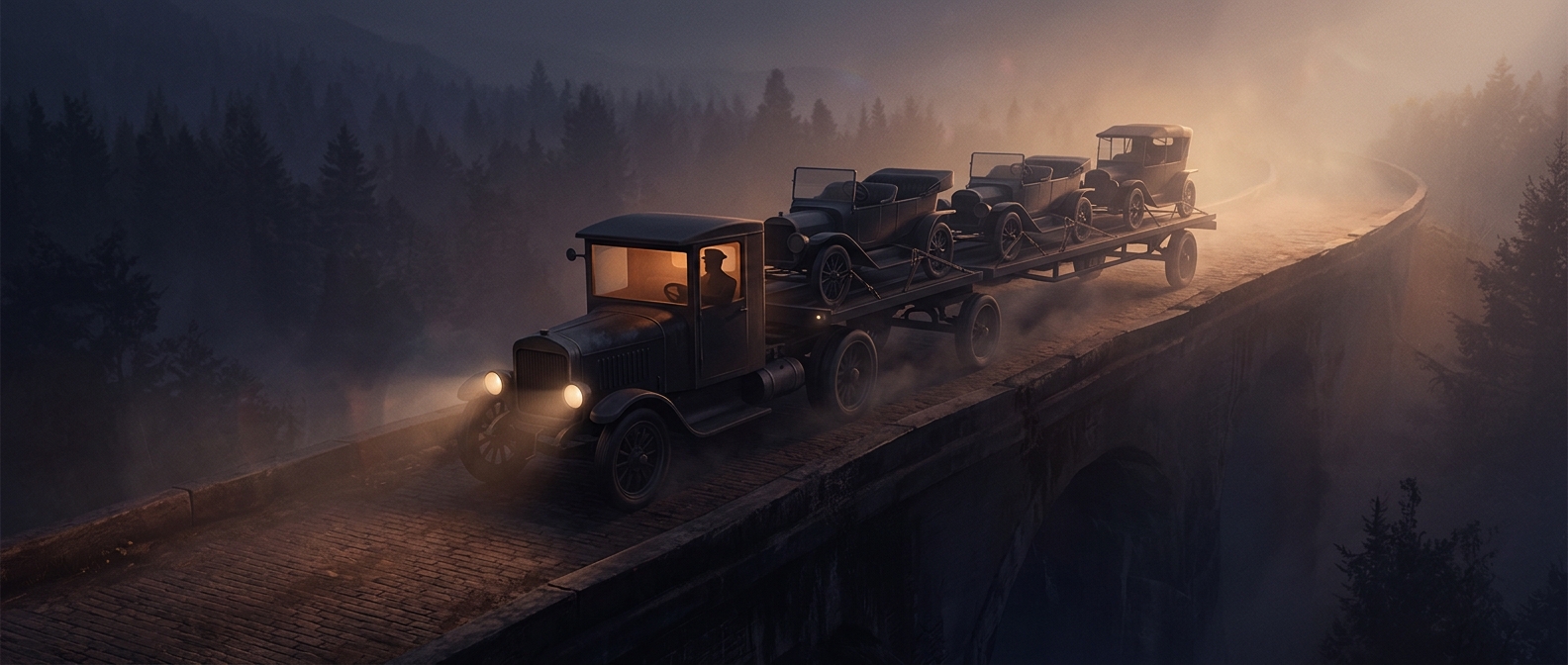
Alexander Winton’s solution was to move the car without using it as the means of transport. His powered tractor unit pulled a separate trailer carrying the automobile. The buyer’s car could remain cargo until delivery, while the hauling machine absorbed the road journey.
Why separate tractor and trailer mattered
A tractor-trailer divides the job between two vehicles: the powered unit supplies motion, and the trailer carries the load. That arrangement lets a carrier move a car without requiring the car itself to run—or even to have a driver for the trip. It also points toward a scalable way to deliver vehicles: the transporter, rather than each individual automobile, makes the long haul.
The early design was a practical response to a young industry’s distribution problem, not merely a novelty. As car makers sought customers beyond their immediate area, transporting finished vehicles became part of the business. Winton’s hauler made that task a dedicated operation, preserving the distinction between a car being delivered and a vehicle doing the delivering.
The consequence is easy to overlook today: a new car can arrive with its useful life still ahead of it, because another machine has already done the miles.