Why Silent Films Needed Intertitles
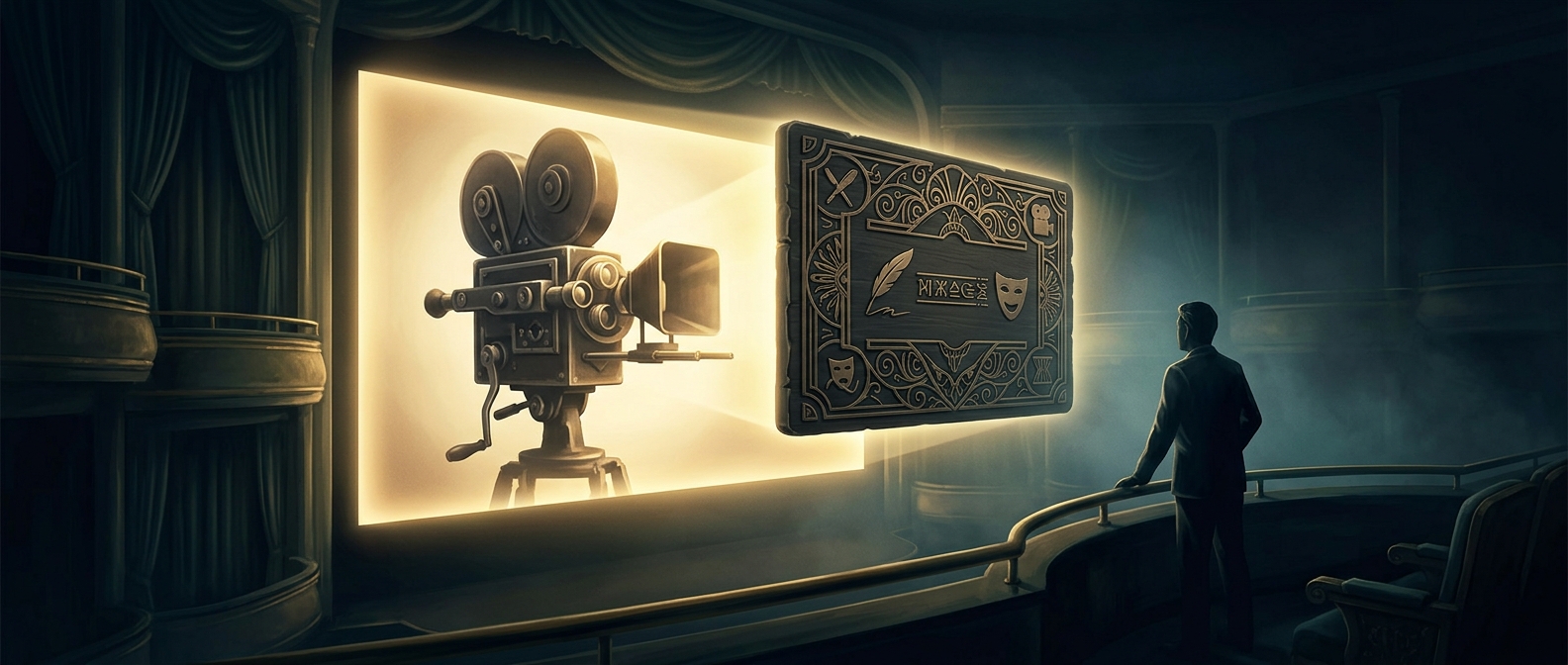
Silent films could show a character opening a door or fleeing a pursuer, but they could not record spoken dialogue as synchronized sound. To convey words the camera could not show—and clarify plot details that gestures alone might leave uncertain—filmmakers inserted printed cards between shots. These were commonly called intertitles, or simply titles.
A card might give a line of dialogue, identify a place or time, or explain a turn in the story. The word intertitle describes its position: the text appeared in the middle of the film, interrupting the sequence of moving images. It was not text laid over the picture, as modern subtitles usually are.
The Card Became Part of the Story’s Rhythm
An intertitle had to do more than carry information. Its length determined how long the audience would stop watching action and read. Too little text could make a scene confusing; too much could stall it. Filmmakers therefore had to balance clarity with pace, using images for what could be shown and cards for what needed to be stated.
That division also made the cards a visible part of a film’s style. A short exchange could create a quick beat between shots, while a longer explanation forced a more deliberate pause. Intertitles were practical tools, but they shaped the timing and dramatic flow of silent storytelling.
From Inserted Cards to Subtitles
With synchronized sound, dialogue could be heard rather than printed on a separate card. Text still had a role, especially when viewers needed a translation or help understanding speech; subtitles could present that text while the image continued. The change was more than a new label: it moved reading from a break between scenes into the scene itself.
That shift altered the viewer’s attention. In a silent film, the story literally stopped so its words could be read; in a subtitled film, the words and the action compete for the same moment.