A hillside billboard built to sell a neighborhood
The sign above Los Angeles began as an advertisement, not a civic monument. Its full name, Hollywoodland, pointed directly to the upscale real-estate development it promoted. The project was segregated: the promise of hillside homes was not intended to be open equally to everyone.
Putting the advertisement high on a hillside made it visible across the city, while illumination kept it legible after dark. The enormous letters turned a sales pitch into part of the landscape. For people looking up from Los Angeles, the development’s name became a repeated image even if they never visited the neighborhood.
When the advertisement outlasted its purpose
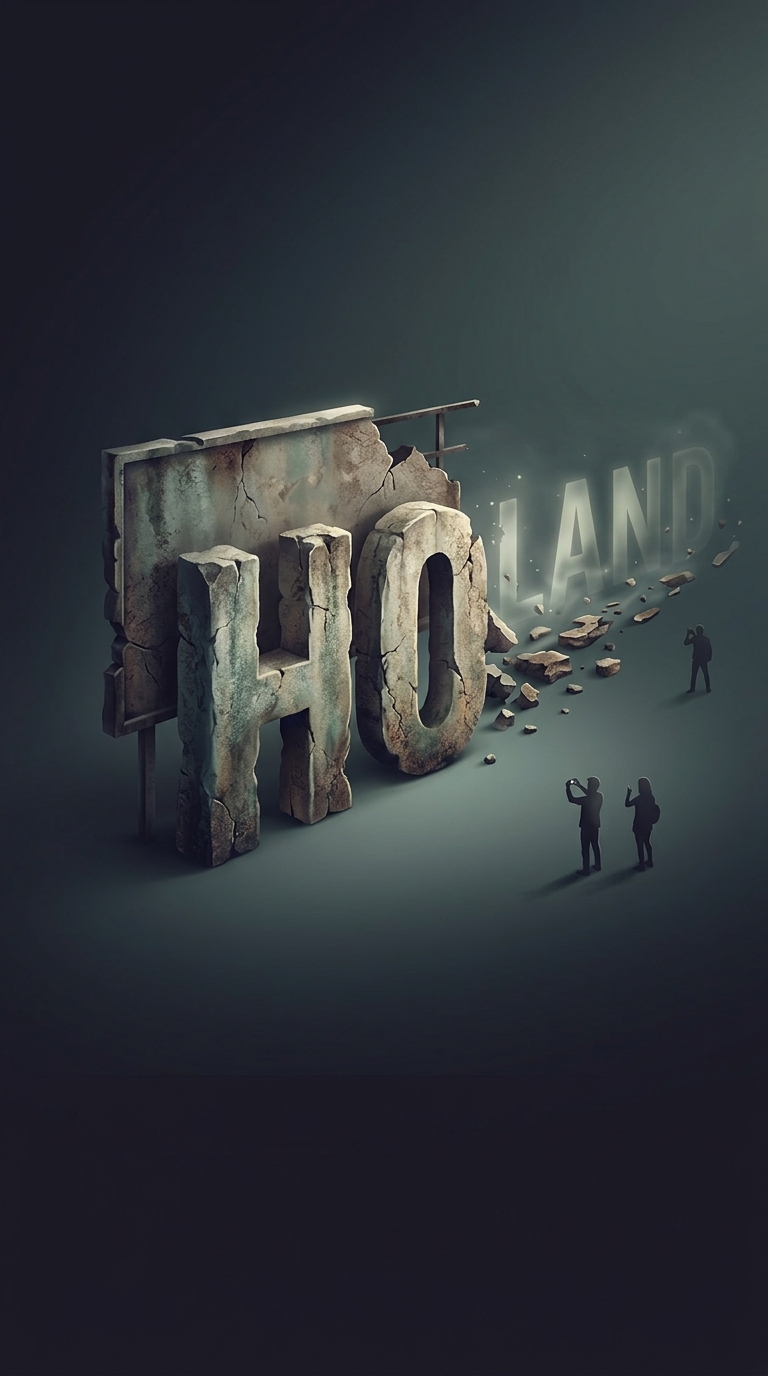
The sign was built in the 1920s, but its letters were exposed to years of weather and neglect. As the structure deteriorated, the final four letters were removed in the late 1940s. That left “Hollywood”—a name that no longer pointed to the development the original billboard was meant to sell.
The change was more than an edit to a word. It severed the sign’s visible identity from its real-estate pitch, allowing the remaining letters to take on a broader association with the surrounding area. A development advertisement became a lasting feature of the city’s image, while the missing letters preserved a clue to what it had first been built to promote.