The Statue Is in New York; the Harbor Has a Borderline Story
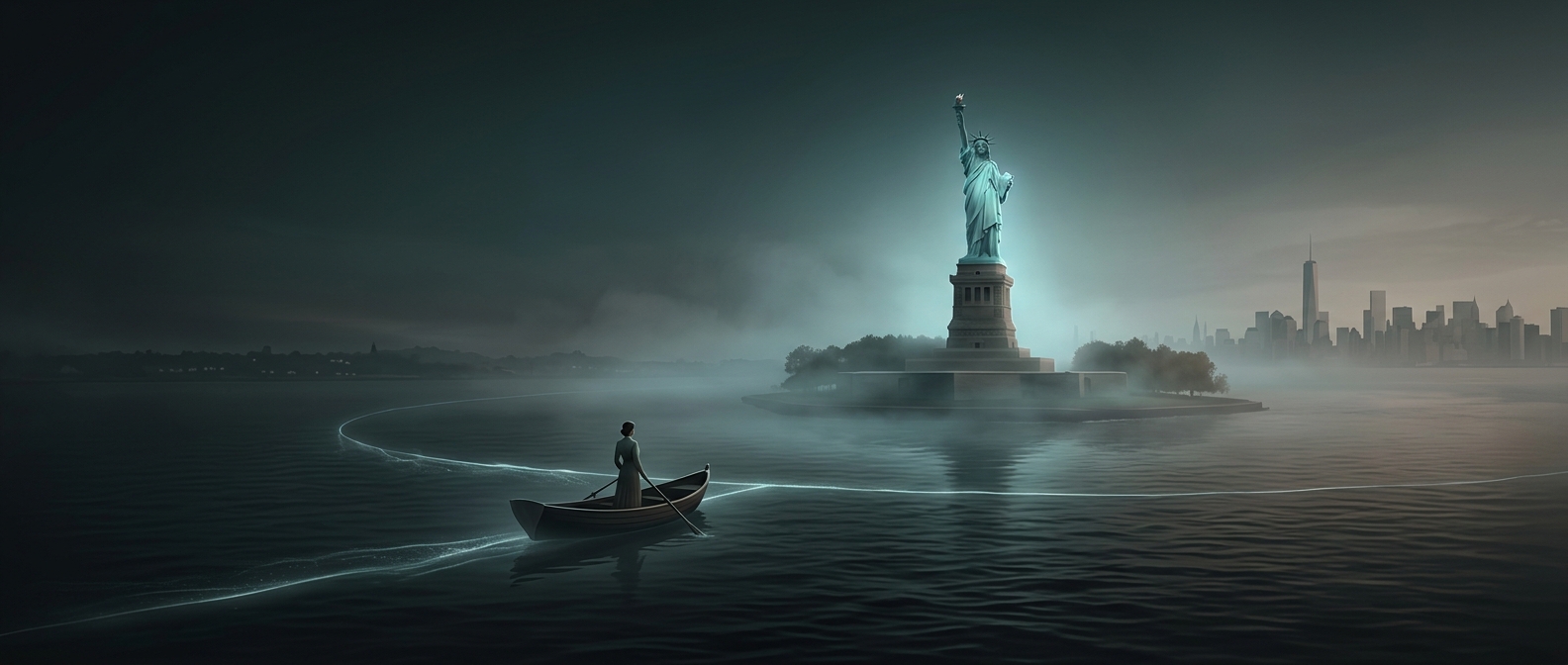
The Statue of Liberty stands on Liberty Island, which is part of New York. The geographic wrinkle is in the water around it: New York and New Jersey meet in the harbor, and their state boundary does not simply follow the shoreline or divide the bay into two obvious halves.
That makes “in New Jersey” an overstatement if it refers to the statue or the island. The more precise point is that New Jersey has a claim to waters in the surrounding harbor, while the landmark itself is on New York territory.
A State Line Shaped by the Harbor
The New York–New Jersey boundary reflects old agreements about control of the harbor and its islands. Rather than placing every island and nearby stretch of water neatly on the same side, those arrangements left a patchwork: an island can belong to one state even as waters nearby are associated with the other.
This distinction matters because a state boundary is not just a line on a tourist map. It can affect which state has authority over particular places and activities. But it does not move the Statue of Liberty out of New York: the island’s location and the surrounding water’s jurisdiction are separate questions.
Why the Confusion Persists
Visitors see the statue rising from the middle of a shared harbor, not from a city street with an obvious state line. New Jersey’s proximity—and its interest in the surrounding waters—helps explain the recurring claim. The memorable twist is not that the statue secretly stands in New Jersey, but that a New York landmark sits in a harbor whose boundaries are more complicated than its postcard view suggests.