A serpent imagined to move in two directions
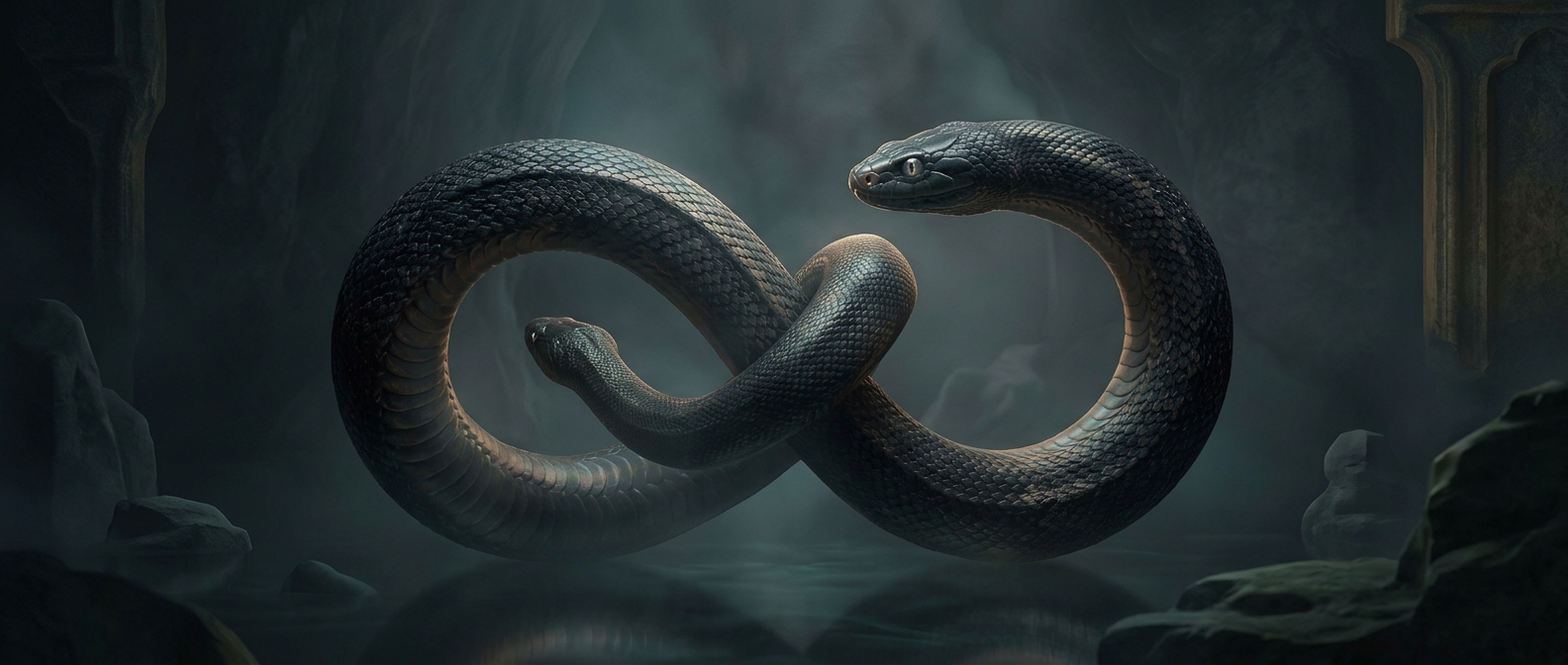
The amphisbaena belongs to the menagerie of creatures described in classical lore, not to zoology. Its name comes from Greek words meaning roughly “going both ways.” In accounts and later retellings, the defining feature is a head at either end of its body, allowing it to move forward or backward without turning around.
That design makes the creature more than an ordinary snake with an extra face. A snake’s head normally marks its direction of travel; the amphisbaena makes that direction uncertain. Whichever end leads, the other can seem ready to lead next.
From verbal puzzle to picture
The idea is easy to grasp in a sentence but awkward to draw. Artists have often made one head appear at the tail, so the body reads as a loop with a face at each end. Some versions resemble a serpent biting its own tail, though the essential feature is not a circle: it is the ability to advance either way.
The image turns a simple movement into a compact marvel. In a world of legendary beasts, the amphisbaena’s strangeness is also its practical trick: there is no wrong end to approach, and no need for the creature to turn.