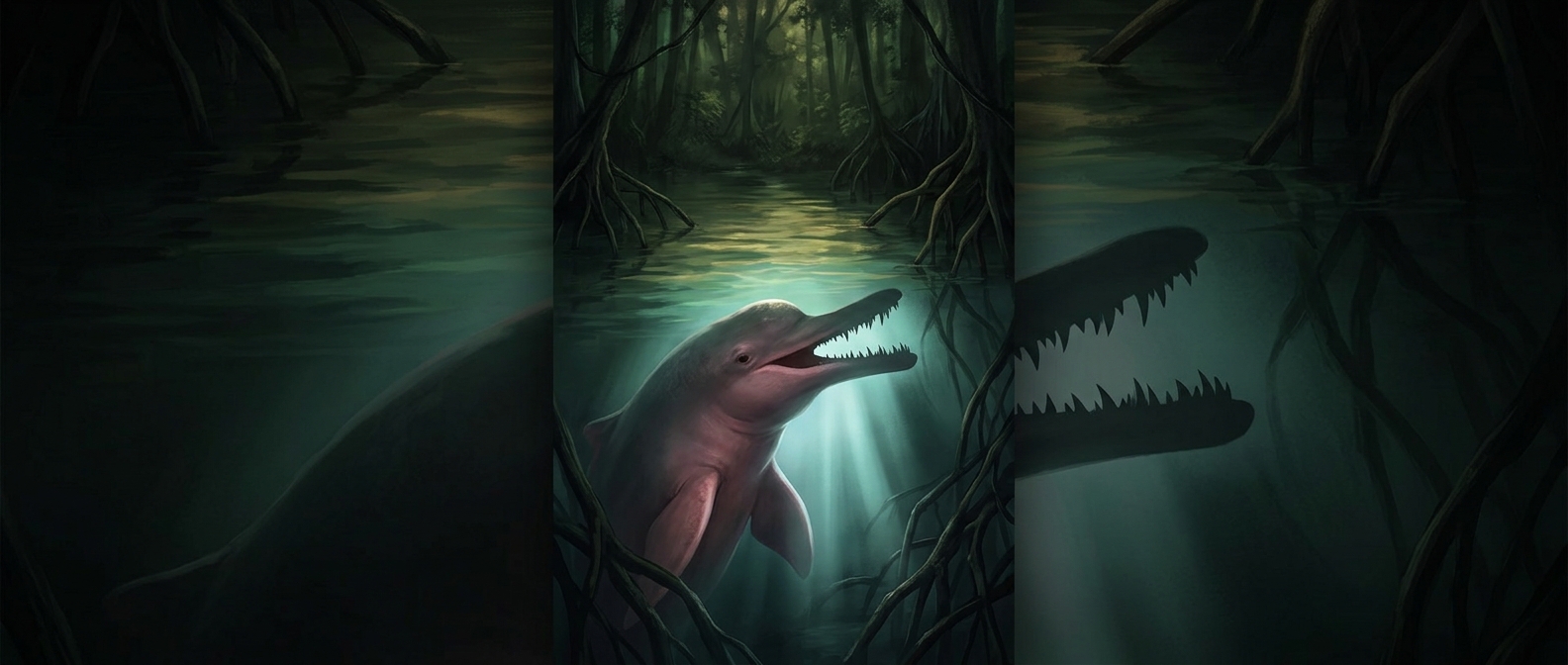
A Dolphin’s Teeth Built for More Than Gripping
The Amazon river dolphin, or boto, has teeth that vary along its jaws. The teeth near the front are pointed, while those farther back have broader, ridged surfaces. That contrast can make the mouth look jagged—and gives the animal more than one way to handle prey: pointed teeth help seize it, and the rear teeth can crush it.
This arrangement suits a river habitat where meals are not always the same size or kind. Botos eat fish and other aquatic prey, and a mouth equipped both to grip and to break down food is useful when prey must be handled quickly. The ridges are not decorative spikes; they are part of the working surface of the back teeth.
Finding Food Where Eyesight Falls Short
In the Amazon’s murky channels and flooded forests, visibility can be poor. Botos use echolocation—sending out clicks and interpreting the returning echoes—to detect objects and locate prey. Sound gives them information about what is nearby even when the water hides it from view.
Echolocation helps find a meal; teeth help deal with it once caught. Together, these traits show how the dolphin’s feeding strategy fits a complicated river environment: it can search by sound and handle prey with a mouth whose teeth do different jobs.