How a howdah stayed in place
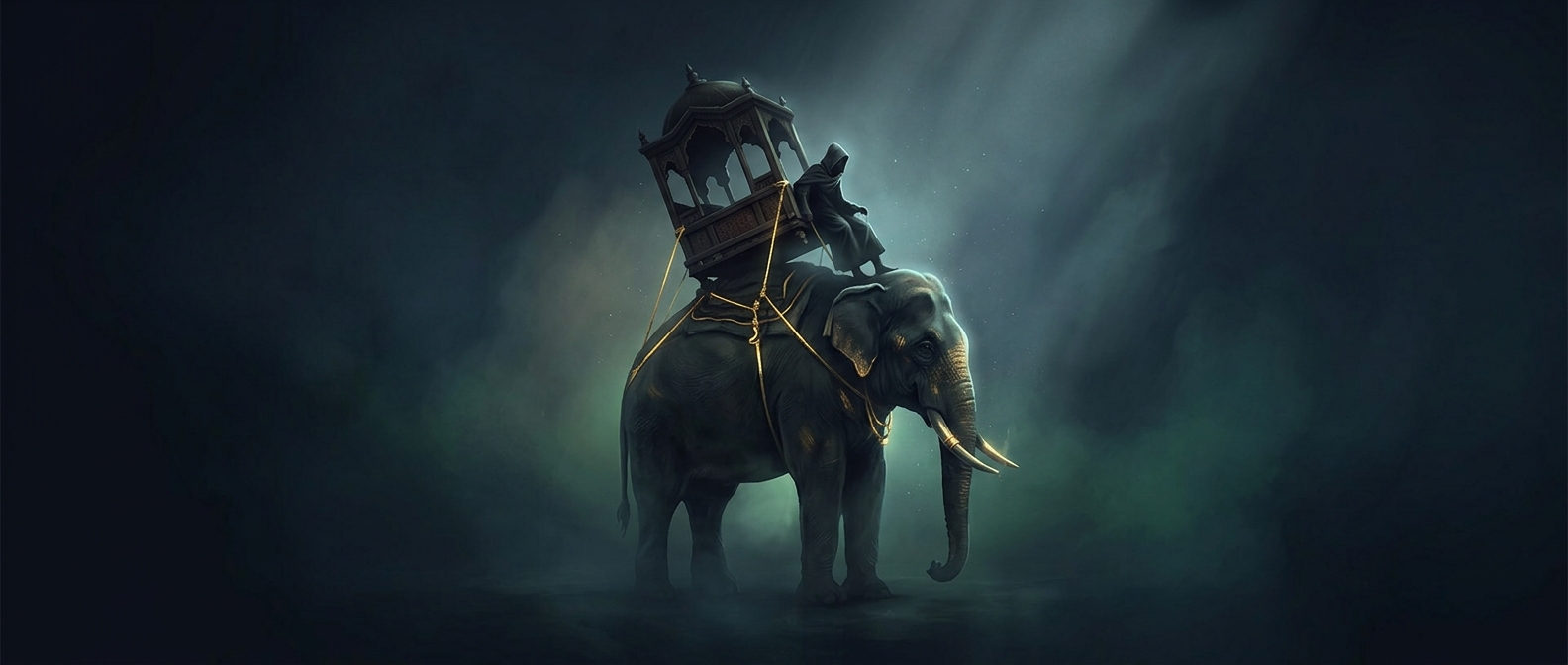
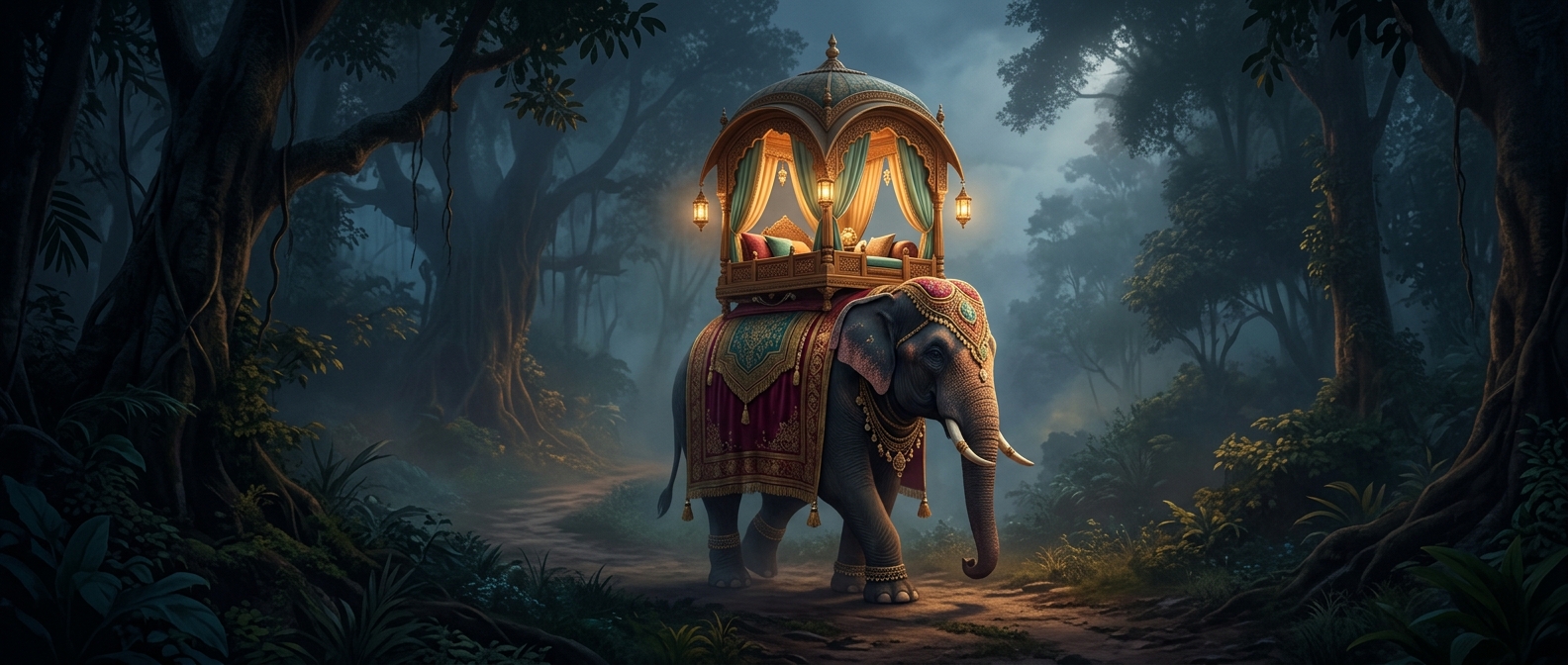
A howdah was more than a seat perched on an elephant. The wooden or metal structure rested on a padded support, with straps securing the assembly around the animal’s body. The support helped distribute pressure over a broader area than a narrow seat would, while the straps kept the load from shifting as the elephant walked. Designs varied: some were open platforms, others enclosed cabins, and their size and fittings depended on their purpose.
That arrangement solved one problem but created another. An elephant’s back rises and falls with each step, and its body can sway from side to side. A rigid cabin had to remain secure without making the load dangerously unbalanced. Riders also sat high above the ground, so weight placed unevenly—or a sudden shift—could affect stability. Getting on and off required care, too.
A vehicle shaped by its passenger
The elephant supplied the power, but it was also a living, moving foundation. Unlike a wheeled carriage, a howdah could not rely on suspension or a fixed chassis to smooth the ride. Its padding and attachment had to accommodate the animal’s motion, and the elephant had to bear the added weight over long periods. The design therefore linked transport engineering to the animal’s size, gait, and capacity.
Elevation brought practical advantages: riders could see over obstacles and remain above muddy or uneven ground. But the same height made the ride exposed and made every movement of the load more noticeable. The howdah’s unusual form was not simply a miniature house on an elephant; it was a compromise between carrying people securely and asking a powerful, mobile animal to serve as the vehicle beneath them.