How a heartbeat reached the nursing station
A heart monitor does not listen to the heart like a microphone. Small electrodes attached to a patient’s skin detect the changing electrical signals that coordinate each heartbeat. A monitor turns those signals into a moving trace, making the timing and rhythm visible.
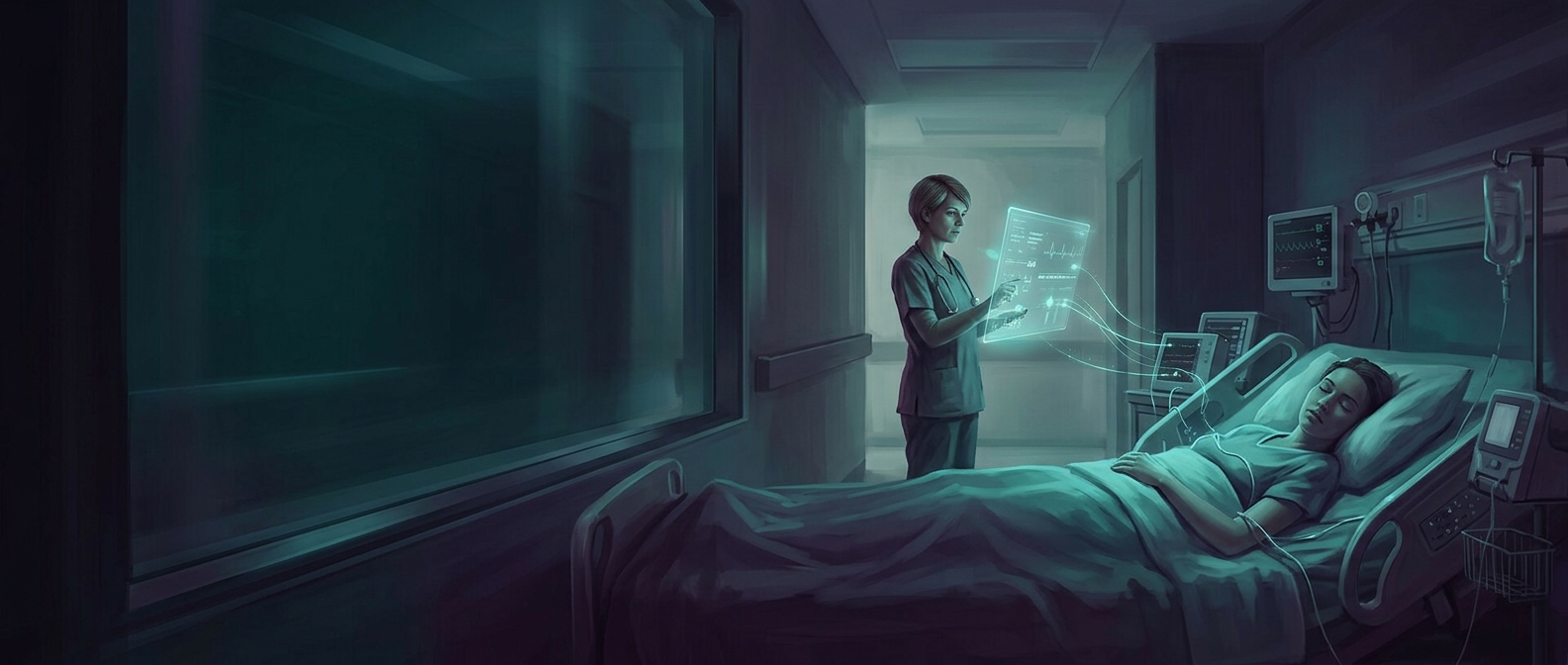
In early central-monitoring systems, cables carried that signal from an ICU bed to a display at the nursing station. The patient stayed connected to bedside equipment, but nurses could also watch the trace from elsewhere in the unit. That mattered when several patients needed observation at once: staff could scan multiple displays and notice a rhythm change without first stepping into every room.
Remote viewing, not remote care
The system extended nurses’ awareness; it did not replace their judgment or an in-person assessment. A changing trace could prompt a closer look, but staff still had to determine what was happening with the patient. Movement, loose electrodes, or other interruptions could also distort the signal, so a monitor’s display was information to interpret, not a diagnosis by itself.
The cables imposed a practical limit: monitoring depended on a physical connection between the patient’s equipment and the central station. Even so, the arrangement changed the geography of observation. A nurse could keep watch on a heartbeat from across the unit, while bedside care remained where it had to happen: with the patient.