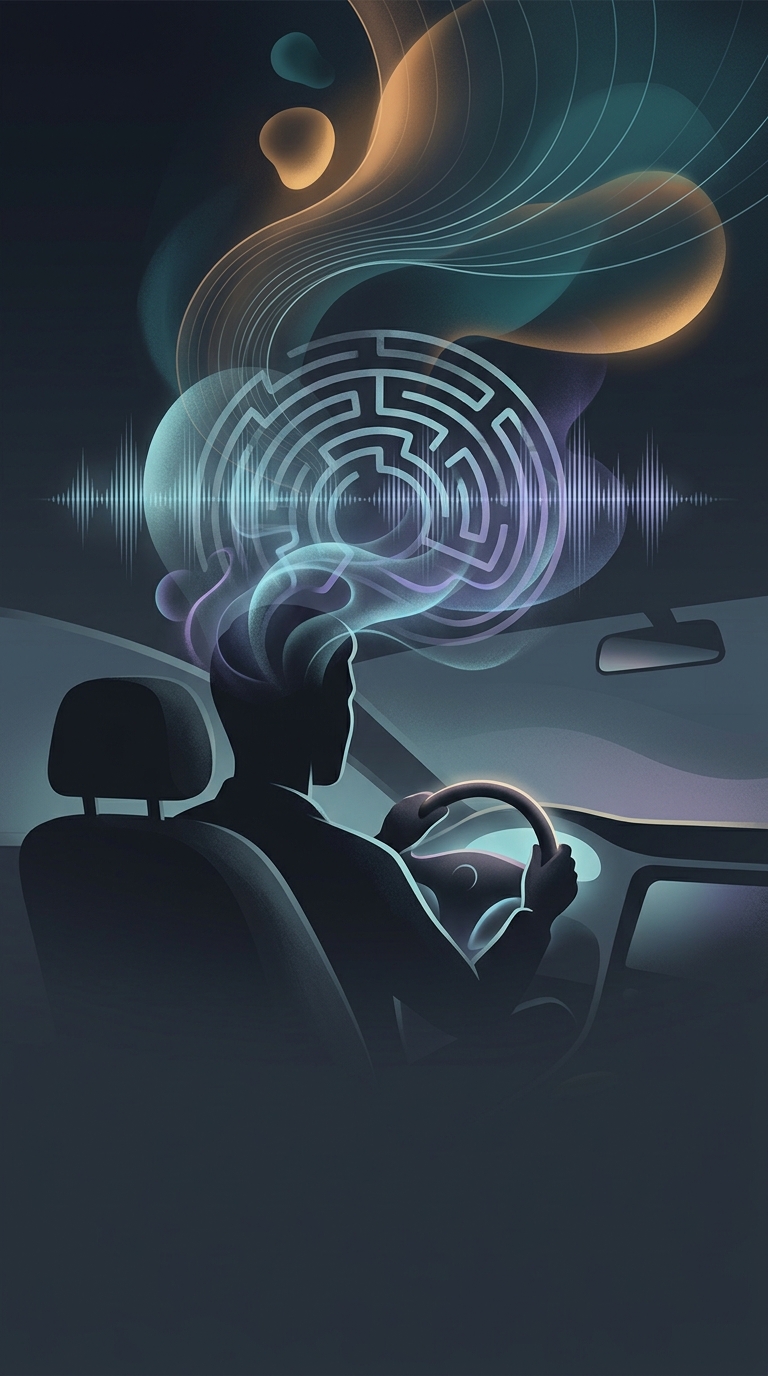
Why the radio gets quieter when the task gets harder
Finding an address or squeezing into a parking space asks you to do more than look ahead. You have to pick useful details out of a busy scene, remember what you are searching for, judge distances, and plan your next move. Those operations draw on limited attention and working memory—the short-term mental workspace used to hold and manipulate information.
A radio adds another stream to process. Music can compete for attention, but speech is especially demanding: even when you are not trying to follow the lyrics or a conversation, your brain is good at making sense of language. Turning the sound down reduces that competition, leaving more capacity for scanning street signs or tracking the car’s position relative to the curb.
A small adjustment, not sharper eyesight
Lowering the volume does not make your vision more accurate or change how well the car handles. It changes the conditions under which you are paying attention. The effect is most noticeable when the driving task is unfamiliar or precise; on an easy, familiar stretch, the same radio may barely register.
That is why the gesture feels almost automatic: as the visual task becomes more demanding, reducing an unnecessary input is a quick way to simplify the job. The radio is not the obstacle itself—the useful change is having one less thing competing for your attention while you decide where the curb is.