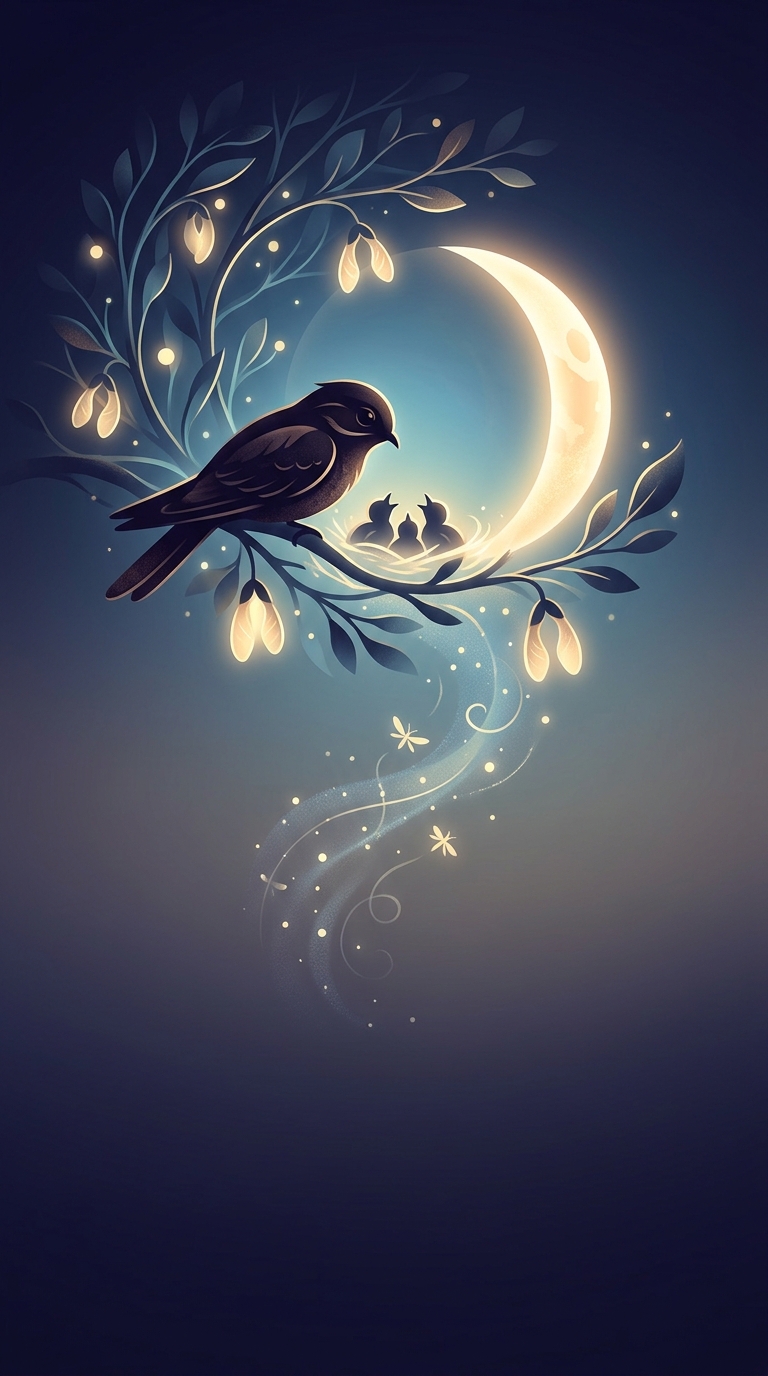
How moonlight can shape a nesting schedule
Whippoorwills hunt flying insects at night, so the amount of light available can affect how long adult birds can forage and how easily they can spot prey. A brighter moon does not guarantee a good feeding night, but it can extend the useful window for hunting—especially when the sky is clear.
Researchers have observed that whippoorwills time nesting so their eggs hatch around brighter phases of the lunar cycle. The result is that newly hatched chicks arrive when moonlight may help their parents find more food. This matters because growing chicks need frequent meals, and the adults must catch insects while also tending the nest.
A helpful cue, not a dependable food supply
The moon’s cycle is predictable, giving birds a natural way to anticipate changing nighttime light. But lunar timing cannot control the weather: thick clouds can hide the moon, and insect abundance can vary. Moonlight is therefore better understood as a potential advantage than as a guarantee that parents will catch enough prey.
The striking part is the coordination: the birds’ breeding schedule can put vulnerable chicks on the ground when nights are often brighter, giving their parents more opportunity to forage during a demanding stage of family life.