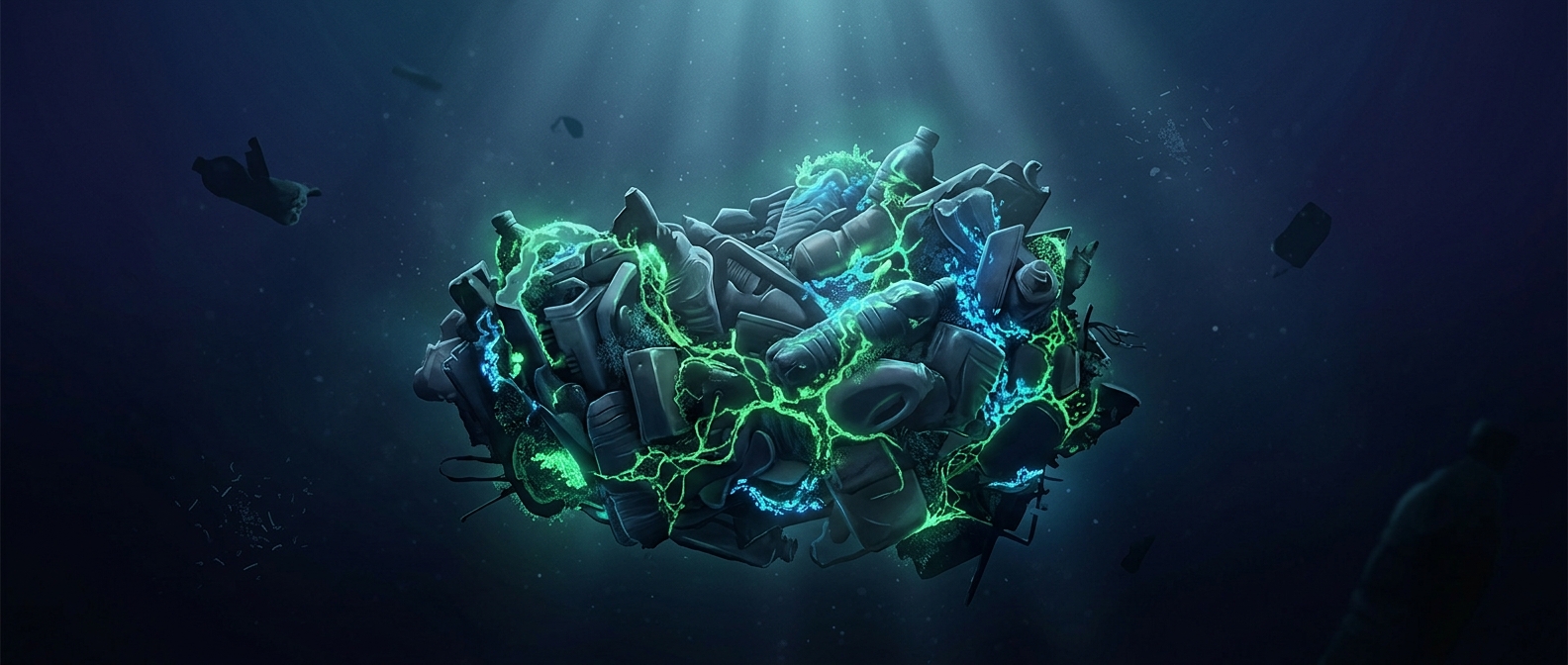
How plastic becomes a floating habitat
A plastic fragment at sea is not just a bare surface drifting through the water. Within hours or days, molecules and organic material can coat it, giving bacteria and other microscopic organisms a place to attach. As they grow and collect, they form a biofilm: a thin living layer that turns the fragment into a small, mobile habitat known as the Plastisphere.
That habitat differs from the surrounding water. A surface offers microbes something to cling to rather than being swept along, and the biofilm can gather organisms that might otherwise remain dispersed. Currents then carry this miniature community wherever the plastic travels.
Who lives aboard—and what that does not prove
The Plastisphere can include many kinds of microbes, among them Vibrio bacteria. The group contains species that can cause disease, but finding a Vibrio on plastic does not by itself show that it is a disease-causing species, that it can infect a person or animal, or that the plastic has delivered an infection. Those are separate steps, each requiring evidence.
Plastic could nevertheless matter as a means of transport: a fragment may carry attached organisms beyond the place where they first settled. Whether that changes disease risk depends on which microbes are present, whether they survive the journey, and what happens when they reach a new environment or host. The key distinction is between a potential ride for microbes and a demonstrated route of infection. The plastic’s unusual ecosystem is real; its health consequences depend on what the passengers can actually do.