A failed exam, a fever, and a new religious movement
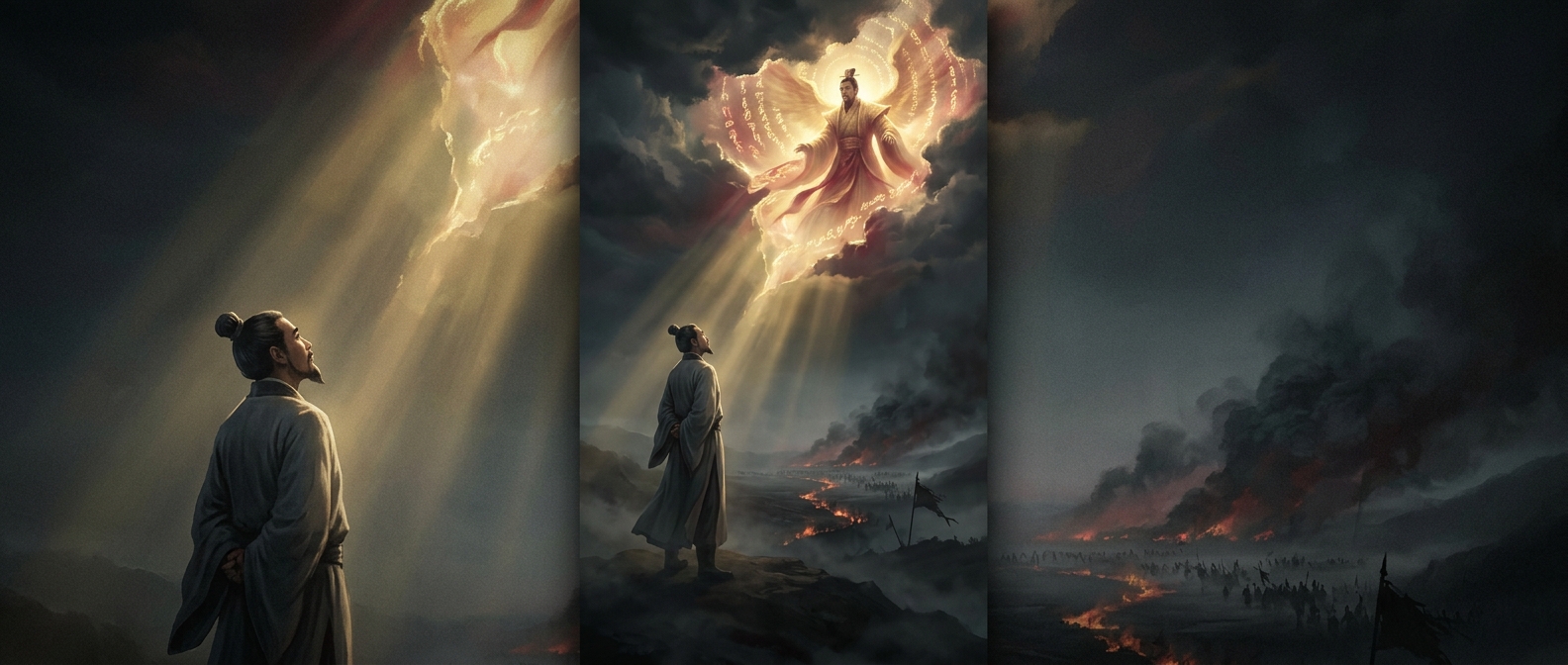
Hong Xiuquan’s visions came after repeated failure in China’s civil-service examinations, the route by which ambitious men could gain status and government work. In 1837, after another unsuccessful attempt, he suffered a serious illness and later described vivid dreams from that period. He did not immediately build a movement around them. Years afterward, while reading Christian tracts, he interpreted the visions as encounters with God and concluded that he had been sent to destroy demons and correct religious error.
Hong’s interpretation was strikingly specific: he presented himself as the younger brother of Jesus. His message borrowed Christian language but differed sharply from Christian teaching as missionaries understood it. It also spoke to people facing poverty, insecurity, and the authority of the Qing dynasty, the ruling imperial government.
From religious following to revolt
Hong and his followers formed the God Worshipping Society in southern China. As the group grew, its members clashed with local authorities and rival communities. These tensions turned a religious movement into an armed uprising. In 1851, the rebels proclaimed the Taiping Heavenly Kingdom, with Hong as its ruler; two years later they captured Nanjing and made it their capital.
The movement’s appeal was not only spiritual. Taiping leaders promised a transformed social order, including changes to landholding and family practices. Their program attracted supporters, but imposing it through military rule also created conflict and resistance. The Qing government, meanwhile, fought to retake territory, drawing regional armies and local leaders into a prolonged struggle.
Why the dream mattered—and why it was not enough
Hong’s visions gave the rebellion a sacred story: fighting the dynasty could be framed as carrying out a divine mission. That conviction helped bind followers together and gave a political revolt a clear, uncompromising purpose. But visions alone did not produce the war. Social strain, the movement’s growth, clashes with authorities, and the Qing response all helped turn belief into a vast civil conflict.
The Taiping Rebellion lasted until 1864. Its fighting, famine, displacement, and disease killed millions, though estimates vary. Hong’s private interpretation of a dream became consequential when an organized movement and a weakened, contested state gave it the means to challenge an empire.