Heat turns blood proteins into structure
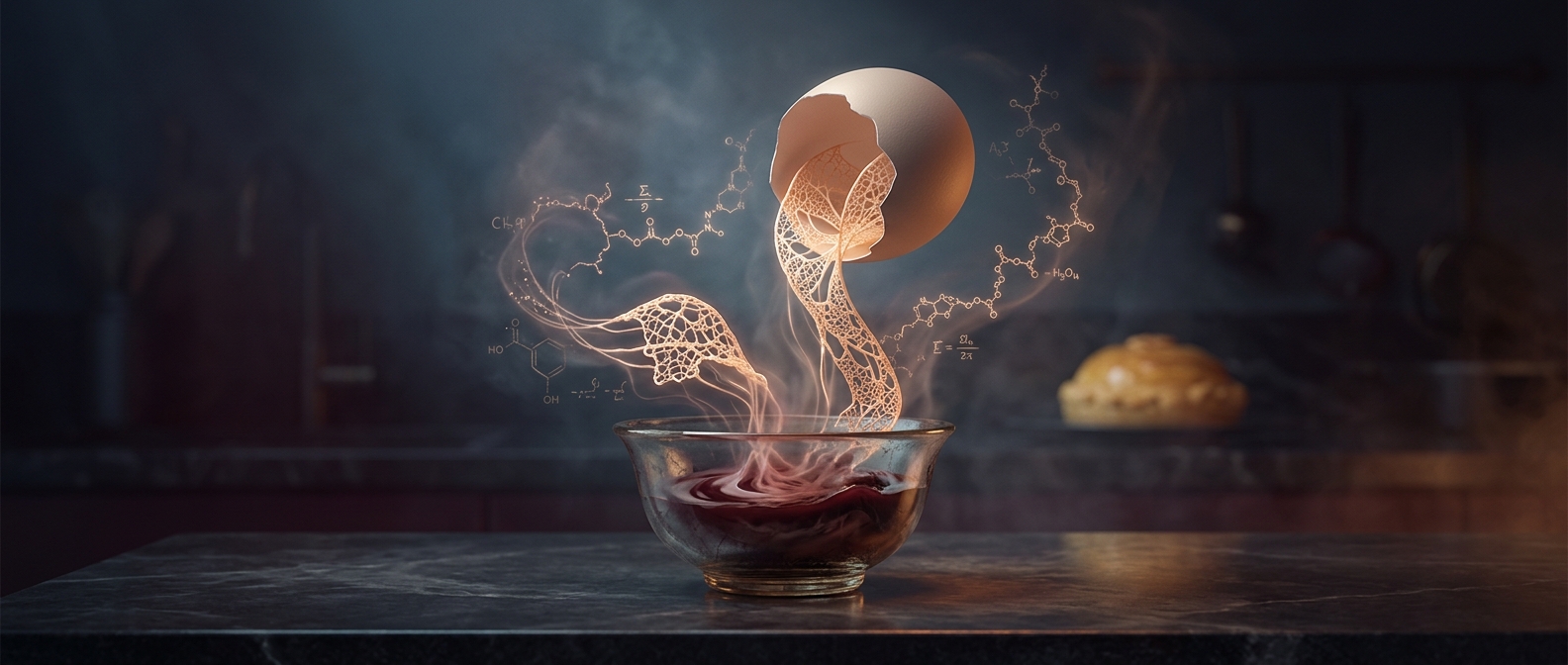
An egg does more than add moisture to a cake. Its proteins help trap air during mixing, then change shape and link together as the batter heats. That network firms up around the bubbles, helping the cake hold its rise instead of collapsing.
Blood proteins can undergo a similar change. When heated, they unfold and join into a solidifying network—a process called coagulation. In a batter, that can help bind ingredients and set the crumb, giving blood some of the structural role eggs play.
Similar chemistry, different ingredient
The resemblance is not a perfect swap. An egg brings several components with distinct jobs: egg-white proteins help stabilize foam, while the yolk’s fats and emulsifying substances help water and oil mix. Blood has a different mixture of proteins and lacks that same balance. It may help a batter set, but it does not automatically reproduce every effect of an egg.
Whole blood also contains hemoglobin, the iron-rich protein in red blood cells that carries oxygen. That changes the result beyond texture: it can darken baked goods and contribute a metallic taste. A protein can perform the right structural job while still changing the food’s color and flavor.
Why the substitution stays unusual
The baking chemistry explains why blood has been tested as an egg substitute, not why it would suit every recipe. A cake’s success depends on more than whether its proteins set; flavor, color, moisture, and the way air is held in the batter matter too. The practical lesson is that ingredient function and ingredient identity are not the same thing: blood may help a cake hold together, yet still produce a very different cake.