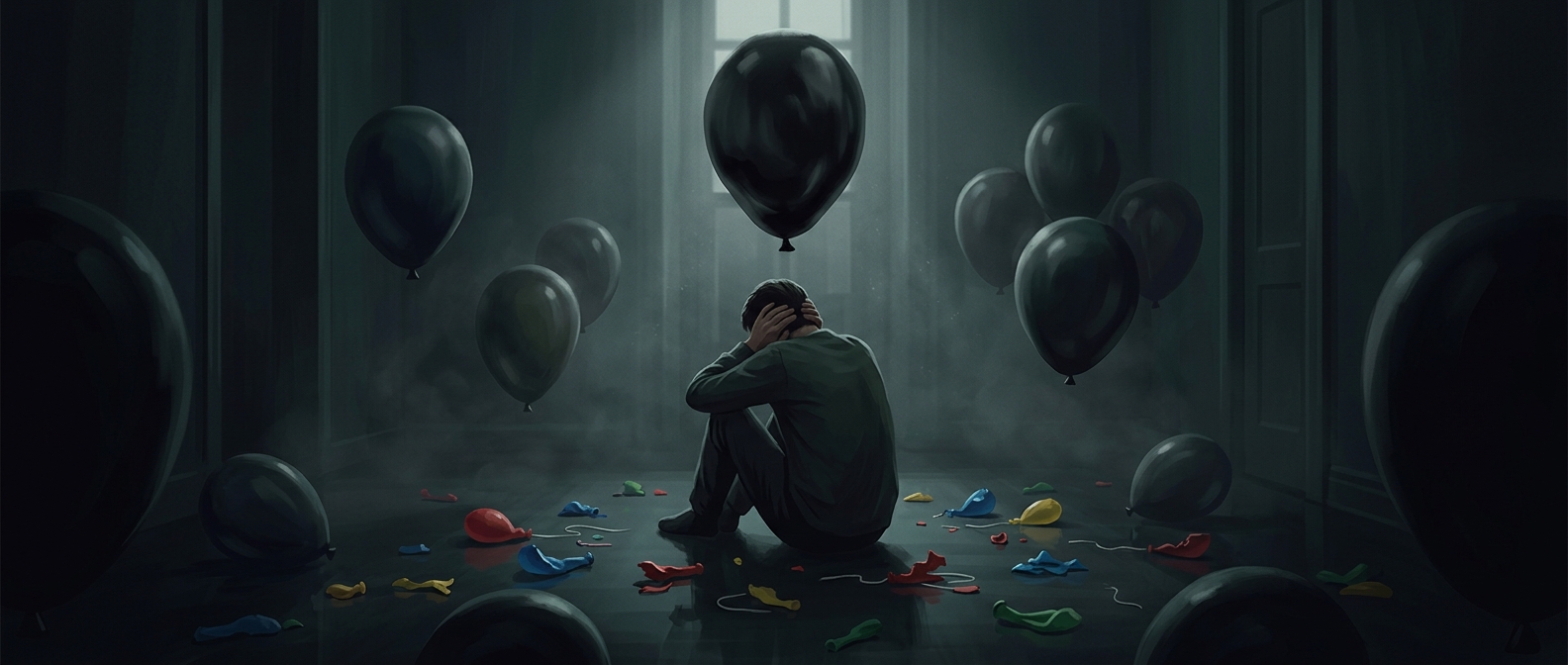
Why a sudden pop can change the mood
A balloon bursting can set off the startle response: the body’s rapid, automatic reaction to an unexpected sound. Muscles tense, attention snaps toward the noise, and the nervous system briefly prepares for action. That reaction happens before a person has time to decide whether anything is actually wrong.
The body’s alarm is useful when a sound signals danger, but it is imprecise. A sharp crack can trigger the same first jolt whether it comes from a real threat or a harmless party decoration. For someone already anxious, startled, or sensitive to loud sounds, it may take longer to settle.
From alarm to social tension
After the noise, people try to work out what caused it and whether it could happen again. If the source is unclear—or balloons keep popping—the room may feel less predictable. Attention shifts from conversation to watching for the next bang, and ordinary movements can start to seem more abrupt or suspicious.
That change is partly social. People notice one another’s flinches, irritation, or nervous laughter, then use those reactions to judge the room. The sound does not make anyone hostile by itself; it can put people on alert, making the setting feel more threatening than it did moments earlier. A small, unexpected noise can therefore affect a gathering not just through its volume, but through the uncertainty it leaves behind.