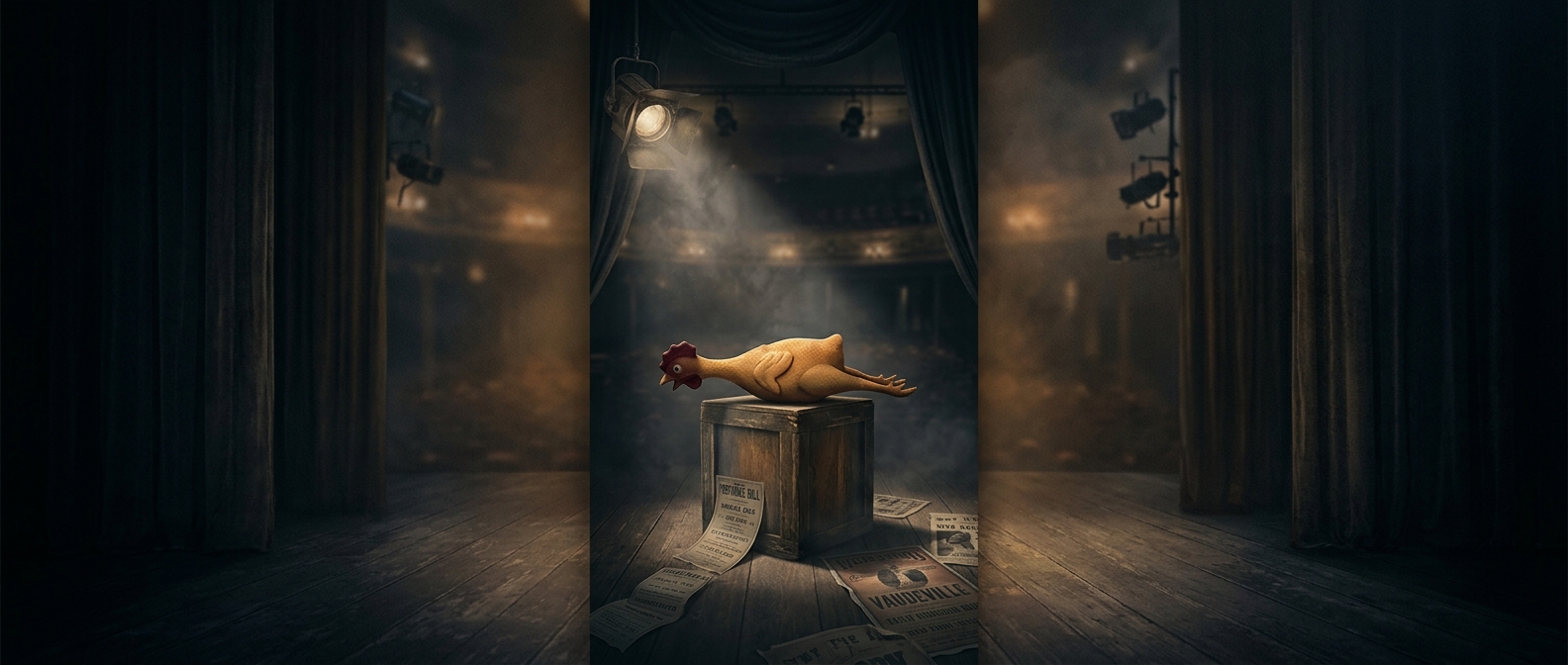
Why the Rubber Chicken Replaced a Messier Gag
A slapstick prop has to work on cue. An inflated pig bladder could make a comic spectacle when hit or waved around, but it was an awkward material for a traveling performer: it was organic, hard to keep clean, and less dependable from one performance to the next. A manufactured rubber prop offered a more practical version of the same visual joke.
The chicken shape did much of the comic work. It turned an ordinary gesture—a swing, a squeeze, a mock blow—into an image that was instantly silly. Rubber also let performers reuse the prop without relying on an animal bladder, while its flexibility could produce an exaggerated wobble or squeak. In vaudeville, where performers needed portable gags that could land quickly before a live audience, those qualities made the chicken a useful stage tool.
A Prop Built for Repeatable Comedy
The change was not just from one material to another; it made the gag more controllable. A performer could bring the same prop from show to show, time its movement, and use it as a visual punch line without the cleanup associated with the older version. The rubber chicken became a durable comic shorthand: its absurd shape signals that the action is meant to be ridiculous before anyone says a word.