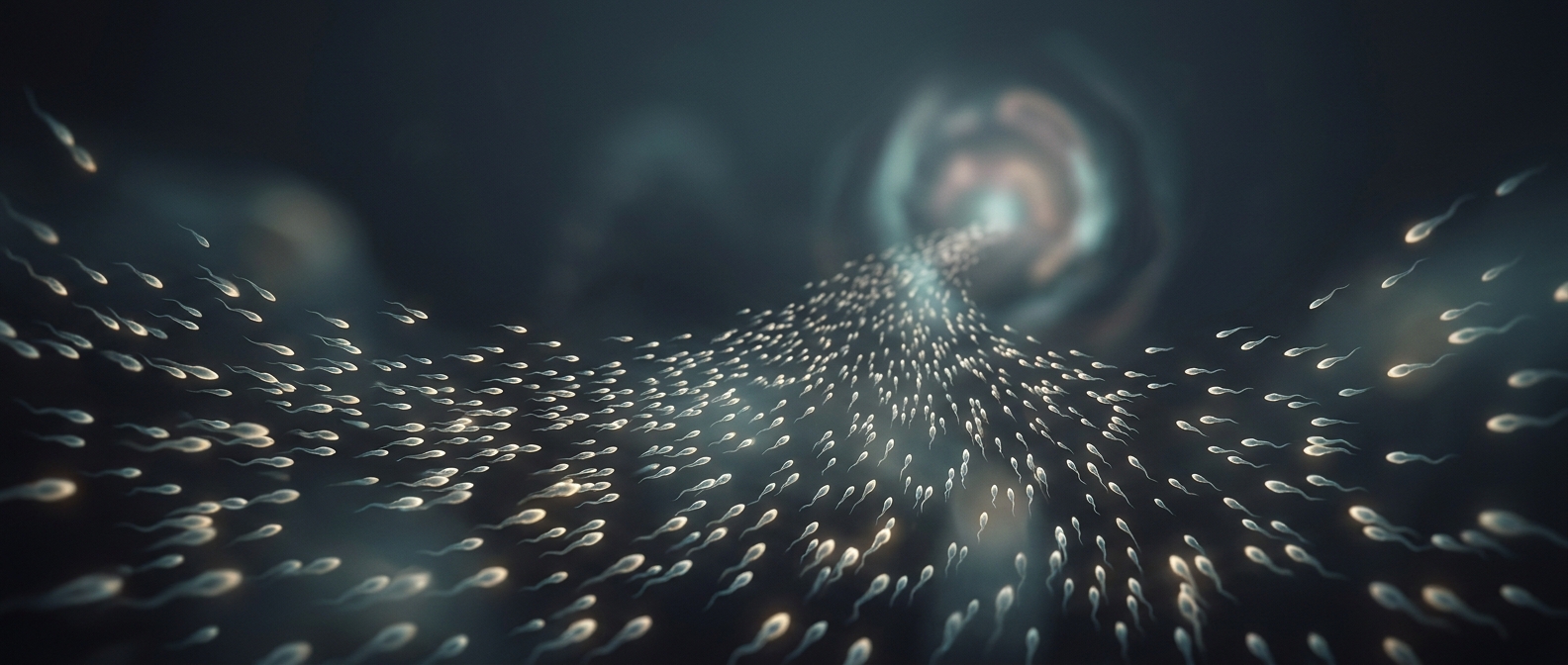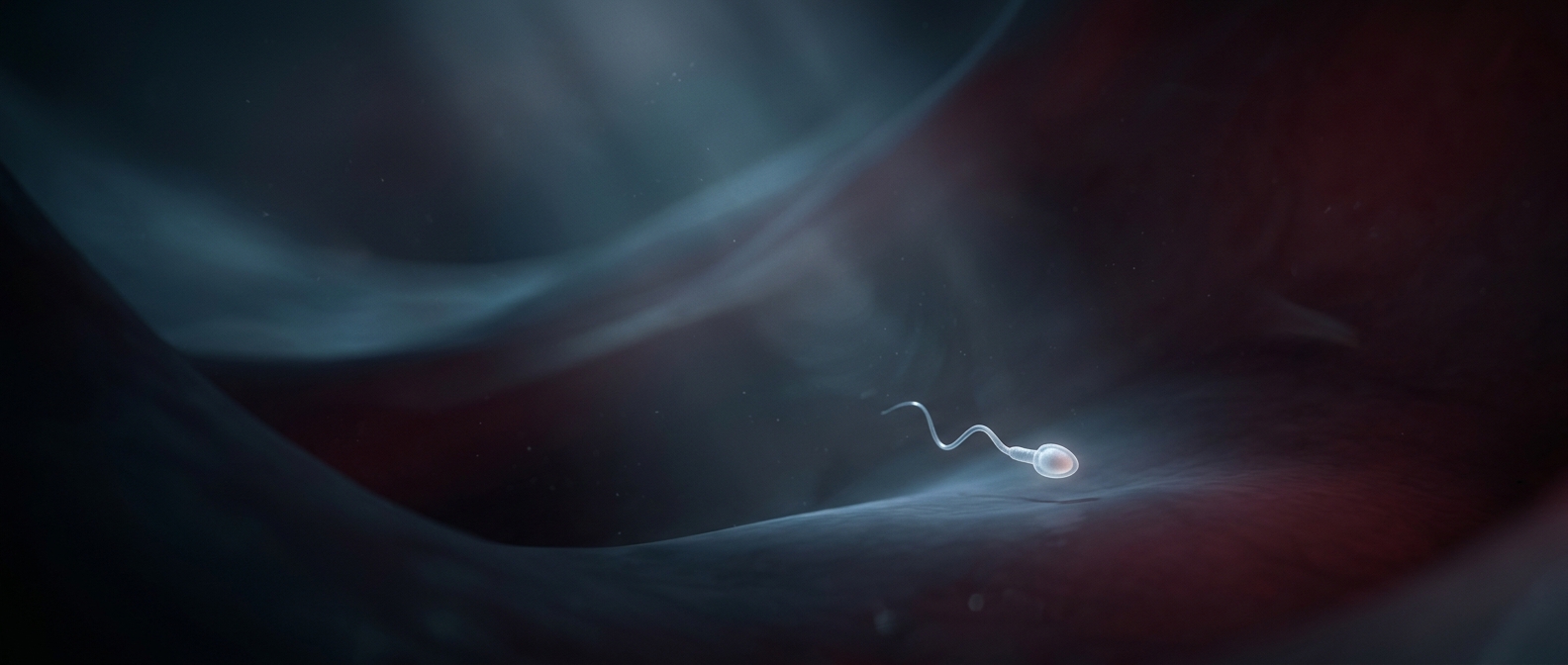
A sperm’s route is built from repeated strokes
A sperm does not point its head toward an egg and swim in a straight line. Its tail bends from side to side, pushing it forward while also making it wobble and turn. In fluid, tiny changes in those strokes can send it along a looping or zigzag path. The result is less like steering and more like moving forward while continually adjusting direction.
That erratic motion is not necessarily wasted effort. A sperm can keep making progress even when its path is indirect, and a large number of sperm making the journey increases the chance that some will get far enough to encounter the egg.
The reproductive tract shapes the journey
The route is not an open, still pool. Sperm travel through the cervix and uterus toward the fallopian tube, where an egg may be present. Fluids, narrow passages and the tract’s own movements affect which sperm can move onward. These conditions act as filters: many sperm do not complete the journey, while those with stronger or better-suited movement are more likely to continue.
Near the egg, chemical and temperature differences may help some sperm adjust their movement. These are local cues, not a long-range homing system: they can influence sperm already in the right vicinity, but they do not turn the entire trip into a direct beeline.
Why numbers and filtering both matter
The journey therefore combines many attempts with selection along the way. Most sperm never reach the egg; the few that do have navigated a changing environment through their own motion and the conditions of the tract. Their winding paths are part of a difficult search, not evidence that each sperm is independently following a precise map.