How a living surface gathers metal
Desert varnish forms where exposed rock meets tiny amounts of water, airborne dust, and microbial life. The microbes do not produce a coat of pigment like a painter mixing paint. Instead, they help create conditions in which manganese can collect and become concentrated at the rock’s surface. Manganese compounds darken the coating; iron compounds can contribute reddish tones.
The process depends on small, intermittent inputs. Dust supplies minerals, while brief wet periods let dissolved elements move across the stone and take part in chemical reactions. Microbes living on the surface can influence those reactions, helping metal compounds accumulate in a thin mineral layer. The coating builds so slowly that it records many episodes of exposure rather than one dramatic event.
A natural layer over a pale canvas
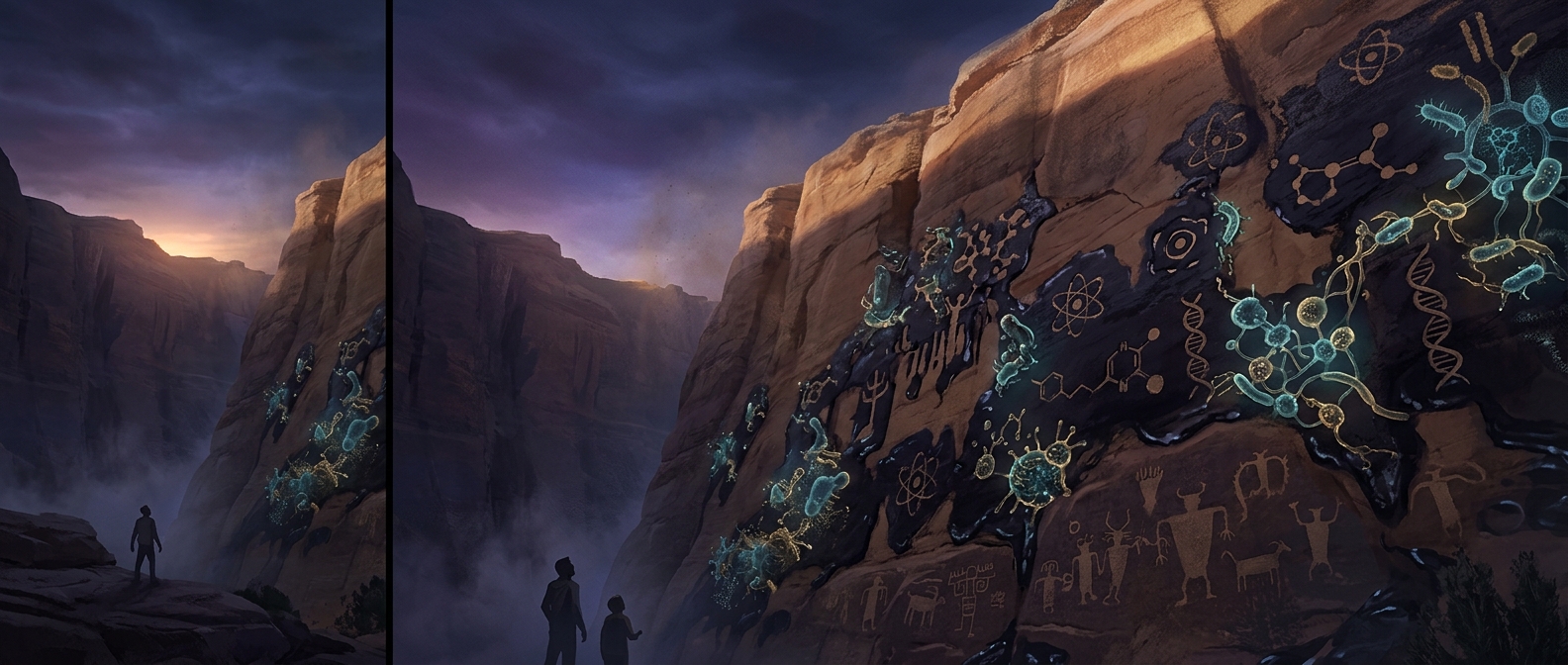
Varnish is only a surface skin, not a color change running through the rock. Scratch or carve through it and the lighter stone underneath appears, creating a sharp contrast between the dark exterior and the original rock. That contrast is why marks cut into varnished stone can remain visible for so long: the surrounding coating and the exposed line are different materials.
The same slow growth that makes the varnish striking also makes it fragile. A fresh scratch removes a layer that took a long time to form, so the bright mark is not simply a temporary change in lighting—it is a cut through a naturally assembled mineral record.