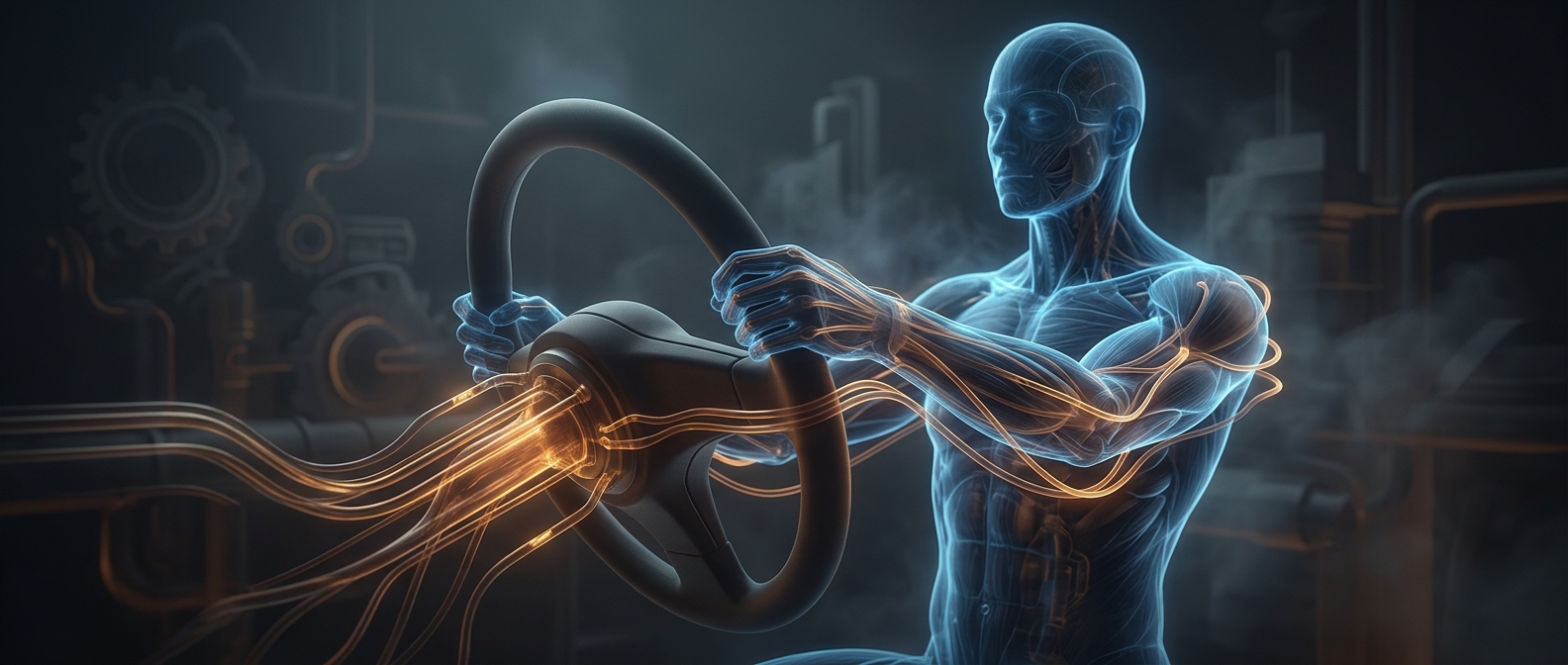
How hydraulic steering turns a small effort into a large one
The steering wheel does not directly muscle the tires around. It moves a steering shaft connected to a control valve. As the driver turns, resistance from the road creates a slight relative twist in the shaft, shifting the valve and opening a route for fluid on one side of a piston in the steering rack. The piston then pushes the rack, which pivots the wheels.
The key is that the driver still chooses the direction. The valve responds to the driver’s input, while the fluid supplies much of the force needed to move the steering mechanism—especially when the car is creeping or parked, when tire friction makes turning hardest.
Why the assistance changes with the turn
A hydraulic system does not simply push equally in every situation. The valve directs pressure according to the steering input and resistance. Once the wheel stops turning, the valve largely stops sending assist in that direction. That connection helps preserve road feel: the driver can still sense some of the forces reaching the tires instead of having the steering feel completely detached.
After pushing the piston, the fluid flows back through the system to a reservoir, ready to be pressurized again. In many cars, the pump is driven by the engine, so it can draw power even when the driver is traveling straight. That is one reason manufacturers have increasingly used electric assistance, which can supply power only when needed.
If the hydraulic pump fails, the mechanical link between the steering wheel and wheels remains, but the assistance is lost. The car may still steer, yet turning—particularly at low speed—can suddenly require much more effort.