A cutaway turns a hidden failure into something visible
A semiautomatic pistol depends on a sequence of moving parts. Pulling the slide—the upper portion of the handgun—back and letting it return normally loads a cartridge into the chamber, where it can be fired. If that step has not happened, pulling the trigger cannot produce a shot.
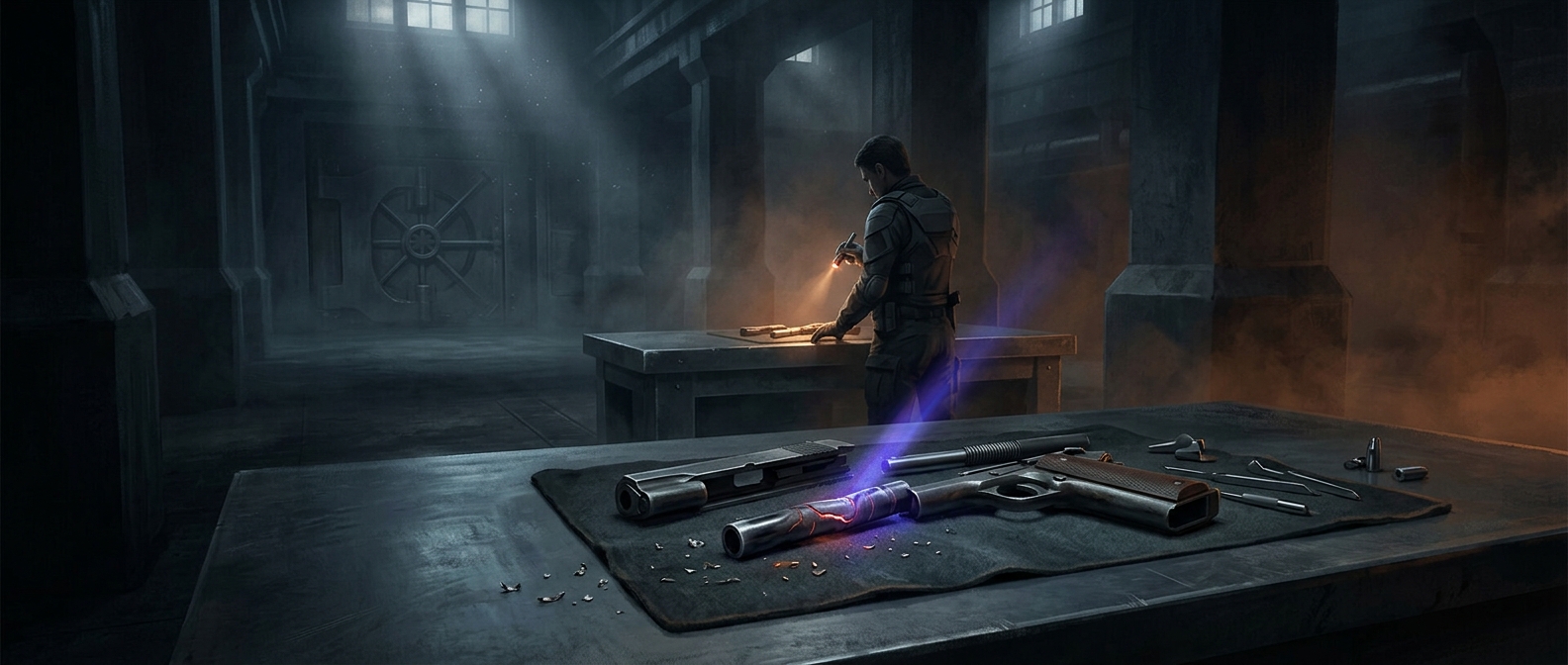
The difficulty for trainees is that much of this sequence happens inside an enclosed metal frame. By cutting openings into the frame and slide of the handgun used in the 1975 attempt, the Secret Service made its internal workings easier to see. The weapon could serve as a physical teaching aid, not just an object in a case.
From an incident to a training lesson
A visible cutaway helps turn an abstract explanation into a mechanical one: trainees can connect a gun’s external controls to the parts that move inside it. That matters in forensic work, where investigators must understand how a firearm was operated and what its condition can—and cannot—tell them about an incident.
The modification also changed the gun’s role. Instead of being treated only as evidence of a failed attack, it became a tool for explaining how a small missed step can interrupt a weapon’s operation. Its most telling feature is the opening itself: the mechanism that was hidden from view became the lesson.