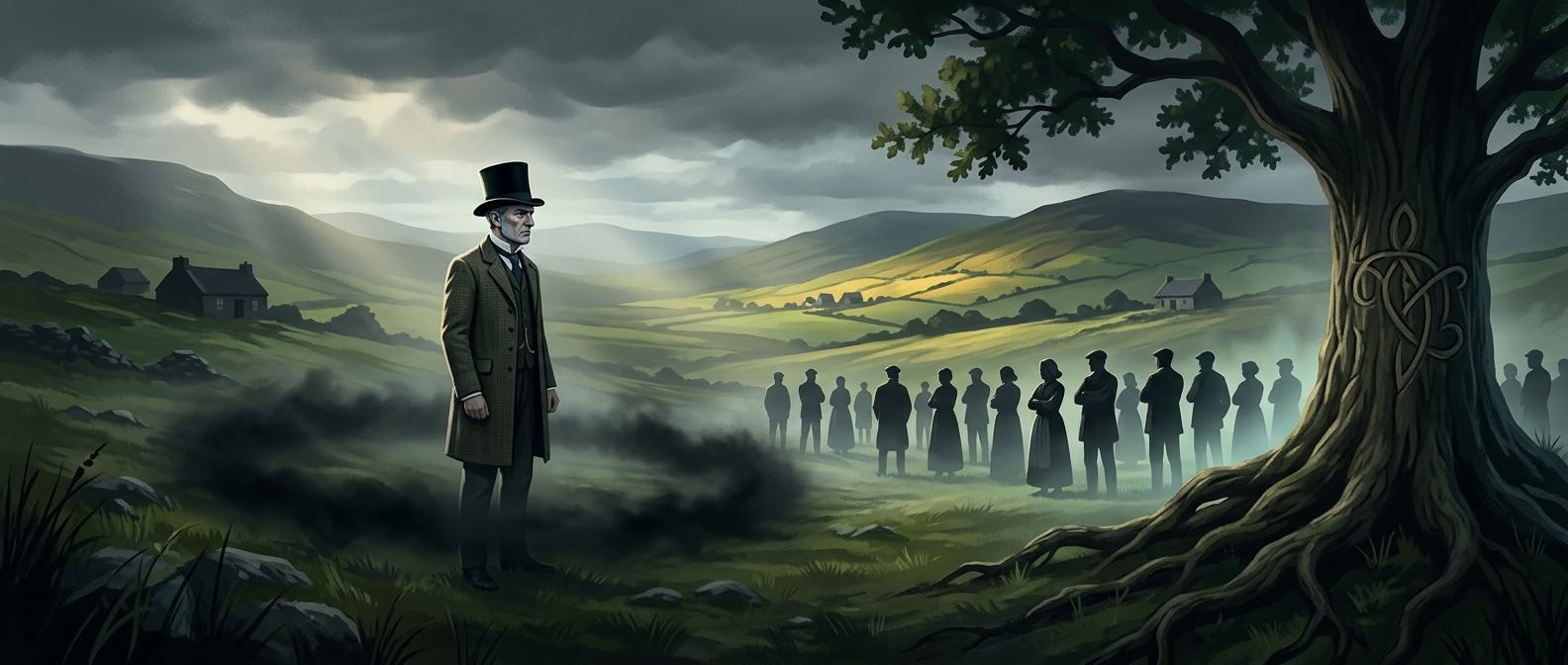
How a refusal became a weapon
Charles Boycott was not simply a farmer caught in a neighborhood dispute. As an estate agent in County Mayo, he stood between a landlord and tenants at a moment when falling agricultural prices and hardship sharpened arguments over rent. Tenant farmers wanted lower payments; the conflict was part of a broader campaign for greater security and fairer terms for people who worked the land.
The pressure on Boycott worked through everyday dependence. A farm could not function on its owner’s authority alone: it needed workers, suppliers, transport, and cooperation from the surrounding community. When those relationships were collectively withdrawn, routine tasks became difficult or impossible. The tactic did not require a direct confrontation. Its force came from making cooperation conditional—and from neighbors sustaining that refusal together.
Why the story traveled
The episode attracted attention beyond the farm because the refusal was both practical and visible. Boycott’s isolation showed how a community could impose a cost without attacking him or destroying property. At the same time, the response made plain that collective action could be risky: anyone who continued working for him might face pressure from neighbors, while the estate still needed its land managed and its harvest brought in.
Newspapers needed a compact way to describe this unusual form of organized exclusion. They began using Boycott’s surname for the tactic itself. The word endured because it named a clear chain of events: a target depends on other people’s cooperation, a group withdraws it, and the resulting isolation is meant to force a change. What began as a local dispute thus supplied English with a verb for collective pressure.