Why aluminum can pull oxygen from iron oxide
The reaction works because aluminum binds oxygen more strongly than iron does. When the mixture is heated enough to start reacting, oxygen shifts from the iron oxide to the aluminum. The iron is left behind as metal, while the aluminum becomes aluminum oxide—a separate, very hot material often called slag.
This is a chemical exchange, not ordinary burning: the reacting materials supply the oxygen transfer that releases the heat. Once underway, the reaction can sustain itself and produce enough heat to melt the newly formed iron.
From a powder reaction to a practical weld
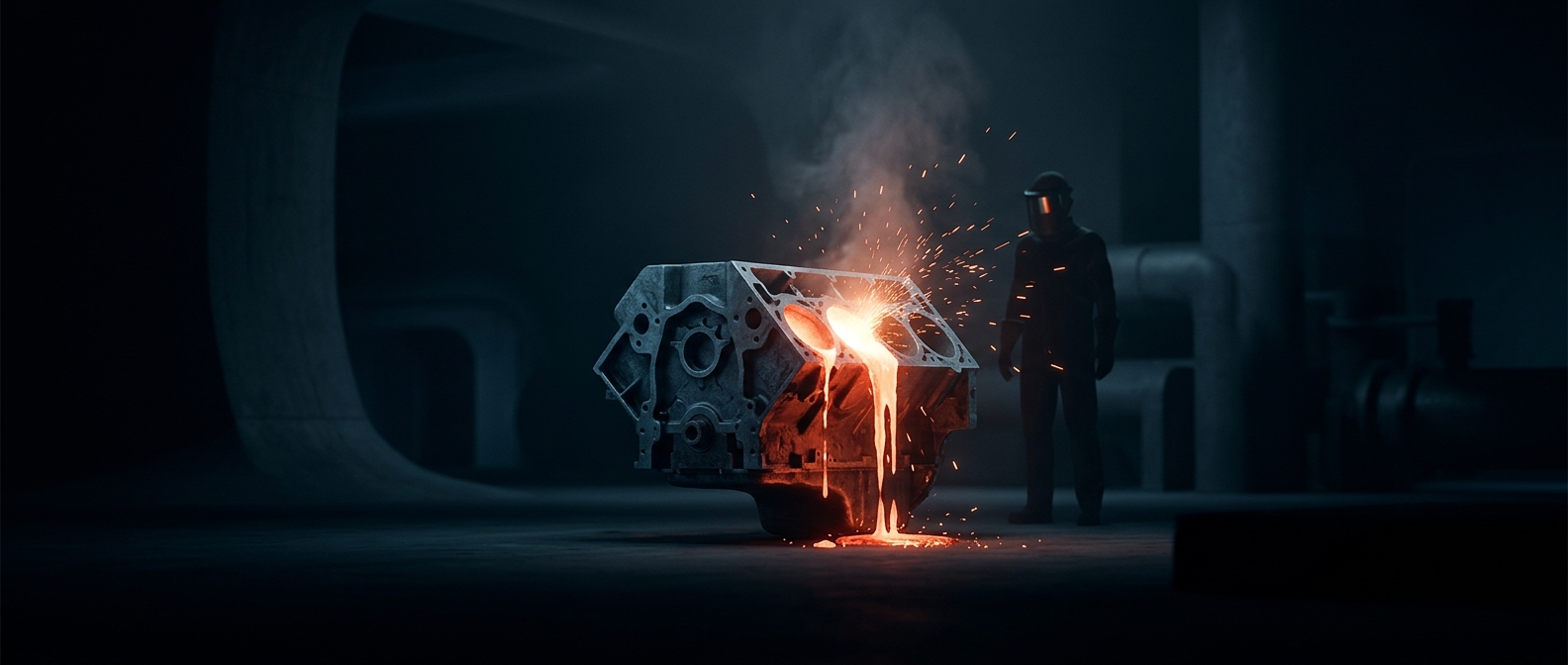
That intense, localized heat has made the process useful for thermite welding, especially for joining heavy steel parts such as railway rails. A prepared charge reacts in a controlled container above the joint. Molten iron flows into the gap, fills it, and fuses with the surrounding metal as it cools. The aluminum oxide remains separate and can be removed after the metal solidifies.
The same concentration of heat that makes the method effective also makes it hazardous: the reaction is difficult to stop once started, and molten metal can damage nearby materials. Its striking result is not just a burst of flame, but a small, self-heating chemical furnace that manufactures the metal it uses to fill a joint.