Why the Arc Becomes a Cutting Tool
Inside the torch, the nozzle squeezes gas into a narrow, fast stream. An electrical arc strips electrons from some of the gas atoms, turning the stream into plasma, an electrically conductive state of matter. The nozzle’s small opening concentrates that hot stream onto a tiny spot, rather than spreading the heat across the metal like a broad flame.
The arc also completes an electrical circuit through the workpiece. Because the metal conducts electricity, current can pass from the torch through the piece and back to the power supply. This lets the arc keep delivering concentrated heat at the cut.
The Cut Is Melted, Then Cleared
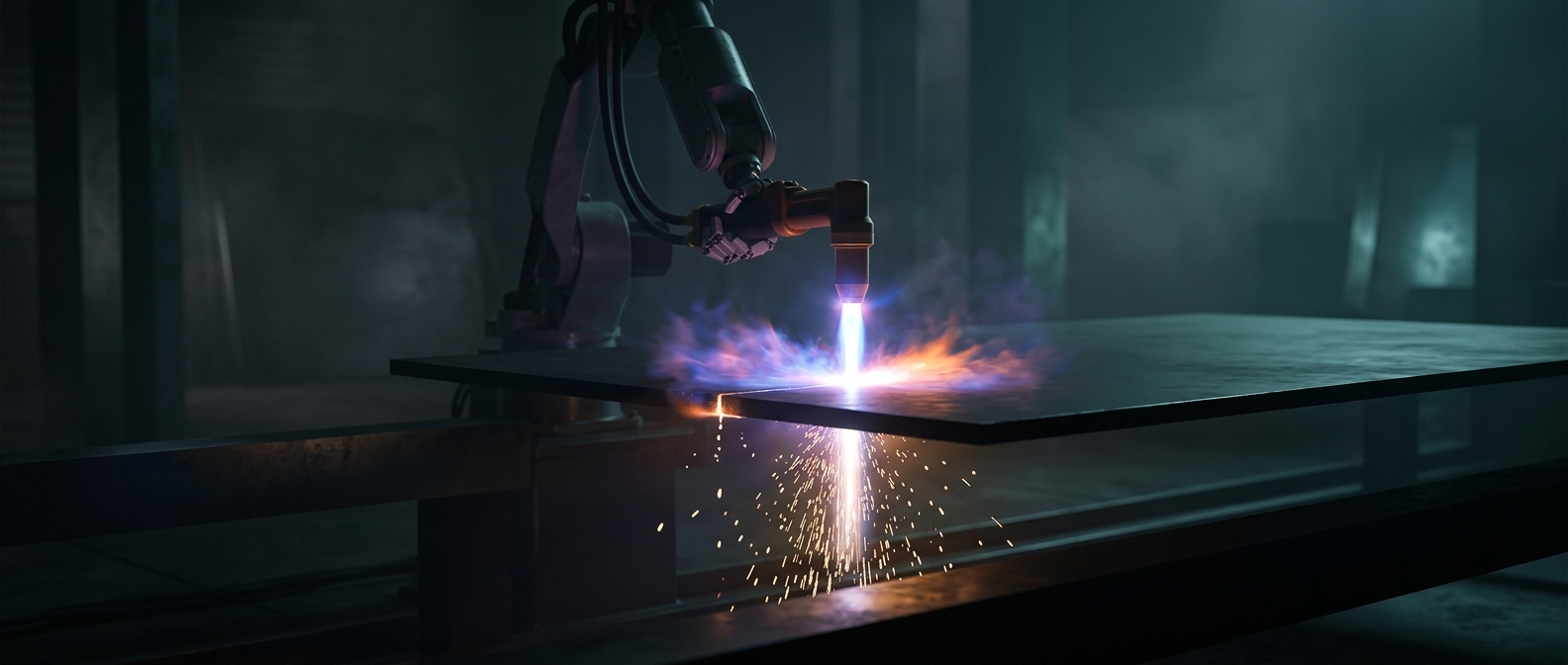
At the surface, the plasma heats the metal until it melts. The gas stream does a second job: it pushes the liquid metal out through the narrow channel, called the kerf, leaving the edges separated. Without that moving stream, molten metal could linger in the cut and resolidify as rough buildup, often called slag or dross.
That combination explains why a plasma cutter can move through thick metal without needing to melt the entire piece. It heats only the material along a narrow path, while the gas clears that path as the torch advances.
Why Speed and Setup Matter
A clean cut depends on matching the torch’s heat and gas flow to the metal and its thickness. Move too quickly and the arc may not fully cut through; move too slowly and extra heat can widen the kerf or leave more melted metal attached to the edge. The nozzle and electrode also wear as they handle intense heat and electrical current, so their condition affects how steadily the arc is focused.
The practical advantage is precision: the tool concentrates energy where the operator guides it, then blows the melted material out of the way. The finished cut is not simply burned apart—the metal is locally melted and mechanically cleared in one continuous pass.