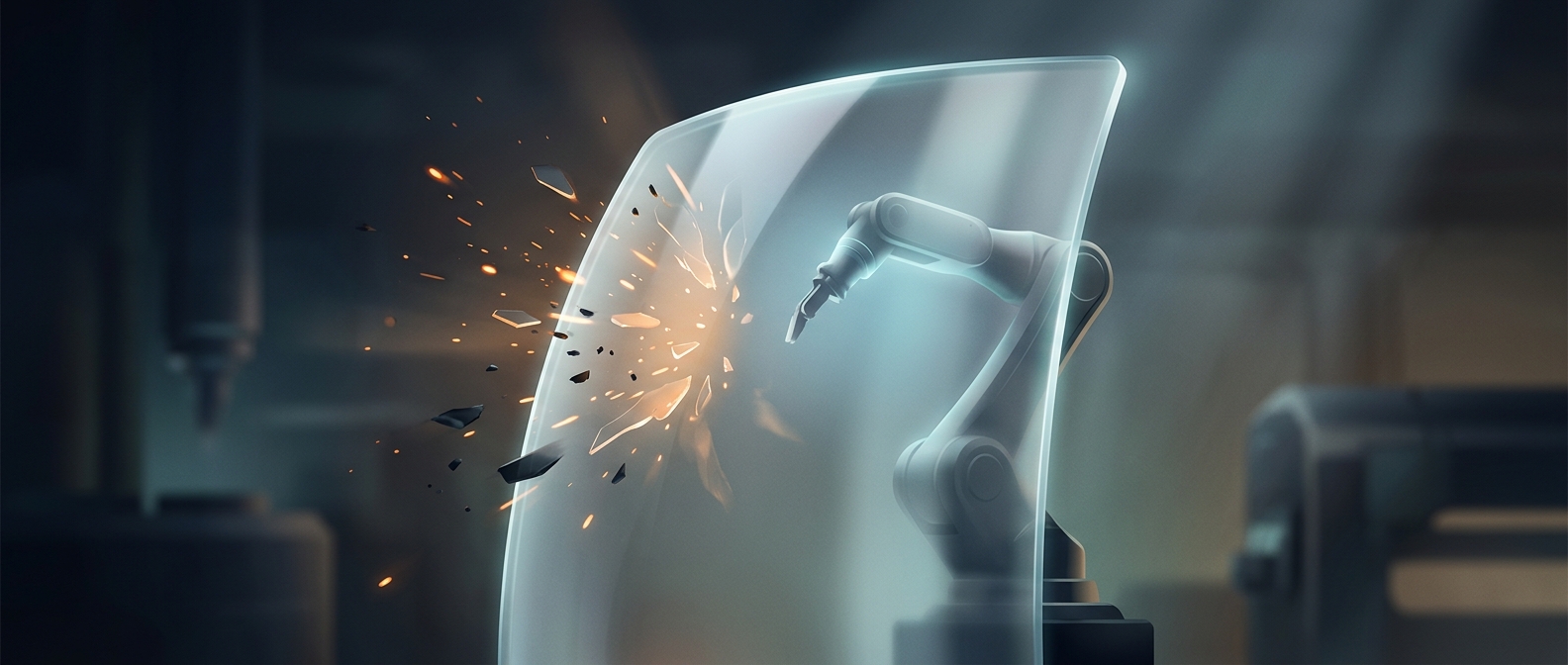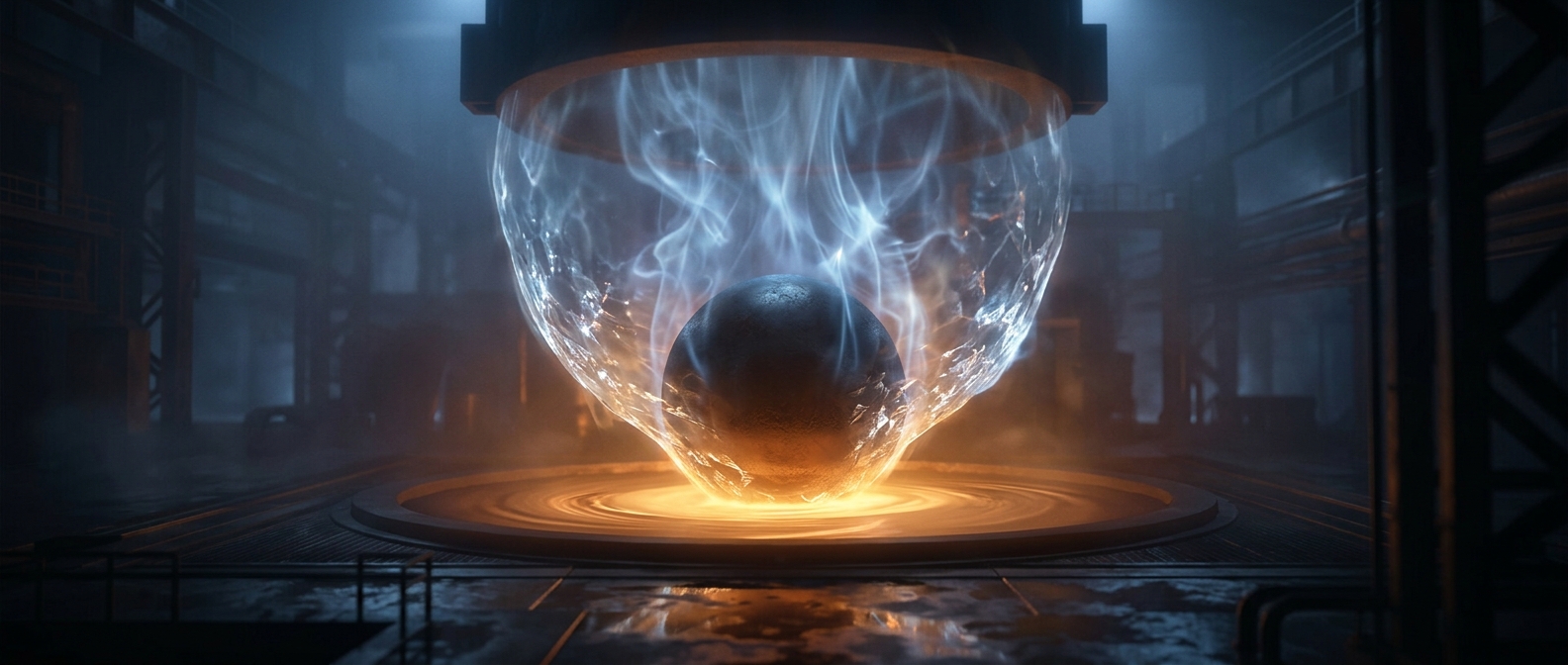
Nitrogen hardens steel from the surface inward
In nitriding, heat helps ammonia at the steel’s surface split into nitrogen and hydrogen. The nitrogen enters the metal as individual atoms and gradually moves into its surface—a process called diffusion. It does not need to melt the steel or coat it with a separate material.
As nitrogen travels inward, it reacts with iron and, especially, with alloying elements such as chromium or aluminum. These reactions form tiny nitride particles that obstruct the movement of defects inside the metal. Since those defects help steel deform under pressure, making them harder to move makes the treated region much harder and more resistant to wear.
A hard case, with a strong core
The result is not simply a thin, brittle shell. Nitrogen creates a surface layer and a deeper zone whose hardness gradually fades toward the untreated core. The outer region resists rubbing and indentation; the core can retain more of the toughness needed to absorb force without snapping.
Nitriding is usually carried out below the temperature at which steel’s internal structure changes dramatically. That helps limit distortion, an important advantage for finished parts such as gears, shafts, and dies that must keep precise dimensions. The treatment still requires control: an excessively thick or poorly suited surface layer can be brittle, so the steel’s composition and the process conditions matter.
That combination—wear resistance where contact happens, toughness underneath—is why nitriding can strengthen a component without hardening its entire cross-section.