A cleaning blast that disappears
Dry-ice cleaning begins much like other forms of blasting: compressed air drives solid carbon-dioxide pellets through a nozzle at the dirty surface. The pellets deliver a brief impact, but their coldness adds another way to loosen stubborn deposits.
Cold makes the grime let go
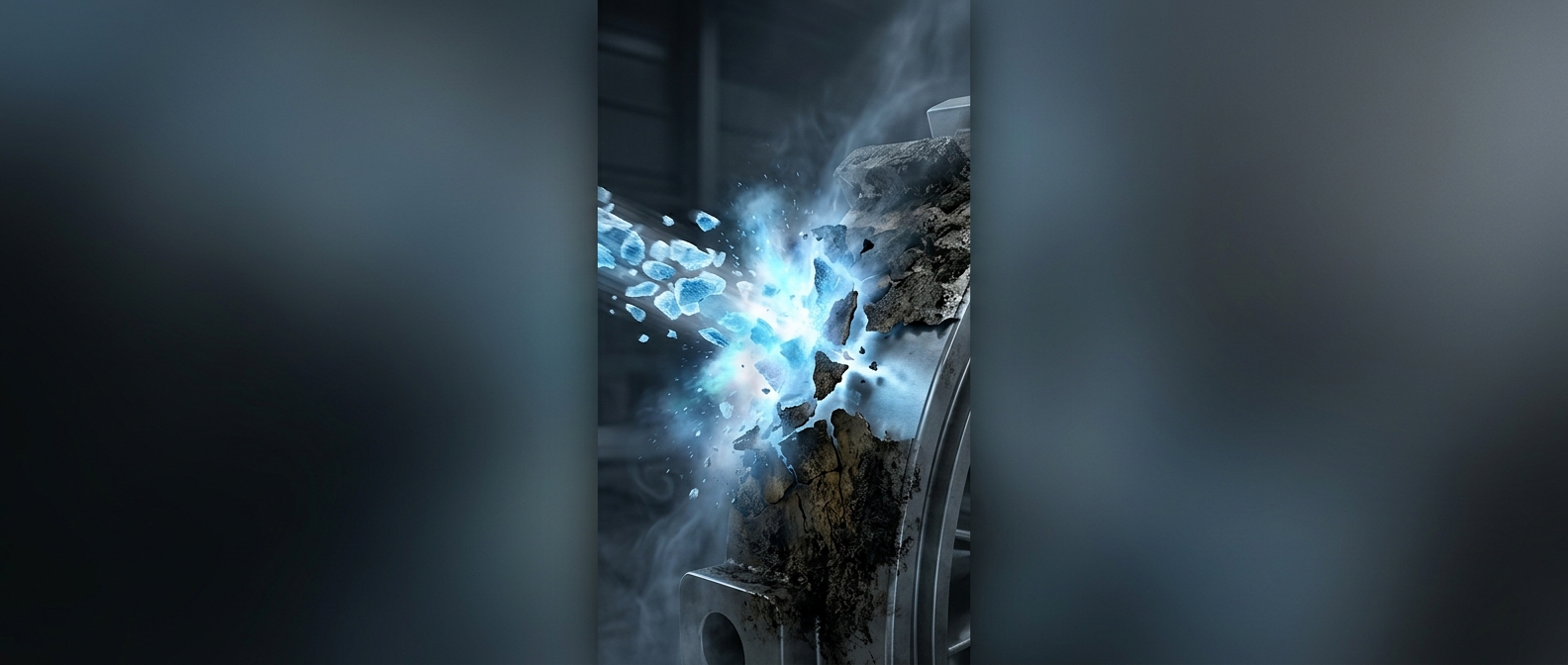
When a pellet hits warmer machinery, the sudden temperature change can make a coating of oil, paint, or other buildup contract and become brittle. Cracks open between the deposit and the surface. The pellet’s impact helps break the loosened material free, and the carbon dioxide changes directly from solid to gas—a process called sublimation. That rapid expansion helps dislodge debris from cracks and crevices.
The method is not simply “ice scrubbing.” Unlike sand or other abrasive media, dry ice does not remain as particles after impact, and it does not add water to the equipment. The detached grime still has to be swept up or captured; what disappears is the blasting material itself.
Why that matters around equipment
Because the cleaning medium vanishes, dry-ice blasting can be useful where leftover grit or moisture would be troublesome—for example, around machinery that is difficult to dismantle. But the process does not make every surface invulnerable: the coating, temperature change, and force of the blast still need to suit the equipment. Carbon dioxide gas also needs adequate ventilation, especially in enclosed spaces.
The practical payoff is a cleaning process that can loosen a deposit while leaving no spent blasting media wedged behind in the machine.