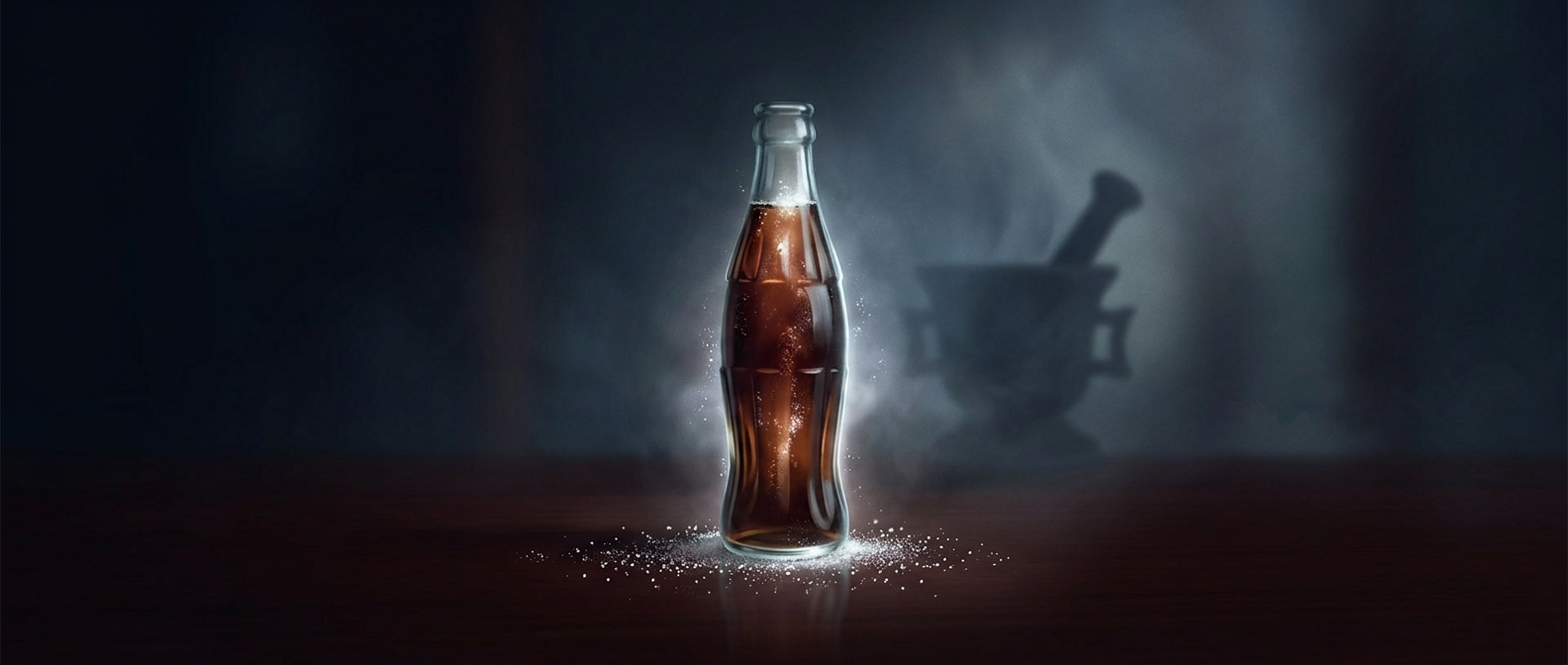
Cocaine Was Removed, but the Coca Leaf Stayed
There was no single new ingredient poured in to replace cocaine. Coca-Cola’s early recipe drew on coca leaves, which contain cocaine, as well as kola nuts, a source of caffeine. As concern and legal pressure over cocaine grew in the early 1900s, the company shifted to coca-leaf extract from which the cocaine had been removed.
That change preserved the leaves’ flavoring role while eliminating the drug. The drink’s stimulant effect came chiefly from caffeine, which had already been part of the formula through kola nuts and, later, added caffeine.
A Change in Processing, Not a One-for-One Swap
The distinction matters: Coca-Cola did not simply trade cocaine for caffeine at the moment of reformulation. It changed how the coca ingredient was processed. The remaining extract could still contribute flavor, while caffeine supplied a familiar stimulant without cocaine’s intoxicating and addictive effects.
So the memorable answer is caffeine—but not as a direct replacement. Coca-Cola kept a processed coca-leaf ingredient and relied on caffeine for the kick.