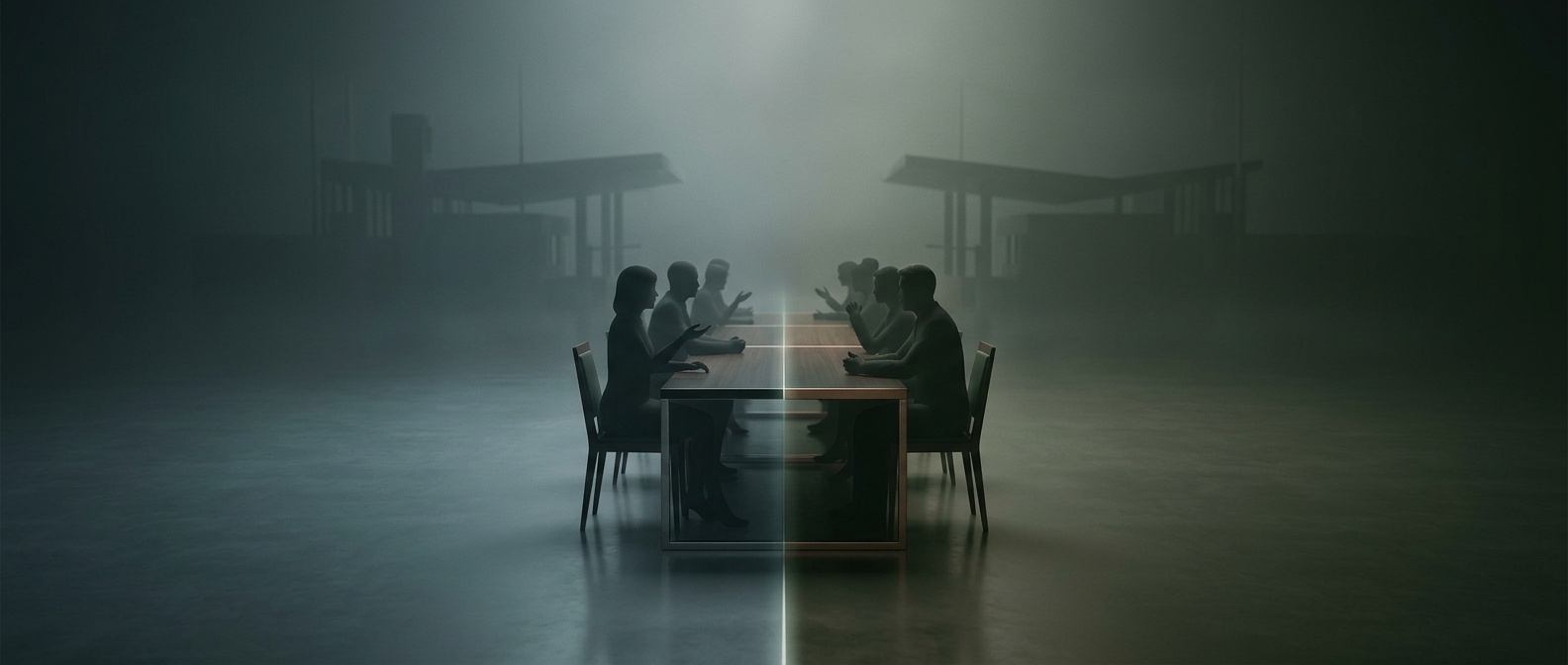
Panmunjom’s Border Inside the Room
At the Joint Security Area in Panmunjom, the Korean divide is not just an invisible line across a landscape. It passes through a conference room built for contact between the two sides. The line is the Military Demarcation Line, the boundary established by the 1953 armistice that halted fighting in the Korean War.
The room sits within the Demilitarized Zone, the buffer area created around that boundary. Unlike most of the heavily controlled border, the Joint Security Area was set aside for meetings between North Korean and United Nations Command representatives. The conference building makes that purpose visible: the boundary continues through an ordinary interior space, rather than stopping at the walls.
A Meeting Place, Not a Peace Treaty
The room’s design reflects an unresolved reality. The armistice ended active combat, but it was not a peace treaty formally ending the war. Negotiations and official encounters therefore needed a place where participants could meet while the boundary remained in force.
That arrangement turns a small detail of the room into a practical statement: conversation can happen across the line without erasing it. The table is not merely a dramatic photo opportunity; it belongs to a site shaped by the need to conduct business amid a lasting military division.
For visitors allowed into the area, the striking part is how ordinary the setting feels. A conference table, chairs, and papers occupy a room where the division of a peninsula runs through the middle of the meeting—not outside in the distance, but under the very place where people sit down to talk.