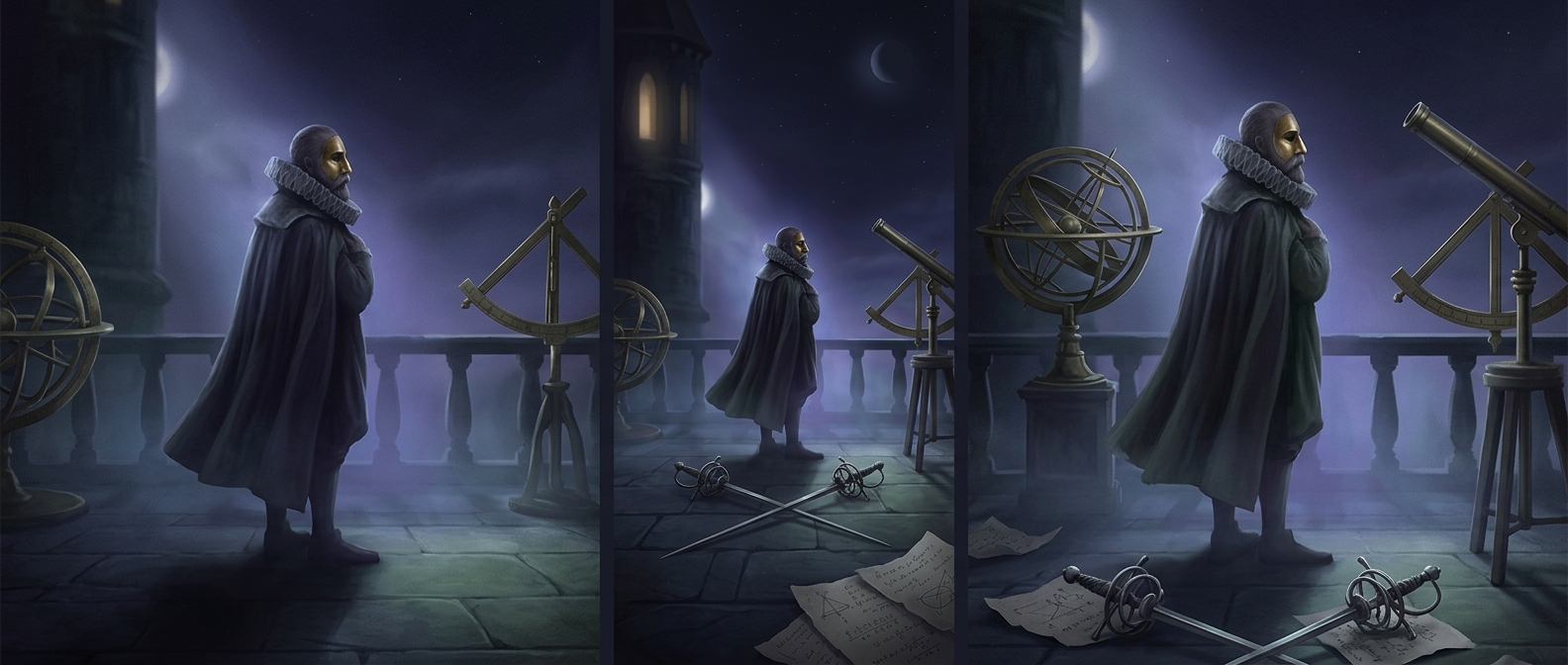
A mathematical dispute became a matter of honor
In 1566, while Tycho Brahe was studying at the University of Rostock, he argued with his cousin Manderup Parsberg over which of them was the better mathematician. The quarrel did not end with a calculation or a classroom challenge. The two young noblemen fought a duel, and Brahe lost the bridge of his nose.
For men of their rank, a public challenge could become a test of honor as much as a contest of skill. That helps explain how an argument about mathematics could escalate into a sword fight—but it does not make the outcome any less striking: a dispute about intellectual superiority left a permanent mark on Brahe’s face.
A lasting reminder, not a lasting argument
Brahe wore a prosthesis over the missing part of his nose for the rest of his life. Accounts describe it as brass, attached with adhesive. The injury was visible, but it did not end his career: he went on to become one of the most influential astronomical observers of his era, making unusually precise records of the positions of stars and planets.
The contrast is what makes the episode memorable. The mathematical rivalry that prompted the duel was temporary; the injury endured through the work for which Brahe is remembered. His prosthetic nose became a daily, physical consequence of treating a dispute over who was better at mathematics as something that had to be settled with swords.