Why a pouch belonged at the waist
For a traveler on foot, a small pouch solved a practical problem: useful objects had to stay close without occupying a hand. Clothing often offered little secure storage, so a belt could do double duty as both a way to hold garments in place and an anchor for a pouch.
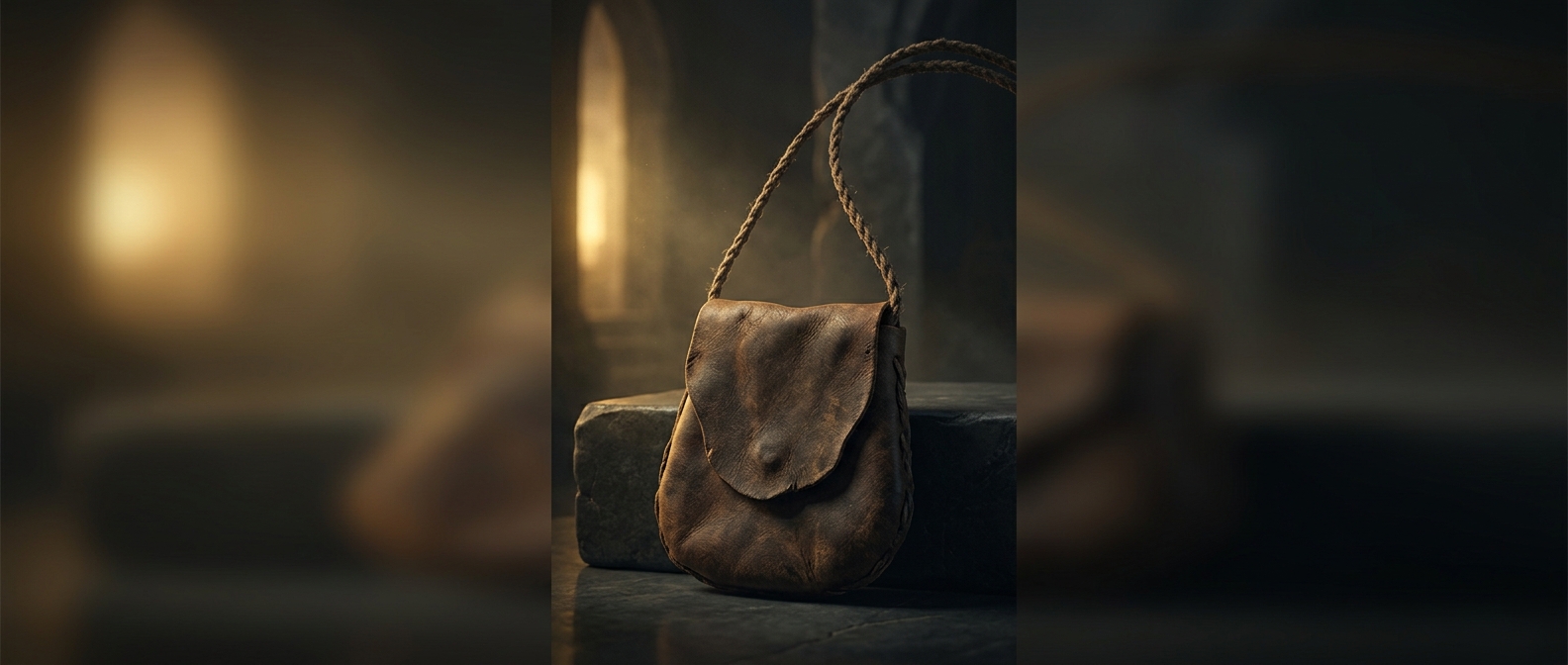
Leather suited the job because it could be cut and stitched into a compact container sturdy enough for repeated handling. A flap or simple fastening helped keep small belongings from spilling, while the pouch remained easy to reach. Its position mattered: a person could take out a needed item without unpacking a larger load.
A simple design, adaptable to daily needs
The contents depended on the wearer and the journey. Coins, tools, or other small necessities could be kept apart from bulkier supplies, making them easier to find. The pouch’s size and placement also made it useful while walking or working, when carrying an object in the hand was inconvenient.
That practical arrangement is the key link to the modern belt bag—not necessarily an unbroken chain of identical designs, but the same basic idea. Put a small container where it is secure, accessible, and out of the way, and the waist becomes a natural place to carry it.