How floss picks up plaque
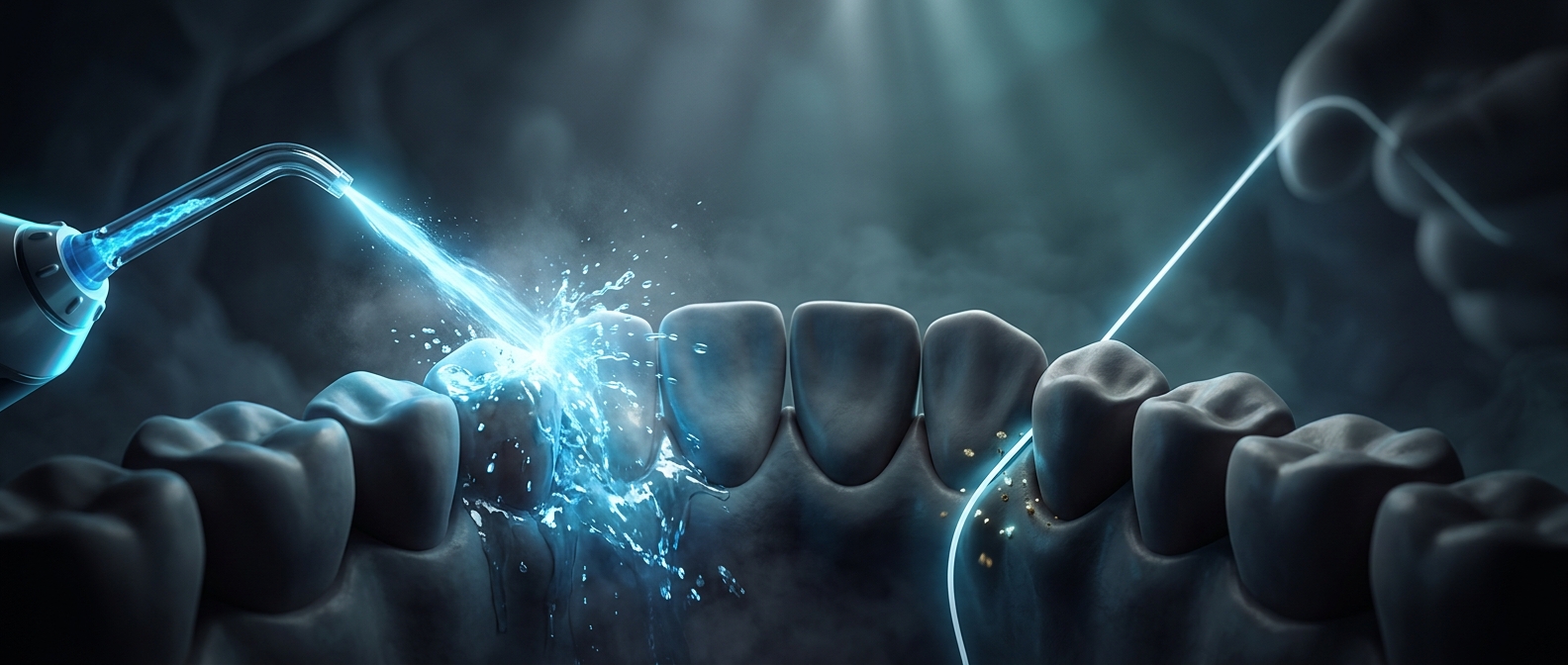
Plaque is a soft, sticky film of bacteria and other material that builds up on teeth. A strand of floss scrapes along the sides of teeth and slips just below the gumline, where a toothbrush may not reach. As it moves, plaque and food debris cling to the floss.
Why a used section can spread it
If you move that same section into another gap, some of what it collected can rub onto the next tooth. The floss may still remove material as it passes, but it is no longer a clean surface; it can carry residue from one area to another. That is why flossing instructions commonly recommend advancing to a fresh section as you work around the mouth.
A simple method is to wind most of the strand around the middle fingers, leaving a short working length between them. After cleaning one gap, unwind a little from one finger and take up the used portion on the other. This keeps each space in contact with cleaner floss without requiring a new piece for every tooth.
Clean the sides, not just the gaps
The aim is to gently hug the floss against each tooth and slide it up and down, rather than snapping it into the gums. Using a fresh section helps keep loosened plaque from being carried along the route—but the key payoff is reaching the tooth surfaces between teeth, where buildup can otherwise remain.