René Magritte made the ordinary feel unreliable
The Belgian painter was René Magritte, a leading Surrealist whose images unsettle everyday logic without abandoning everyday things. Instead of filling his canvases with elaborate fantasy, he often used familiar objects—apples, windows, clouds, and neatly dressed men—and changed how they fit together. The result feels less like a dream with its own rules than like a normal scene in which one rule has quietly failed.
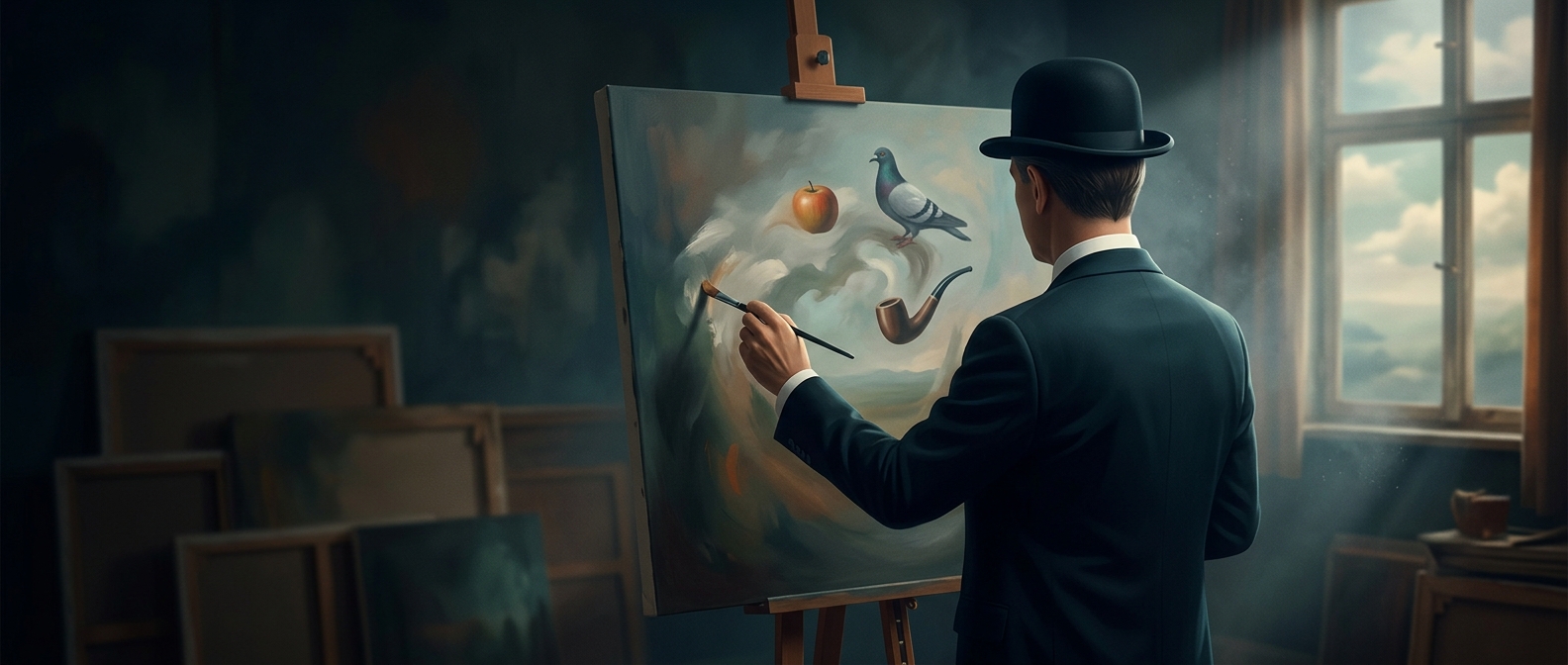
The bowler hat helped make that effect recognizable. It belonged to the sober, respectable look of an ordinary city man, so a suited figure could seem anonymous and familiar before anything strange happened around him. In Golconda (1953), for instance, bowler-hatted men appear suspended in the air above a town, repeated across the sky like a pattern. Their businesslike clothes make the impossible scene feel almost routine.
The suit was part of the visual puzzle
Magritte’s own conventional appearance echoed the figures he painted, but the resemblance was not simply a signature or a costume for a character. Repeating the same kind of man turned him into a visual motif: individual identity mattered less than the clash between an ordinary appearance and an impossible situation.
That contrast also suited Magritte’s interest in how images shape what people think they see. A painted object can look convincing without being the thing itself; a familiar person can seem real while behaving in a way reality would not allow. The bowler-hatted man became memorable because he carried that contradiction in plain view—an office-ready figure in a world where the rules of the office, and of gravity, no longer applied.