Why a dim street gets harder to read
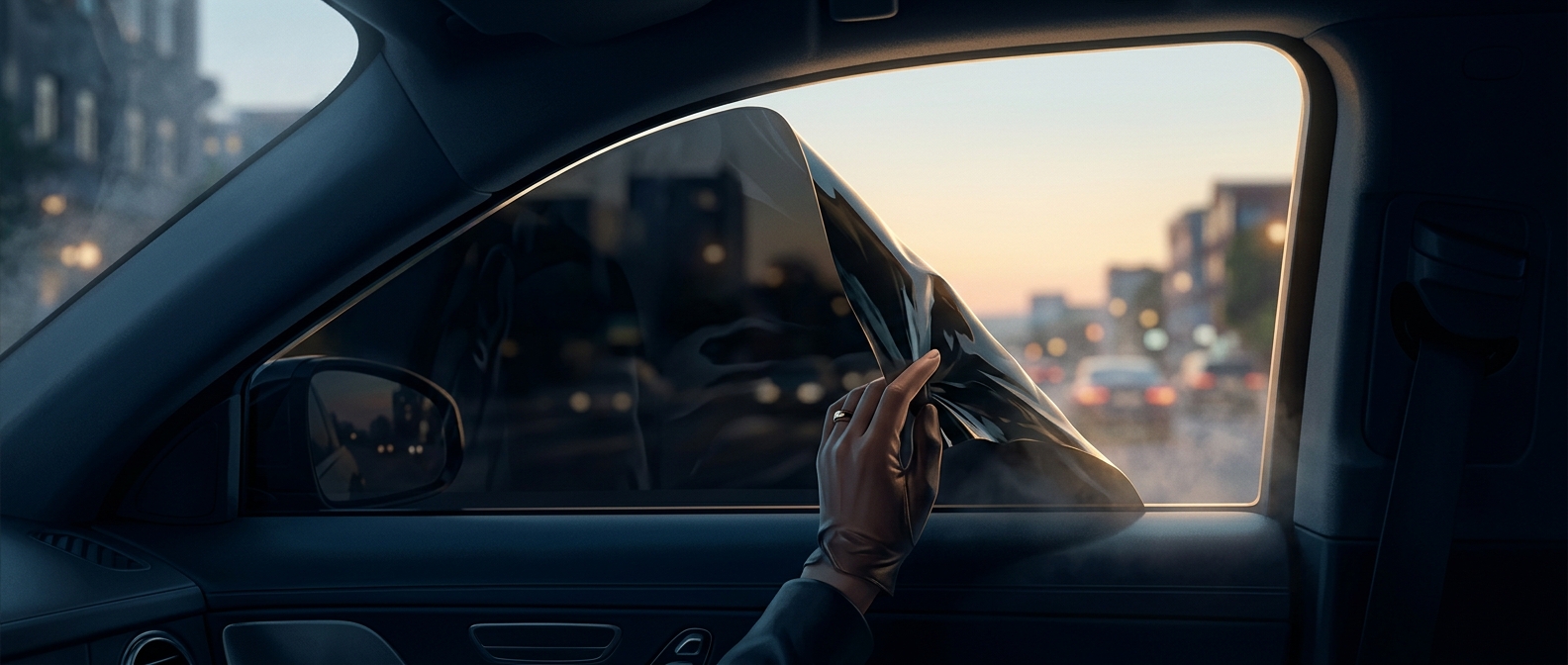
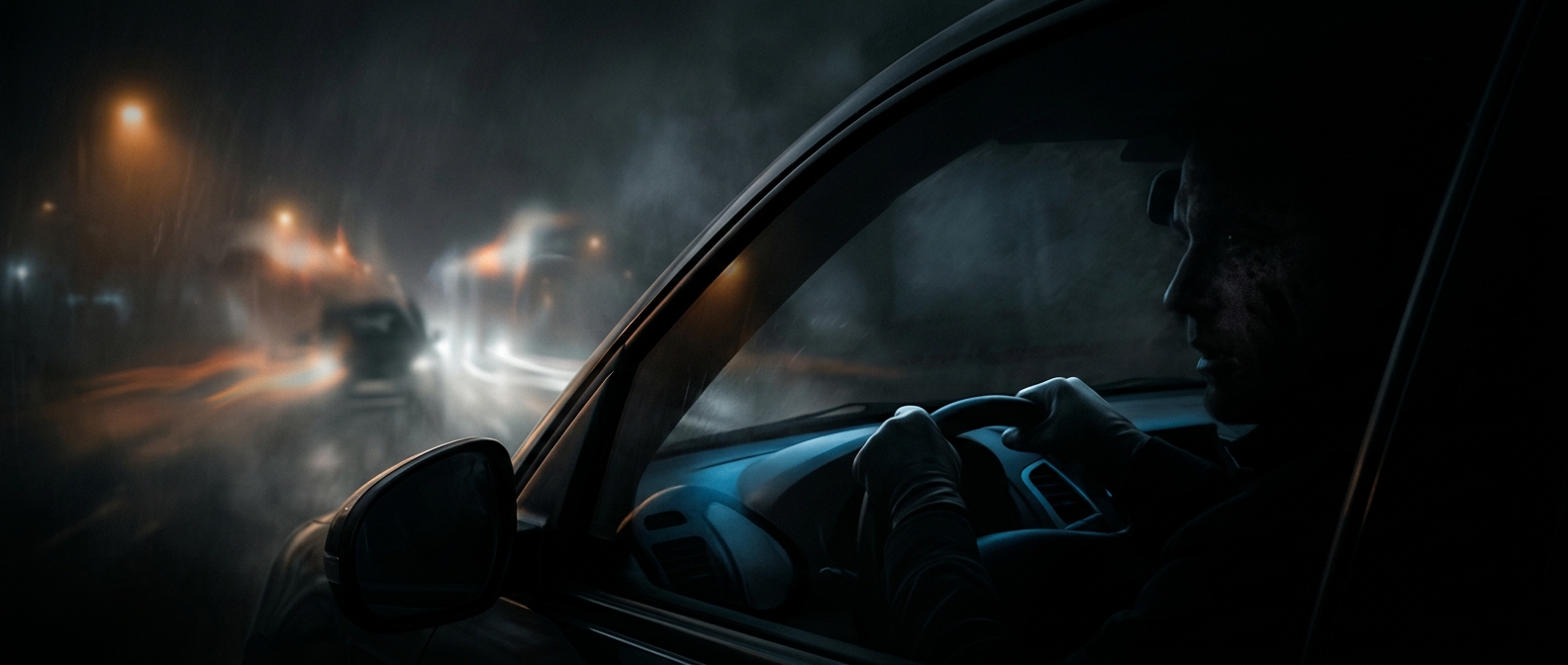
Tint does more than make the view look darker. It reduces the light reaching the driver’s eyes, so a pedestrian in dark clothing, a cyclist beside an unlit curb, or a turn in the road may blend into the background. At night, those hazards often appear in the lower-contrast parts of the scene, where there is already little visual detail to work with.
The problem is especially noticeable when checking side windows. Headlights illuminate the road ahead, but they may not light up someone approaching from the side or a cyclist alongside the car. A darker window further weakens those faint visual cues. Looking through the glass also means the driver cannot rely on a quick glance outside as easily as someone walking in open air can.
The driver’s eyes cannot simply compensate
Eyes adjust to changing brightness, but adaptation takes time and cannot recreate light that the glass has blocked. After looking toward a bright dashboard or oncoming headlights, a driver may need a moment to pick out detail in a darker area. Tint leaves less light available when the eyes are trying to make that adjustment.
The finished darkness depends on the glass and any film together: factory-tinted windows can become darker still when additional film is applied. A film that seems modest in daylight may therefore feel much more restrictive after sunset. The tradeoff is most consequential when a driver needs to spot something outside the beam of the headlights, such as a person stepping off a curb—exactly when there may be little time to slow down or change course.