How a camera follows movement without a camera operator beside it
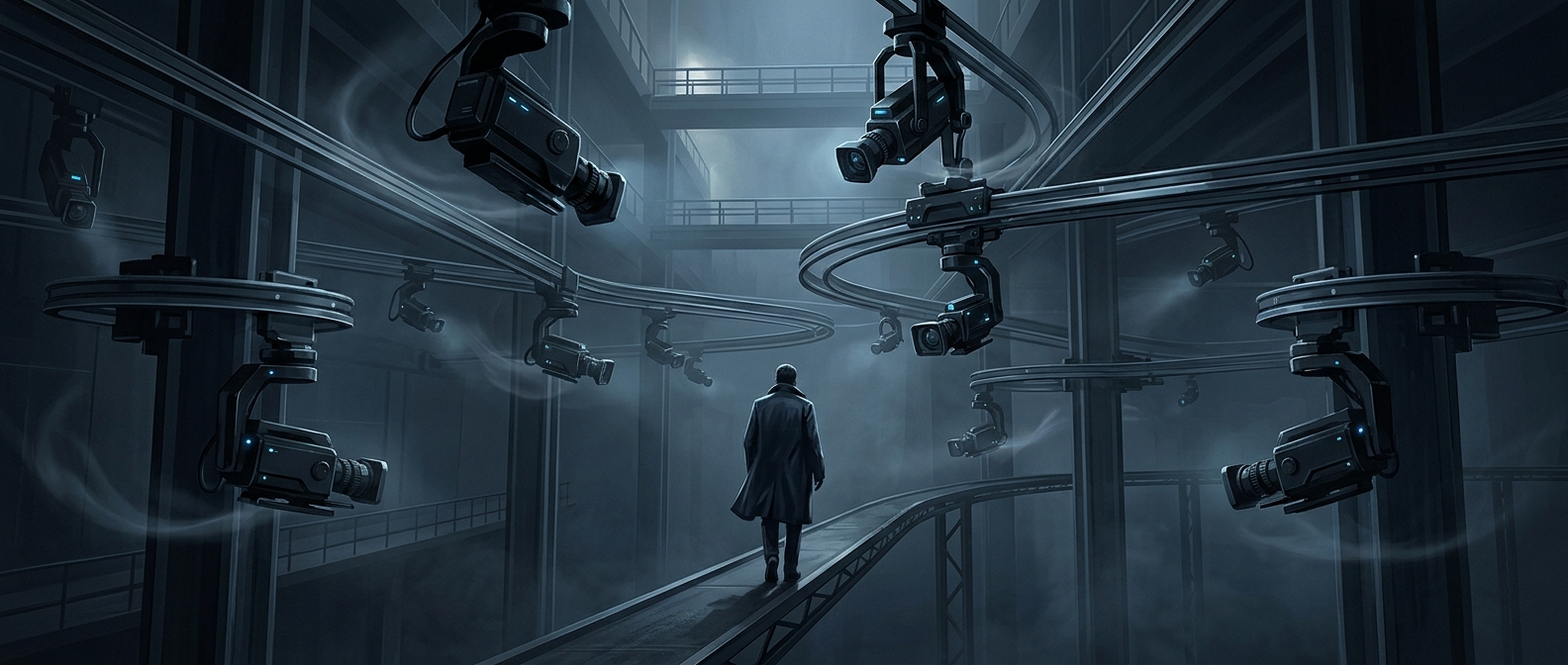
A rail-mounted camera turns part of the room into a repeatable path. Instead of asking an operator to carry a camera wherever a contestant goes, the production can move a camera along the rail and aim it toward activity in the room. Sensors provide cues: motion indicates that something has changed location, while heat sensing can help distinguish a person from cooler surroundings.
Those cues are useful because a reality-TV house may have several conversations and sudden movements happening at once. A camera system can react to a visible target without a person manually steering every movement in real time. The rail also limits where the camera can travel, making its movement more predictable than a freely roaming camera.
Tracking is not the same as understanding
The system can respond to motion or a warm body, but that does not mean it understands a conversation, knows why someone moved, or recognizes the emotional significance of a moment. It detects signals and adjusts the camera’s position; editorial judgment still belongs to the production team, which decides what footage to use and how to shape the episode.
Automation changes the workload rather than eliminating it. It can handle some routine following shots, while human crew members remain important for coverage and decisions that require context. The result is a house where cameras can keep up with movement even when no operator is standing at each one—while the dramatic meaning of what they record is still made by people.