A royal tomb depended on a ration system
The workers who cut and decorated royal tombs at Deir el-Medina were not an anonymous crowd of casual laborers. They were a skilled, organized community whose work supported the king’s burial—and whose daily survival depended on supplies issued by the state. Rations, especially grain, were the practical equivalent of wages in a system where the government provisioned its workforce directly.
That arrangement made a missed delivery more than an inconvenience. Without the food they were owed, the workers could not simply carry on as usual. Their complaint during Ramses III’s reign was therefore both a demand for subsistence and a challenge to the officials responsible for keeping the royal project supplied.
Why the workers went to the temples
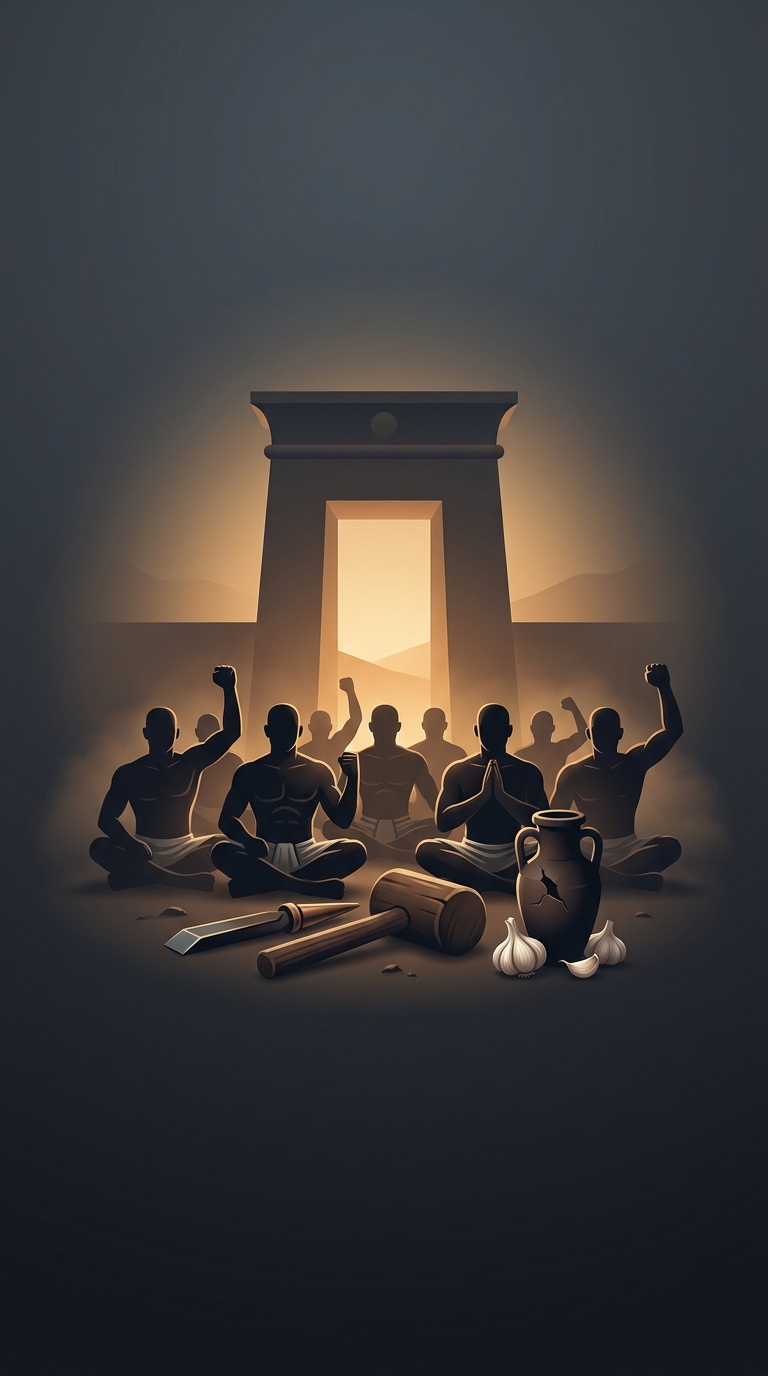
When the provisions failed to arrive, the crew stopped working and moved from the tomb worksite to nearby temple precincts. This made the protest visible and put it in places associated with administration as well as worship. Rather than relying on a private appeal that could be ignored, the workers used their physical presence—and the interruption of an important state project—to press their claim.
The episode is preserved in Egyptian records, making it an unusually vivid glimpse of labor relations from the ancient world. It shows workers acting collectively, identifying a specific failure, and choosing a public setting where officials could not easily pretend the grievance did not exist.
A stoppage with leverage
The tomb builders’ leverage came from the value of their labor: a royal burial could not be completed without their specialized skills. The walkout forced the ration dispute into the open, and officials eventually supplied what was owed. Work could resume, but the delay revealed a basic vulnerability in the system: even a powerful state could not keep its grandest projects moving when the people doing the work went hungry.
The striking detail is not simply that ancient workers protested. It is that their protest left a record—and that a delayed delivery of food could bring royal tomb construction to a halt.