Why a Cat Can Seem to Flow
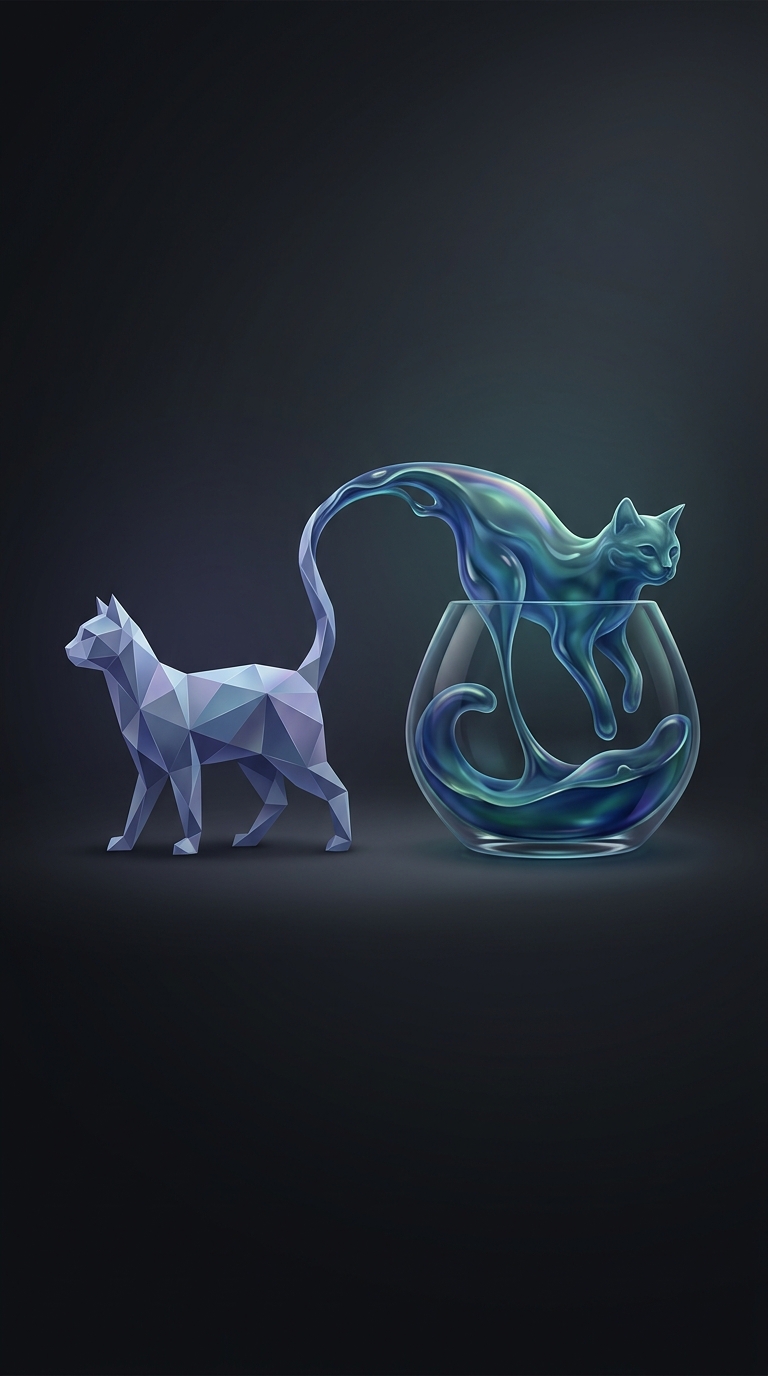
Rheology studies how materials deform when forces act on them, and how their shape changes over time. A cat can look solid when it holds a stable posture: it resists deformation and keeps a recognizable shape. Yet when it climbs into a snug box, it may gradually lower its body and spread into the available space. That slow change resembles the behavior of a viscoelastic material—one that responds partly like an elastic solid and partly like a thick fluid.
The Time Scale Matters
Push briefly on an elastic object and it springs back; leave a thick, slow-moving substance under pressure and it keeps deforming. Some materials fall between those extremes: they initially resist, then relax as time passes. In rheology, this is called stress relaxation—the reduction in resistance while a material remains under a sustained load.
A cat’s apparent transformation depends on how long you watch. It can perch with its body held in a compact form, then ease its limbs and torso into a container. The box supports and constrains the cat, while the animal’s weight and posture change the contact points. Given time, its outline adapts to the space.
Where the Comparison Stops
The resemblance is a useful illustration, not a claim that a cat is literally a liquid. A material’s flow follows its physical properties; a cat actively moves its muscles, shifts its weight, and chooses how to fit. Its changing shape comes from behavior as well as tissue flexibility.
That distinction is what makes the comparison more than a joke: a box does not simply reveal a cat’s “liquid” state. It gives the cat a boundary to settle against, while the cat keeps adjusting until its body finds a comfortable arrangement.