A pigeon can navigate by combining clues
A homing pigeon does not need one instrument to tell it exactly where it is. Different cues can help solve different parts of the journey: a compass-like cue can indicate direction, while familiar features of the landscape can help the bird recognize where it is and which way to turn.
The Sun can serve as a directional reference, but its apparent position shifts across the day. To use it, a pigeon must account for time as well as direction—much as a person reading a sundial needs to know when they are looking at it. On routes it has traveled before, the bird can also use landmarks such as roads, rivers, or buildings to guide its progress.
Why having backups matters
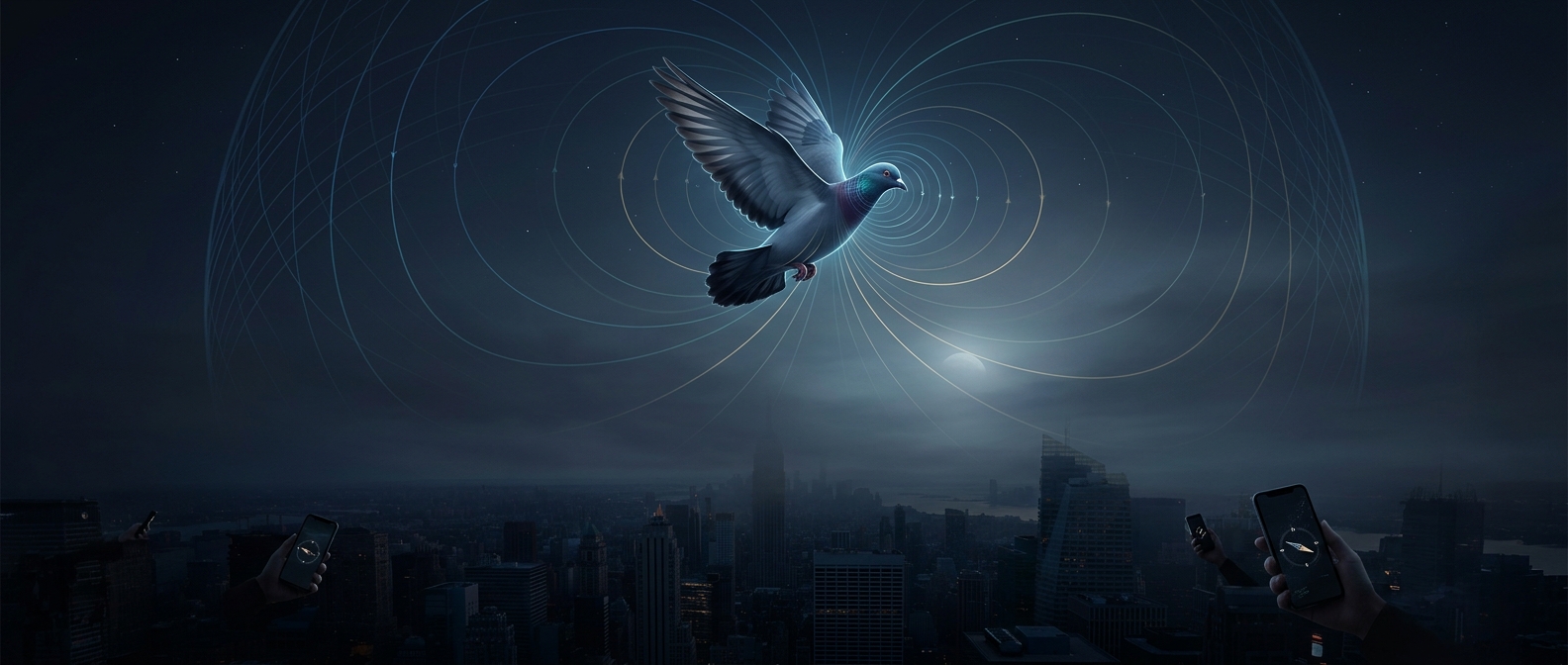
Each clue has limits. Clouds can hide the Sun; unfamiliar terrain offers no well-known landmarks. Researchers have also investigated whether pigeons sense Earth’s magnetic field, which could provide another directional reference. The precise way that sense might work remains debated, so it is better understood as a possible part of the puzzle than as a settled explanation.
The important idea is that navigation need not depend on a flawless, always-available signal. A pigeon can draw on several kinds of information, with the useful mix changing as conditions and familiarity change. That flexibility helps explain how a bird can find its way without relying on a single fixed compass.