How a Lyrebird Turns Listening Into a Performance
A lyrebird’s imitations begin with an unusual talent: it can learn sounds by hearing them and reproduce them later. That ability, called vocal learning, is also found in animals such as parrots and songbirds. The bird listens to noises in its habitat, memorizes their acoustic patterns, and practices producing them with its syrinx—the vocal organ birds use to make sound.
The result can be startlingly precise. A chainsaw’s rough, rising buzz or a car alarm’s repeated pitches may be reproduced as part of a male’s elaborate song. The bird is not operating a recording or making a mechanical sound; it is shaping airflow through its syrinx and vocal tract to imitate what it has heard.
Why the Imitations Enter the Courtship Song
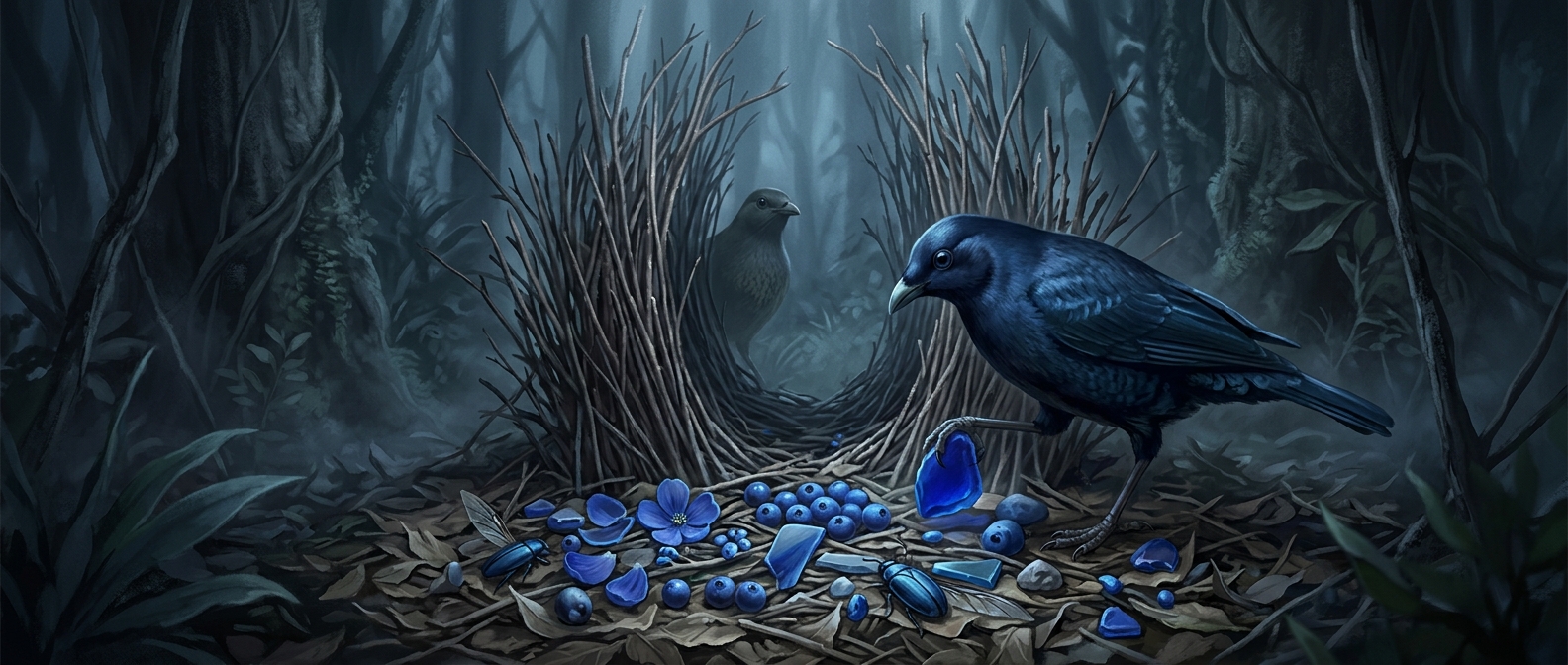
For a male lyrebird, singing is part of courtship. He performs a long, varied sequence while displaying to potential mates, combining species-typical notes with copied sounds. Because the performance draws on sounds encountered in the surrounding environment, the forest’s changing soundtrack can become material for the next display.
That does not mean a lyrebird imitates a chainsaw to warn others that one is nearby, or that it understands a car alarm as a signal. The sound is useful to the bird as a learned vocal element, not necessarily as a message with the meaning people attach to it. Researchers have proposed that a rich, accurate performance may help attract mates, but the precise role of each imitation is not fully settled.
A Wild Soundscape, Recast
Lyrebirds evolved in Australian forests, but their remarkable copying can include sounds introduced by people as well as calls from other animals. A machine may run for only a short time; the bird can preserve its sound in memory and bring it back during a later performance. That is what makes the display more than an uncanny noise: it is a living bird’s learned version of whatever its ears have taken in.