Why the Limbo Bar Feels Lower Than It Looks
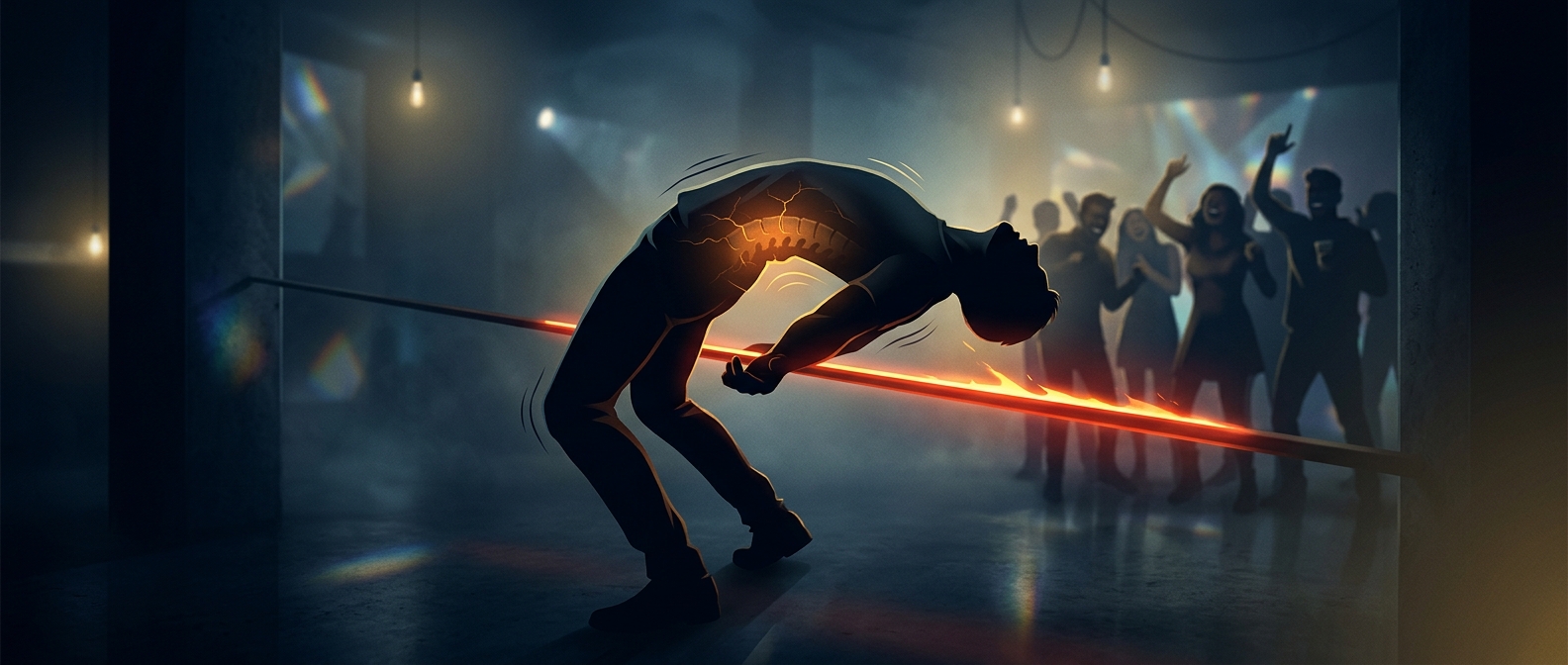
To pass beneath a bar without touching it, a player leans backward while keeping their feet planted and their body upright enough to move forward. That shape demands extension: the spine bends backward, and the hips and shoulders must help create the curve. If they contribute little, much of the bend can collect in the lower back, where the lumbar vertebrae form the spine’s movable bottom section.
The deeper the lean, the harder the body has to work to control it. Back and abdominal muscles steady the trunk, while joints in the lower spine are pushed toward the end of their backward range. The bar itself does not press on the back; the strain comes from holding and moving through an extreme position.
The Crowd Changes the Challenge
Limbo is designed to make a physical limit visible. Each lowering of the bar turns an invisible question—how far can someone bend and still keep moving?—into a pass-or-fail test everyone can watch. A brush against the bar, a wobble, or a sudden step gives the audience an immediate reason to react.
That reaction can encourage players to attempt a lower pass than feels comfortable. The game’s tension comes from the gap between what the crowd wants to see and what the player can control. A clean pass is not simply a matter of being flexible: balance, coordination, and distributing the bend across the hips, upper back, and lower back all matter. When the lower back supplies most of the curve, the spectacle can come at the cost of a sore, overworked spine.