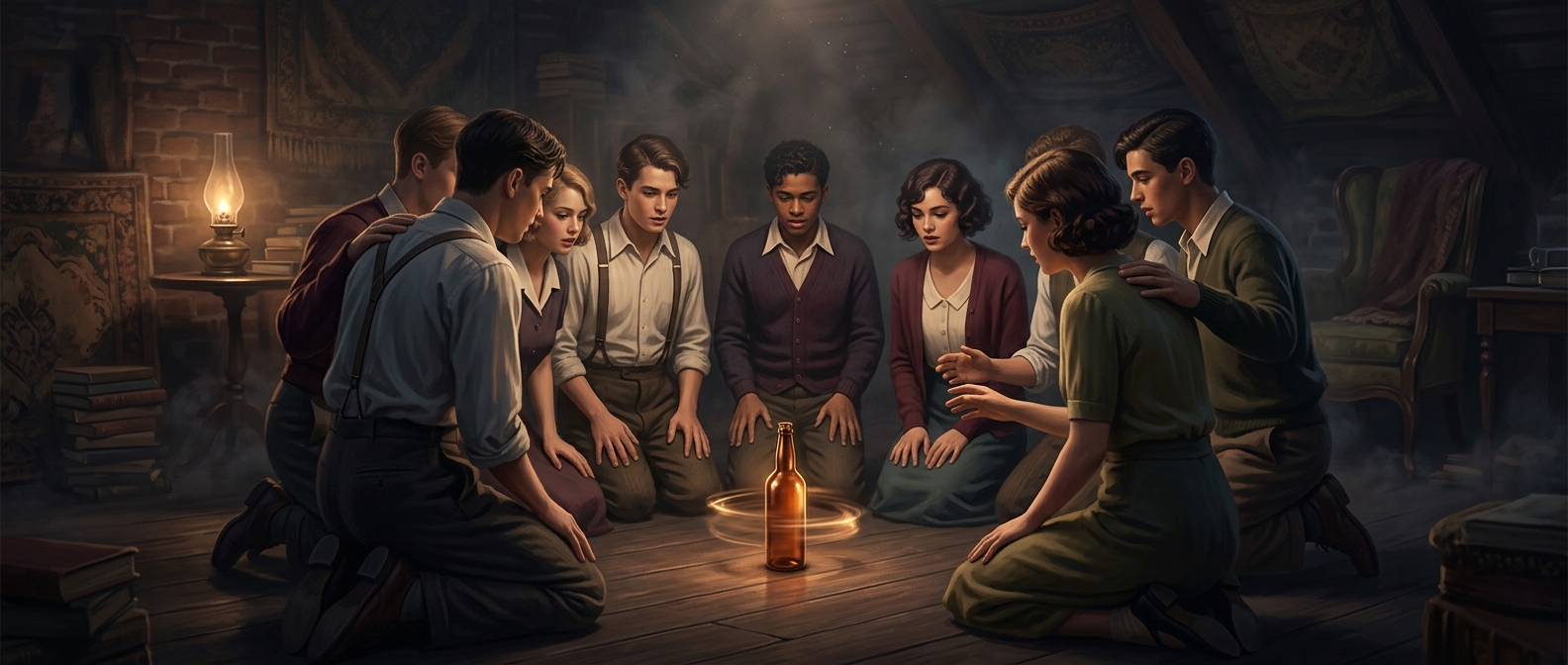
A Bottle Turned Courtship Into a Game
Spin the bottle’s mischief came from changing who appeared to make the choice. In formal courtship, a young couple’s interaction could be watched and guided by chaperones—adults charged with supervising social encounters. In the game, the bottle’s spin seemed to select the pair instead. That made a kiss look less like a direct declaration and more like the outcome of a shared game.
The trick was social as much as mechanical. Everyone gathered around the bottle accepted its result, so a player could take part in a romantic encounter without openly choosing a partner in front of the group. The game did not abolish adult supervision or the expectations surrounding courtship; it created a playful opening inside them.
Why Flappers Fit the Game
Flappers—young women associated with the more openly modern style of the 1920s—helped popularize the game as a cheeky rebuke to strict chaperoning. Its appeal rested on a small reversal: instead of adults managing who could meet, the circle of players let chance appear to decide who kissed whom.
That appearance of chance mattered. A bottle has no preferences, but the players control the rules, decide whether a spin counts, and choose how to respond to its result. The game made flirtation feel spontaneous while giving the group a structure for it. Its lasting hook is that simple mismatch between the innocent-looking object and the intimate decision it seems to make.