From a seed-filled figure to a party game
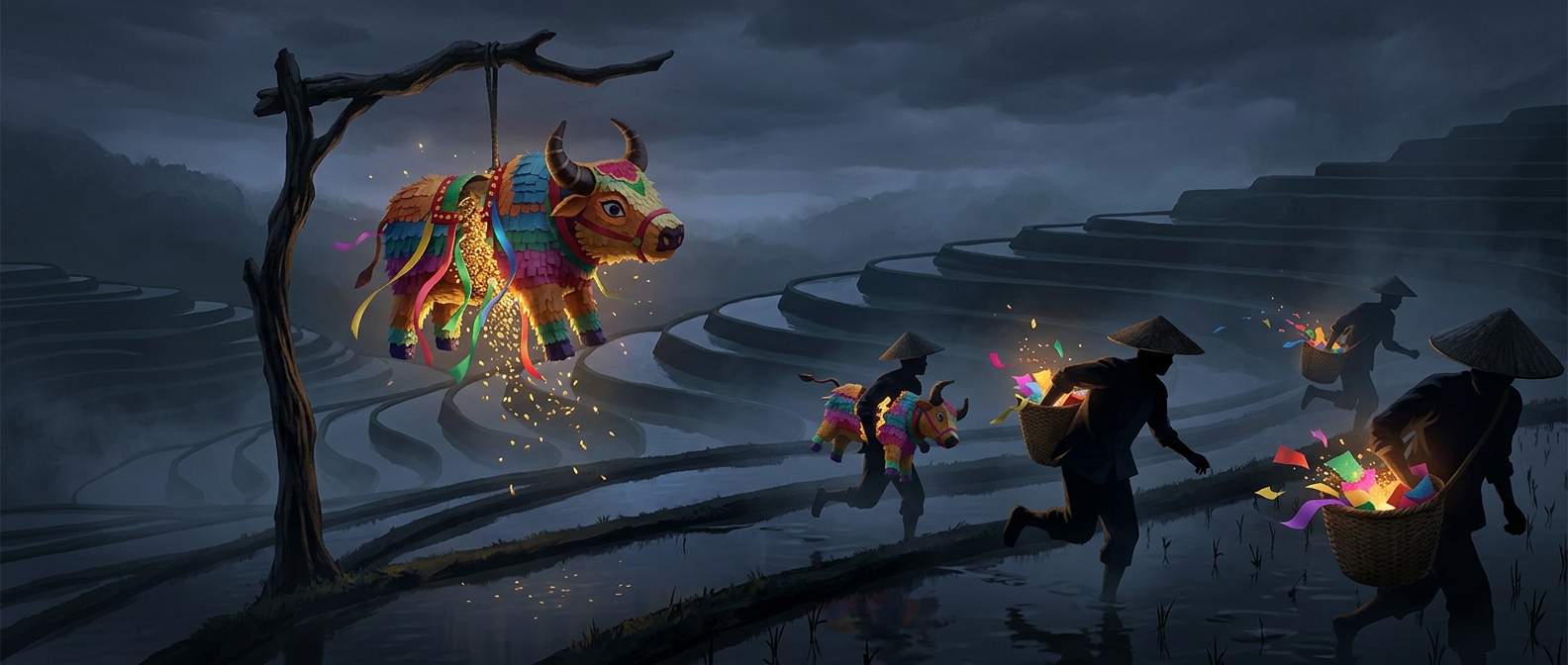
The story linking Marco Polo to the piñata begins with a custom he reportedly encountered in Asia: people struck figures made to resemble animals, which were filled with seeds. The account gives the object a practical beginning. Breaking it released food, turning a seasonal display into a communal act.
If the custom traveled west through Polo’s accounts or contact with the practice, it did not arrive in Europe unchanged. European versions became associated with a clay pot—the Italian word pignatta means a cooking pot—and the breakable container eventually took on decorative shapes.
How the purpose changed
In Spain, the piñata was incorporated into religious observances, including the season of Lent. Spanish missionaries later brought the practice to Mexico, where it met Indigenous traditions of ceremonial objects and public celebration. Over time, the piñata became part of local festivities and, eventually, a children’s party game.
The familiar papier-mâché animal is therefore the result of several transformations: a reported Asian seed-filled figure, a European breakable pot, and later decorative forms made to hold treats. Candy replaced seeds, but the basic action remained the same: a group gathers around an object whose contents are revealed by breaking it. That change turned a seasonal or ceremonial object into a game built around suspense, cooperation, and a sudden spill of rewards.