A party game built around uncertainty
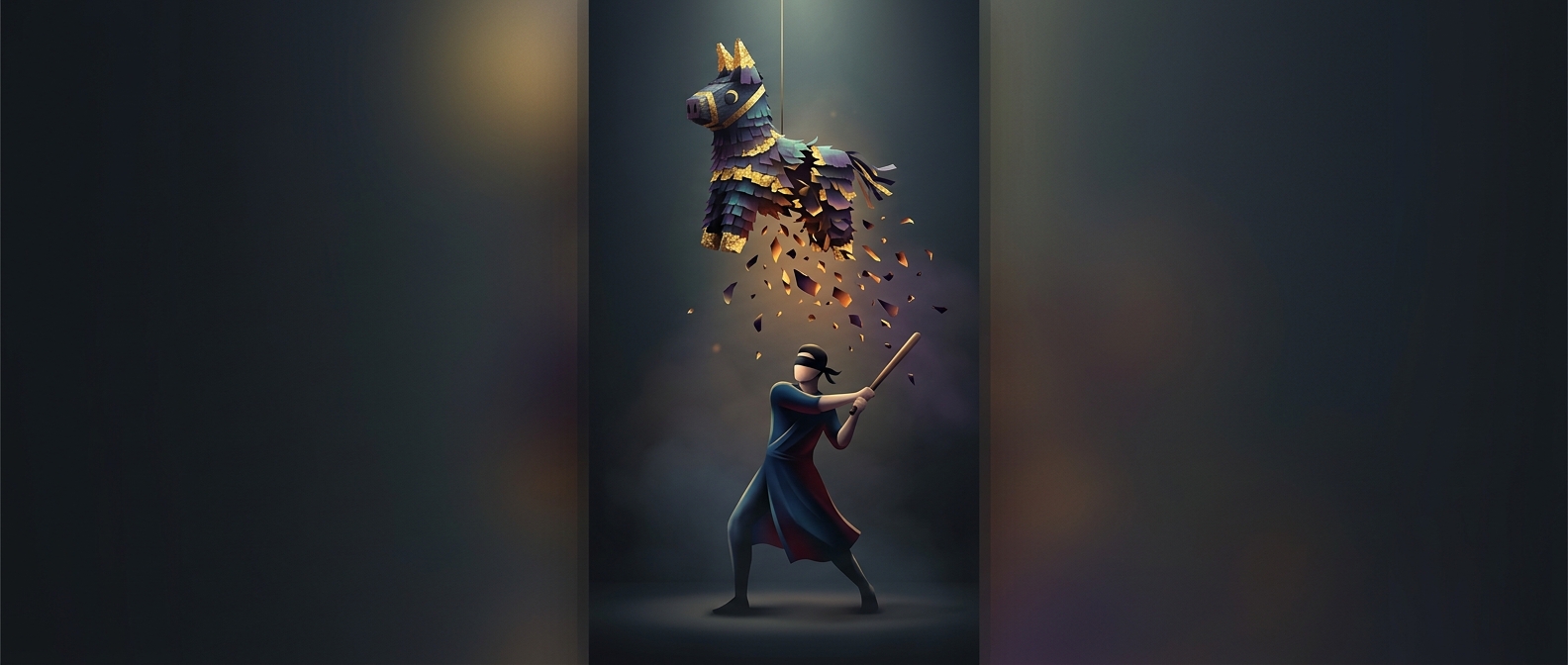
The blindfold changes a simple target into a problem of memory and coordination. A player may see where the figure hangs before being covered, but then has to estimate distance and direction while swinging. The result is deliberately unreliable: a careful swing can miss, while a lucky one can land a hit.
That uncertainty gives the game its shared drama. Everyone watching can see the target and track the swings, while the person taking a turn cannot. Each attempt becomes a small suspenseful performance, and the missed swings are part of the fun rather than a sign that someone has failed.
Why the figure breaks open
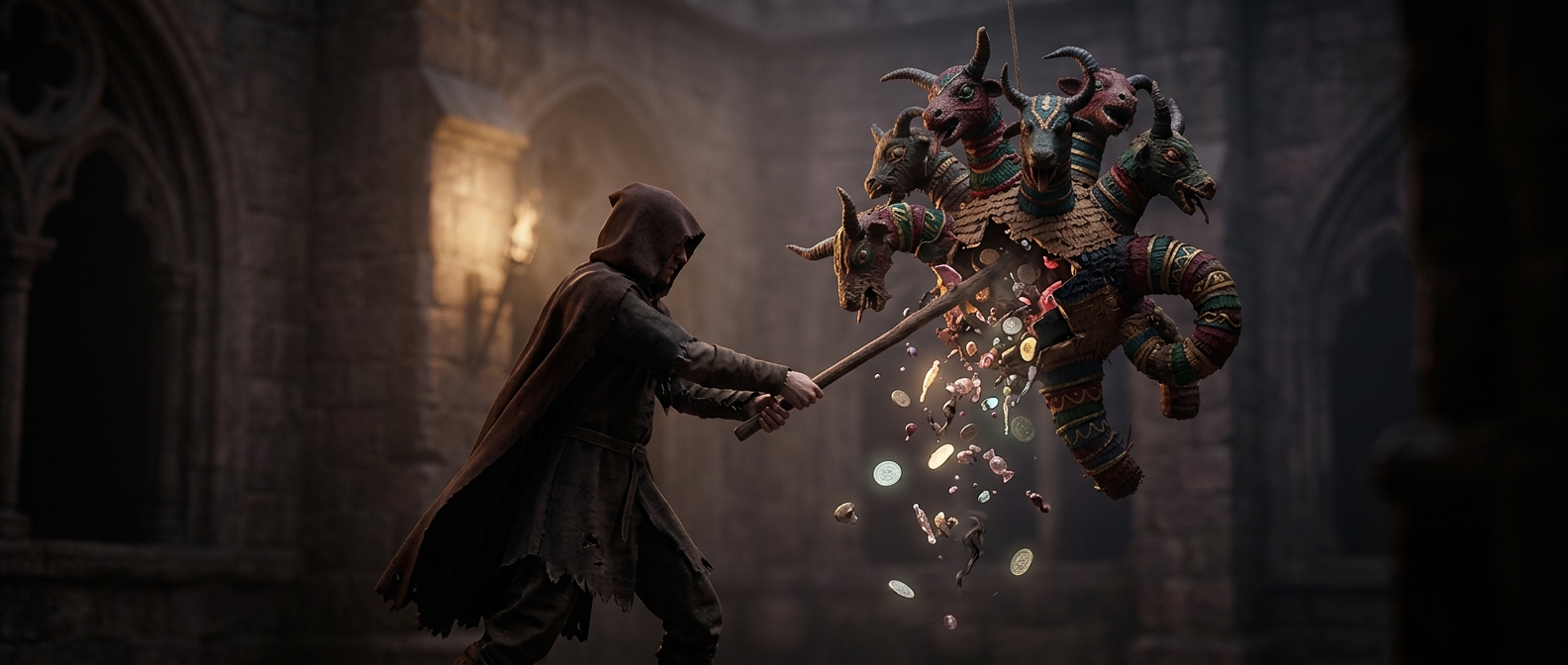
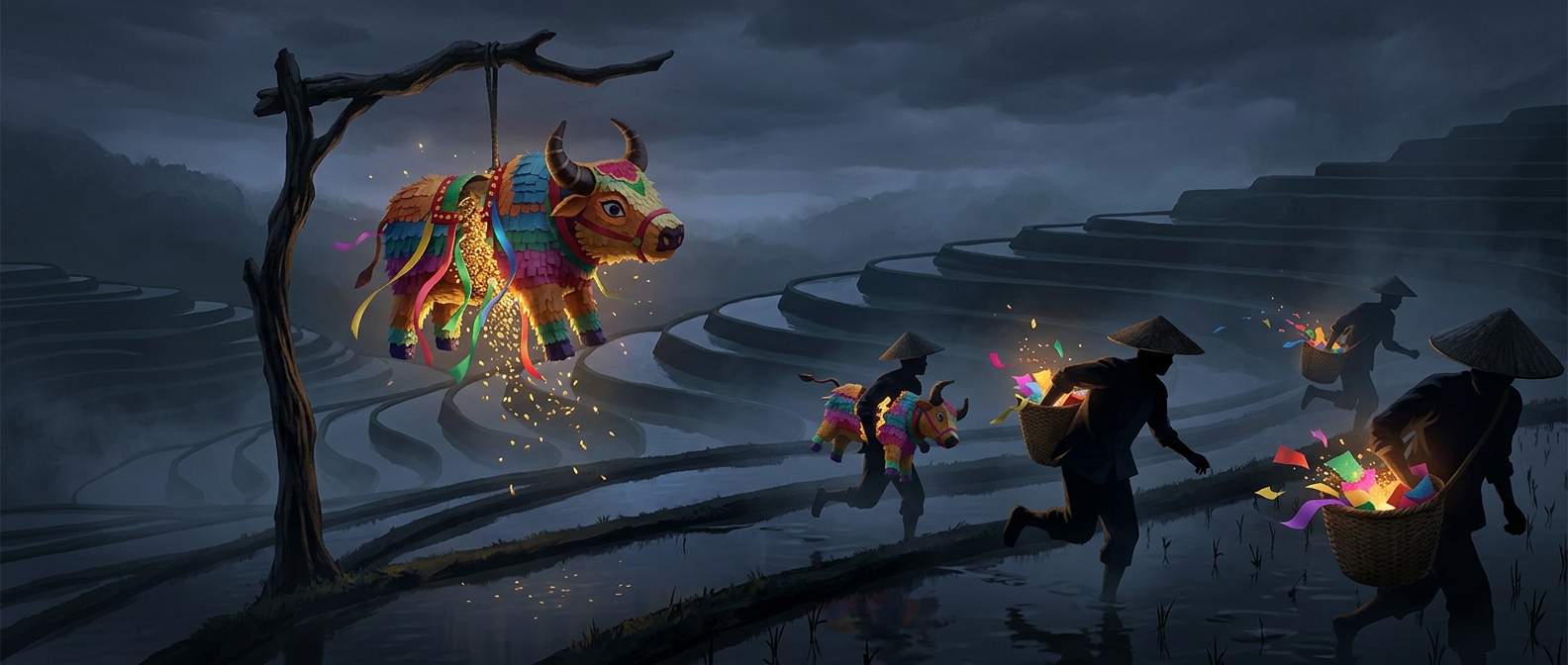
The papier-mâché shell is meant to be sturdy enough to hang together but brittle enough to split under repeated blows. Inside, sweets turn that break into a reward the whole group can see and scramble to collect. The figure’s animal shape makes the target festive; its hollow construction makes the payoff possible.
The design balances force against safety. A heavy stick makes the challenge possible, but a blindfolded swing can travel unpredictably, so the game works best with clear space around the player and spectators kept back. Until the shell cracks, nobody knows which swing will release the sweets—one hit can turn a hanging decoration into a sudden shower.